REVIEW · HANOI
From Hanoi: 1-day Sapa Trekking Tour With Overnight Bus
Book on GetYourGuide →Operated by MOC MIEN RESORT SERVICES COMPANY LIMITED · Bookable on GetYourGuide
Sapa in one day is a real thing. You get a guided hike of Y Linh Ho–Lao Chai–Ta Van with Muong Hoa Valley rice terraces, plus meals and an English-speaking guide. The trade-off is time: you’ll spend a lot of the 25-hour experience riding and waiting around, not just walking.
What makes this tour feel especially doable is the human side. A guide named Sue has been praised for keeping the group together on slippery sections, and the route can feel like it was built for moving slowly and looking often. Expect fog and mud at times; that’s Sapa weather, not a tour flaw.
Before you book, check your fitness. This is a 6.5-mile (about 11 km) hike at a moderate-to-high level, and it’s not meant for kids under 10, wheelchair users, or pregnant travelers.
In This Review
- Key highlights worth your attention
- Overnight bus from Hanoi to Sapa: the rhythm of your day
- Getting going in Sapa: breakfast, freshen-up time, and an early start
- Y Linh Ho to Lao Chai: rice terraces, tribal villages, and steady footing
- Ta Van village lunch in a homestay: the mid-day reset
- Back to Hanoi by sleeper bus: what the evening actually feels like
- Value at around $52: what you’re paying for (and what you’ll spend extra)
- Weather in Sapa: fog, mud, and how to be comfortable
- Who should book this trek, and who should skip it
- Should you book this 1-day Sapa trekking tour from Hanoi?
- FAQ
- FAQ
- What time does the tour start in Hanoi?
- Where can I get picked up in Hanoi?
- How long is the trekking portion?
- Is lunch included, and where do I eat?
- What meals are included?
- Do I need to speak Vietnamese?
- What should I bring for the hike?
- Who should not join this tour?
- Is free cancellation available?
Key highlights worth your attention

- Overnight sleeper bus: Hanoi to Sapa while you sleep, so your day in the hills starts early
- Classic Sapa village route: Y Linh Ho to Lao Chai, then on to Ta Van
- Ethnic minority communities on the trail: Black H’mong, Dzao, and Dzay mentioned along the way
- Homestay lunch in Ta Van: a proper pause instead of rushing through
- English-speaking guiding: helpful for staying together on uneven, wet ground
- Weather-ready planning: rain gear and waterproof shoes matter here
Overnight bus from Hanoi to Sapa: the rhythm of your day
This tour is built around one smart idea: use the night travel so you can hike during daylight. You start in Hanoi at 9:30 PM, with pickup at either Hanoi Capsule Station area or your hotel in the Old Quarter. The pickup point at Capsule Station is 22 Tran Nhat Duat, Dong Xuan, Hoan Kiem, Hanoi, and you should be ready in the lobby about 15 minutes early.
Then the sleeper bus takes over. You arrive in Sapa around 4:00 AM. That early arrival isn’t just a timing note; it changes how you feel. You’re not starting the hike at dawn exhausted and foggy-eyed. You get time to rest until about 6:00 AM, then the day actually begins.
In practice, this “sleep now, hike later” system is what makes a 1-day trek possible. It also explains why the schedule can feel like a lot of travel time. If you’re the type who wants maximum walking minutes, you may find it frustrating. If you’re okay treating the bus as part of the adventure, it’s a good trade.
You can also read our reviews of more hiking tours in Hanoi


Getting going in Sapa: breakfast, freshen-up time, and an early start

At 6:00 AM, the guide picks you up to take you to your hotel for a quick freshen-up and breakfast. Expect a proper breakfast to fuel the hike—recent feedback calls out that breakfast time can include plenty of options, including vegetarian choices, which is rare enough to mention.
At 8:00 to 8:30 AM, you start trekking toward Y Linh Ho village. That early start matters in Sapa. Fog can roll in quickly, and rain can turn footpaths slick. Going sooner gives you better odds of clearer views and more stable trail conditions.
One practical note: don’t assume you’ll have time to pack and re-pack. Bring what you need for the hike in a small day bag. The tour also asks you not to bring large luggage, which is another hint that the schedule is tight.
Y Linh Ho to Lao Chai: rice terraces, tribal villages, and steady footing

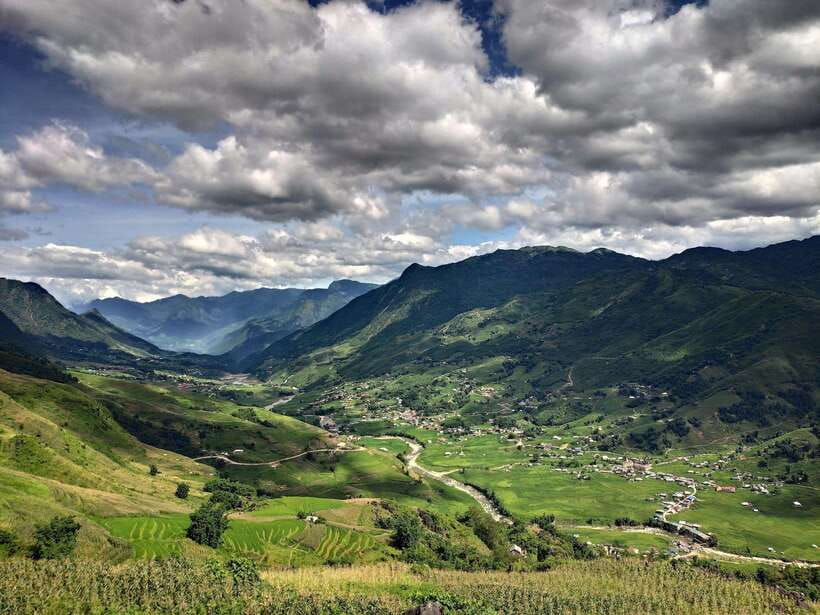
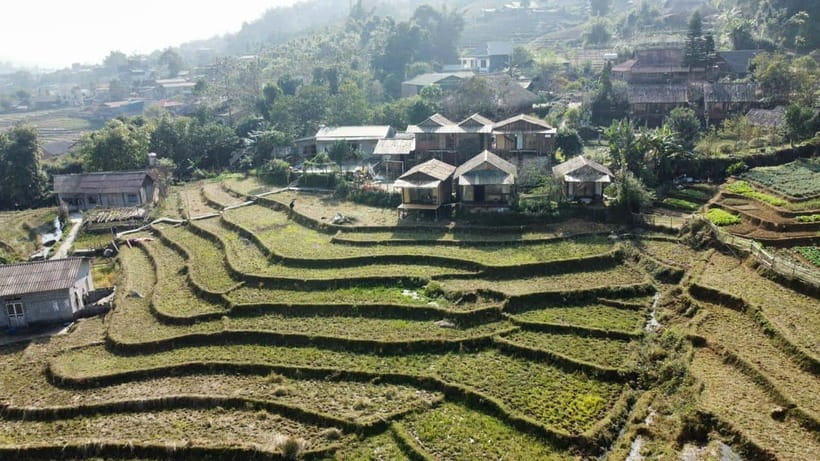
This is the core hiking stretch. Your route follows the Muong Hoa Valley’s rice terraces, then continues to Lao Chai, described as a Black H’mong village.
The trail isn’t just scenic scenery. It’s a route that links everyday village life to mountain views. You’ll pass through several tribal villages along the way, including Lao Chai and then later Ta Van. The tour description specifically mentions ethnic groups you may see and learn about on the paths: Black H’mong, Dzao, and Dzay communities.
Why this part works so well: you’re not walking one long monotonous line. You’re walking through changing terrain—terraces, village edges, valley viewpoints—and the cultural context changes with the landscape. Even when fog hides the far mountains, the terraces and nearby hamlets still give the day texture.
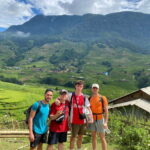
The terrain can be slippery. That’s why having a guide keeping the group together is a real advantage, not a luxury. The praise for Sue highlights exactly this: when the ground is wet, a good guide helps you avoid stretching the group too thin and losing momentum.
Timeline check:
- Start walking: 8:00–8:30 AM
- Reach Ta Van by about 12:30 PM
That means you’re hiking for several hours with time for stops and moving at a reasonable pace.
A possible drawback: if you judge the experience by “hours hiking vs. hours traveling,” you might feel the math doesn’t favor you. On at least one occasion, the trekking and meals added up to only a portion of the total day, with a lot of time spent on transport and waiting. So if your heart is set on long hikes, you’ll want to mentally budget for a fast, efficient route.
Ta Van village lunch in a homestay: the mid-day reset
Around 12:30 PM, you arrive in Ta Van village. This is where the tour slows down on purpose. You’ll have lunch at a local homestay, then you typically spend about 2 hours here.
This stop is more than food. It’s a cultural pause in the middle of a “one-day” schedule. In a place where hiking can be tiring, homestay lunch gives you a break from the trail rhythm and a chance to connect with what daily life looks like just off the main paths.
From practical experience with treks like this, this is also where you can recover:
- Use the restroom before heading back
- Sip water and cool down
- Let your feet rest for the downhill/return timing
Once lunch ends, the next push is shorter but still structured:
- 2:00–2:30 PM: return to Sapa Town
- 3:00–3:30 PM: board the sleeper bus back to Hanoi
If you’re hoping for a long wandering afternoon in Ta Van, this tour is probably not the match. But if you want a taste of village life without turning the day into a marathon, it hits the right note.
Back to Hanoi by sleeper bus: what the evening actually feels like

You head back to Sapa Town by 2:00–2:30 PM, then you board the sleeper bus sometime around 3:00–3:30 PM. Dinner isn’t listed as included, but meals are included during the day (breakfast and lunch), so you may be mostly good for the return.
Then you ride overnight again, returning to Hanoi around 9:30 PM, finishing on Tran Quang Khai Street.
How this usually feels: you get just enough time in Sapa for the village portion, then it’s straight back to transport mode. If you pack snacks or plan hydration carefully, the return is smoother. If you don’t, you may feel hungry and restless in the bus waiting pockets.
Still, it’s hard to beat this format if your trip north has limited days. You get mountains, villages, rice terraces, and an evening back in Hanoi without spending extra nights.
You can also read our reviews of more tours and experiences in Hanoi





Value at around $52: what you’re paying for (and what you’ll spend extra)
At $52 per person for a 1-day trek package, the value is mainly in the “bundle”:
- Round-trip sleeper bus between Hanoi and Sapa
- Pickup from Hanoi Old Quarter areas
- Professional English-speaking guide
- Meals (breakfast + lunch)
- Scheduled sightseeing tickets (not broken down further, but included)
For a solo traveler especially, the guide and transport combo can add up fast if you do it independently. You’d need transport timing, a guide, and a route plan that doesn’t leave you wandering between villages.
What’s not included is equally important:
- Insurance
- Coffee and soft drinks
- Personal expenses
So your real total depends on your habits. If you buy drinks often or want extra snacks, budget for it. If you plan your water and bring simple extras, you’ll keep it closer to the base price.
Also, this is an “efficient” route. You’re paying for a set itinerary, not for open-ended exploration. That’s why it’s cheaper than multi-day trekking plans: less time, fewer overhead hours, and a faster village circuit.
Weather in Sapa: fog, mud, and how to be comfortable

Sapa weather can be dramatic. Recent notes call out fog in March as totally normal, and muddy conditions in December. Translation: the scenery you want is real, but it often arrives with wet feet.
Bring what the tour recommends:
- Rain gear
- Sunscreen
- Hat
- Water
- Comfortable shoes (and hiking shoes if you have them)
- Biodegradable insect repellent
- Passport or ID card
- Smaller luggage (no big suitcase)
If you remember one thing, make it this: dry socks beat most “extra” packing ideas. The schedule includes downhill and uneven surfaces. Even with a good guide, you can get splashed or muddy.
When visibility is low, don’t get disappointed. Fog can soften the valley into layers. You may not see every far peak, but the rice terraces and village paths still look strong up close.
If you’re thinking long-term about timing: one piece of advice shared is that rice looks even more beautiful around September when it’s flowering. If you can’t do that month, March and winter can still work—just come prepared for mist and wet ground.
Who should book this trek, and who should skip it

This tour is a good fit if:
- You want a structured village trek without planning transport and route logistics
- Your schedule only allows a quick northern escape from Hanoi
- You’re happy to treat the sleeper bus as part of the package
- You’re comfortable with a moderate-to-high hike distance
It may be a poor fit if:
- You want mostly hiking time and hate long travel blocks
- You’re sensitive to cold, fog, or wet trails
- You fall into the tour’s restrictions: children under 10, pregnant women, wheelchair users, and people over 95 years
The best way to decide is to picture your day. Can you handle arriving around 4:00 AM, hiking in the morning, eating lunch in Ta Van, then riding back to Hanoi by nightfall? If yes, you’ll likely enjoy the efficiency.
Should you book this 1-day Sapa trekking tour from Hanoi?
Book it if you want the essentials of Sapa—rice terraces, village life, and mountain scenery—without needing extra days. The strongest reasons are the English-speaking guided route, the focused hike between Y Linh Ho, Lao Chai, and Ta Van, and the fact that meals are handled so you’re not hunting for food mid-trek.
Skip it or consider an alternative if you’re chasing a slower, longer walk or you’re worried about wet footing. The tour is efficient on purpose, which means transportation and waiting time can feel like a big chunk of the whole experience.
My practical recommendation: if this is your first time in Sapa and your schedule is tight, this is a smart way to get a real taste of the region. Just bring proper shoes and rain gear, and mentally budget for a day that’s part hike and part overnight travel.
FAQ
FAQ
What time does the tour start in Hanoi?
The pickup begins for an overnight bus departure at 9:30 PM from Hanoi, with options including pickup from the Hanoi Capsule Station area or the Hanoi Old Quarter.
Where can I get picked up in Hanoi?
You can be picked up around the Hanoi Old Quarter area, including Hanoi Capsule Station (22 Tran Nhat Duat, Dong Xuan, Hoan Kiem, Hanoi). The pickup spot is noted as Hanoi Capsule Station and is also described as a lobby pickup area about 15 minutes before the scheduled time.
How long is the trekking portion?
The tour includes a 6.5-mile (about 11 km) hike through villages and rice terraces, with a morning trek from around 8:00–8:30 AM and arrival in Ta Van around 12:30 PM.
Is lunch included, and where do I eat?
Lunch is included, and you eat at a local homestay in Ta Van. Lunch time is scheduled for about 2 hours.
What meals are included?
The tour includes a breakfast in Sapa and a lunch in Ta Van. Coffee and soft drinks are not included.
Do I need to speak Vietnamese?
The tour provides a professional English-speaking guide, so you don’t need Vietnamese for this experience.
What should I bring for the hike?
Bring passport or ID card, comfortable shoes/hiking shoes, hat, sunscreen, water, rain gear, and biodegradable insect repellent. Also, avoid bringing large luggage.
Who should not join this tour?
It is not suitable for children under 10, pregnant women, wheelchair users, or people over 95 years.
Is free cancellation available?
Yes. You can cancel up to 24 hours in advance for a full refund.