REVIEW · HANOI
Explore Hanoi Old City By Cycling Tour With Small Groups
Book on GetYourGuide →Operated by Go Asia Travel · Bookable on GetYourGuide
Hanoi by bike feels like you’re learning the city’s rhythm, not just sightseeing. I love the mix of Old Quarter energy and Red River Delta calm, and I love that the guide actually teaches you how to handle Hanoi traffic with confidence. The one thing to consider is that this is real street riding, so if your bike feels off or you’re uncomfortable in traffic, you’ll want to be mentally ready.
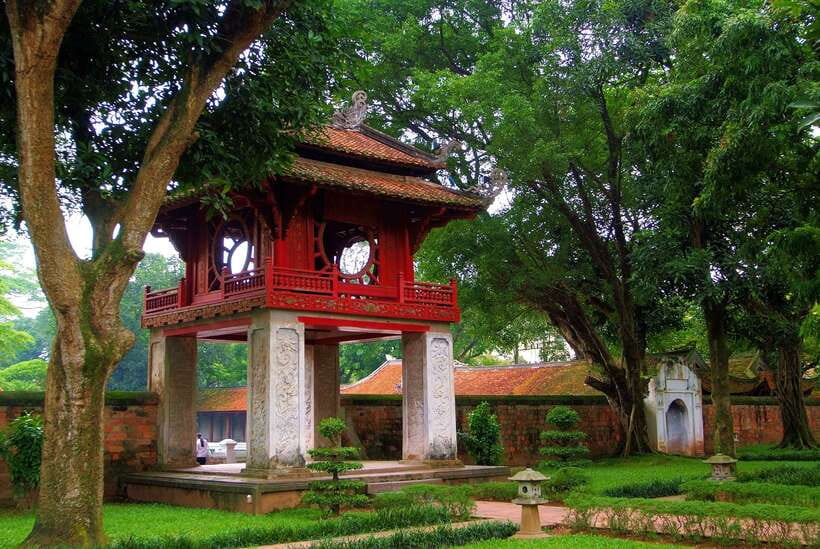
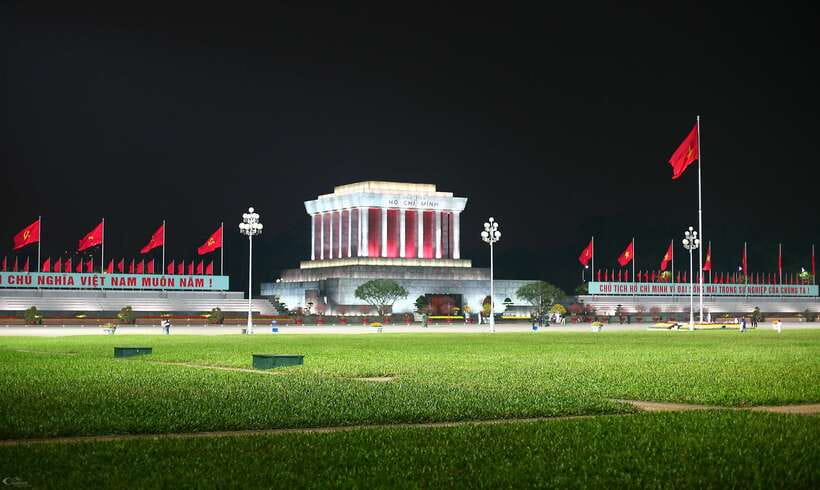
You’ll also get a practical, story-based walk-through of major landmarks like Ho Chi Minh area viewpoints, Ba Dinh Square, Tran Quoc Pagoda, and the north-side historic gates—without wasting half a day in transfers. Plus, the stop for egg coffee and the chance to sample classics like bun cha and banh mi helps the tour feel like a meal plan, not just a photo route. This is a tight half-day format, so wear comfortable shoes and plan to leave some spots in the Old Quarter for a second visit.
In This Review
- Key moments that make this Hanoi cycling tour work
- A half-day bike tour that helps you read Hanoi fast
- Where the tour starts: 24 Hoi Vu Street, bike check, and a safety briefing
- West Lake calm to Tran Quoc Pagoda: a gentle intro before the Old Quarter
- Long Bien Bridge and the Red River Delta: the view from the river feels bigger
- B-52 Lake and Ba Dinh Square: landmarks with clear context
- Hanoi Citadel and the Flag Tower area: a fortress feeling without the exhaustion
- Old train heritage and the train-track vibe: what you’re actually looking for
- North gate and Old Quarter texture: Church, markets, and Cua Bac
- Egg coffee and street food: the stops you’ll remember after the photos fade
- Bike safety in Hanoi: what the guide teaches you to do
- Price and value: what $29 buys you for a half-day
- Who should book this Hanoi cycling tour (and who might skip it)
- Should you book this Hanoi Old City cycling tour?
- FAQ
- What time does the Hanoi Old City cycling tour start, and how long is it?
- Where is the meeting point?
- Do we go inside the Ho Chi Minh complex or mausoleum?
- What’s included in the price?
- What food can I expect during the tour?
- Are drones or baby strollers allowed?
- Can I pay later, and how late can I cancel?
Key moments that make this Hanoi cycling tour work
- Small-group pacing that’s easy to follow while you ride busy streets
- Long Bien Bridge to Banana Island: bridge views plus banana plantations and vegetable gardens
- B-52 Lake and Ba Dinh Square: big landmarks with context from your English-speaking guide
- Train Street-era heritage and north-side gates like Cua Bac
- Egg coffee as a tour highlight, paired with classic Hanoi bites (like bun cha and banh mi)
A half-day bike tour that helps you read Hanoi fast
Hanoi is one of those cities where getting your bearings is half the challenge. This tour solves that with a simple idea: you move through key neighborhoods on a bicycle, while your guide explains what you’re seeing and how to navigate what you’re not used to—traffic, crossings, and street flow.
The tour runs as a half-day option with two start times (8:00 or 13:00), and it returns you to the meeting point at the end. That means you can still keep the rest of your day open for a museum, a lake stroll, or a deeper wander through the Old Quarter on your own.
For me, the best part is how the route is designed to change your mood on purpose. You start near the West Lake area and Truc Bach, then you swing into greener, quieter stretches along the Red River Delta on the way to Banana Island. Later, you’re back in the denser city scenes—heritage gates, older French-era streets, and the Old Quarter lanes where Vietnam’s past still shows up on the sidewalks.
You can also read our reviews of more cycling tours in Hanoi


Where the tour starts: 24 Hoi Vu Street, bike check, and a safety briefing

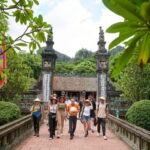
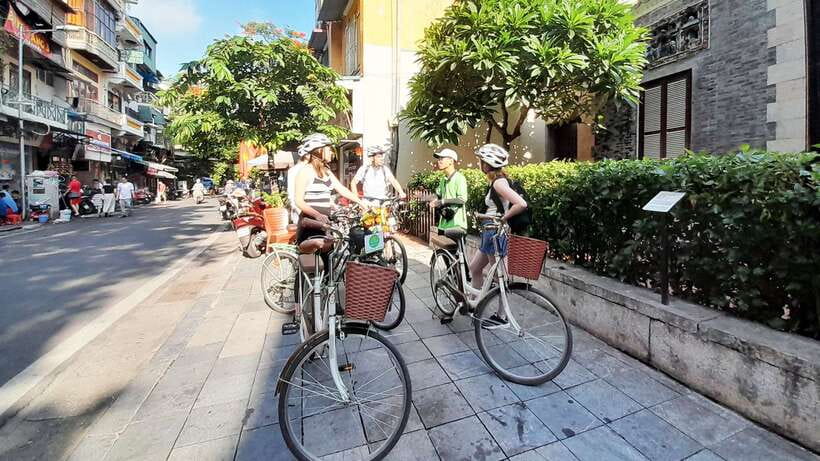
You meet at 24 Hoi Vu Street, where you’ll check your bike and get a safety briefing from the English-speaking guide before you roll out. This matters more than it sounds. Hanoi traffic can look chaotic until you learn the logic behind it, and the guide’s job is to teach you how to move with the stream rather than fight it.
You’re also told up front that you’ll only stand outside the Ho Chi Minh complex for viewing and photos—you don’t go inside. That saves time, but it also sets expectations, so you don’t show up thinking the day will include a full mausoleum visit.
If you’re worried about getting lost, the group format helps. Someone is always watching the route, and the guide adjusts streets depending on what’s safe and controllable at the time.
West Lake calm to Tran Quoc Pagoda: a gentle intro before the Old Quarter
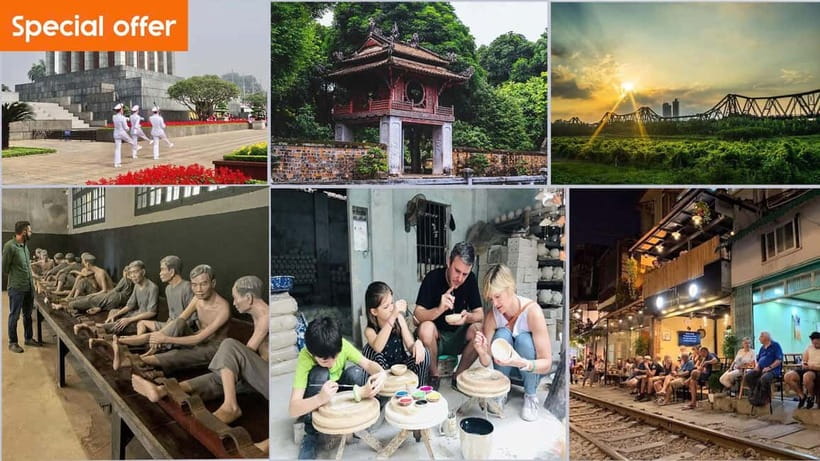
The best cycling days start with an easy warm-up. This one begins on tree-lined streets around the West Lake area, then heads toward Truc Bach Lake and Tran Quoc Pagoda.
These first stops do two things for you:
- They help your body get used to cycling in Hanoi.
- They give you a clean “before” view of the city—water, temple calm, and broad space—so later when the Old Quarter crowds arrive, you can feel the contrast.
Tran Quoc Pagoda is a strong start because it anchors the tour in something older than the city’s street traffic. Even if you don’t consider yourself a temple person, you’ll appreciate the pause it creates. It’s the kind of stop that makes you slow down without forcing you to stop for long.
Long Bien Bridge and the Red River Delta: the view from the river feels bigger
One of the most memorable segments is the ride out toward the Long Bien Bridge, which crosses the Red River and frames the landscape like a moving postcard. As you pass, you’re not just traveling—you’re changing scale. The city opens up, the river becomes the big “street,” and you start seeing why Hanoi’s history is tied to water and fertile land.
Then the tour continues toward banana plantations and vegetable gardens on the Banana Island area. This is where the tour stops feeling like a sightseeing checklist and starts feeling like you’re watching how people live close to the delta.
Here’s the practical point: being on a bike makes you slow down just enough to notice small details—paths, garden edges, and the rhythm of roadside activity. From a bus or taxi, you’ll miss that. On foot, you’d likely lose time. Cycling gives you the sweet spot.
B-52 Lake and Ba Dinh Square: landmarks with clear context
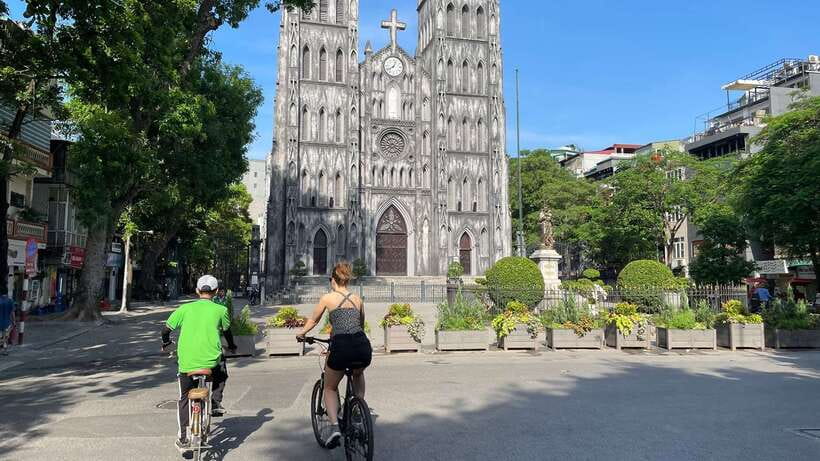
After the calmer stretch, the tour brings you toward major national landmarks.
You’ll pass B-52 Lake, and you’ll also see Ba Dinh Square with the surrounding atmosphere of old French houses. This part of the day is valuable because your guide isn’t just naming places. The value is the story thread that connects them—what these sites represent, why they sit where they do, and how Hanoi’s different eras overlap.
Ba Dinh Square is a big visual moment, even from the outside. It’s the kind of place where you automatically think in terms of politics and national identity, so it helps to have your guide explain what you’re looking at. Even short explanations change how you read a space.
And yes, you’ll hear about Ho Chi Minh as well—but again, you only stand outside the complex for photos. That keeps things efficient and avoids long delays that can ruin a half-day plan.
You can also read our reviews of more city tours in Hanoi





Hanoi Citadel and the Flag Tower area: a fortress feeling without the exhaustion

Next, the route includes the citadel area with a great wall and historic exhibits. You can see the Hanoi Flag Tower and get a sense of how the military design shaped the city’s form.
Fortresses can become “just walls” if you don’t have context. Here, the guide’s story makes it clearer: walls weren’t built for decoration. They were built to control movement and protect authority. When you ride near these structures, you start understanding why certain streets and neighborhoods developed in specific ways.
This section also gives you a break from constant traffic awareness. Even though you’re still cycling, the sights are less about dodging turns and more about looking, absorbing, and taking in the scale of what remains.
Old train heritage and the train-track vibe: what you’re actually looking for
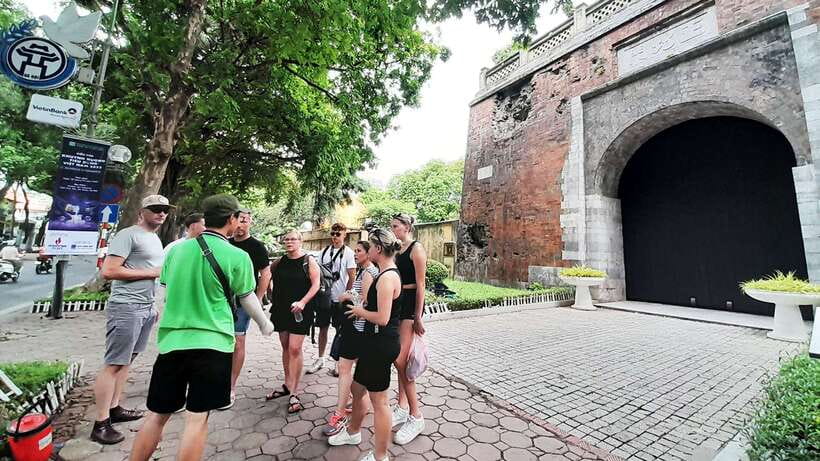
Hanoi is famous for train-related street life, and this tour takes you to the old train railway area with heritage buildings. The key is how this stop functions in the overall route.
You’re learning Hanoi’s “how it works” side:
- how neighborhoods evolved around infrastructure
- how everyday life shares space with historic transport lines
- why certain streets feel different from the rest of the Old Quarter
It’s not just about a photo. It’s about understanding the relationship between old infrastructure and current street life—something that’s hard to grasp on your own in a day.
If you like photography, you’ll enjoy this area. If you don’t, you’ll still appreciate the story because it explains why the streets look the way they do.
North gate and Old Quarter texture: Church, markets, and Cua Bac
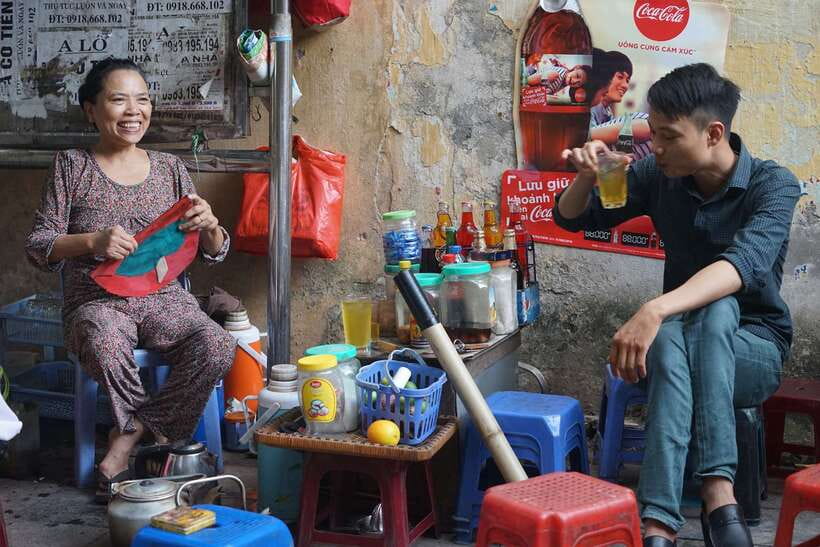
On the north side, you’ll see classic sights like:
- Hanoi Church
- Dong Xuan Market area energy
- Cua Bac Gate
These stops bring you back into the layered, working-city vibe of Hanoi. The Old Quarter is where tourists go first, but the north gates and market zones show you the city with less “performing for visitors.” You get a sense of what residents treat as normal.
One of the smartest parts of this tour is that it blends major icons with everyday spaces. Dong Xuan Market isn’t just a viewpoint; it’s a reminder that the city is still living at full speed. That keeps your day from turning into “I saw monuments; now I’m done.”
Egg coffee and street food: the stops you’ll remember after the photos fade
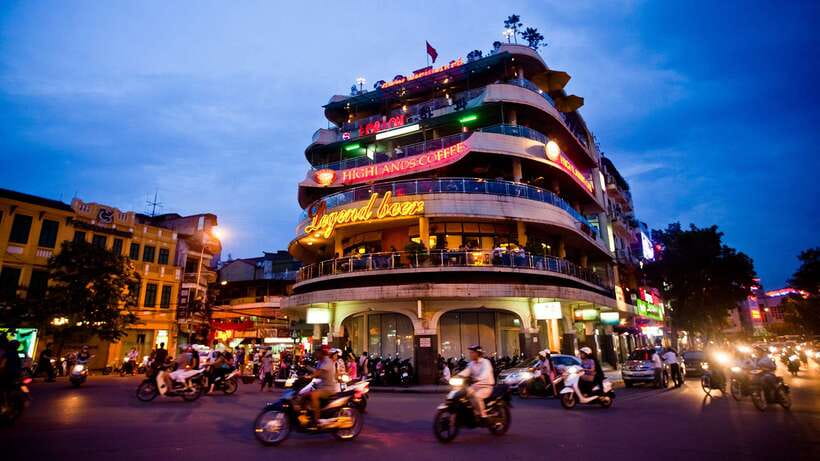
This tour includes egg coffee at a famous cafe, plus you’re also guided toward classic Hanoi bites like bun cha, pho bo, and banh mi.
Egg coffee is more than a novelty. The texture and sweetness make it feel like a Hanoi breakfast-with-a-twist kind of experience, and it’s a great reset point mid-tour. If you’ve been cycling for a while, you’ll appreciate having a warm, sweet stop that keeps energy steady.
As for street food, the value here is timing and direction. You get the chance to taste favorites without spending your limited half-day searching for the right places. If you want a practical approach, ask your guide what they recommend on the day—then stick to one main bite plus your drink. You’ll enjoy it more than trying to sample everything at once.
Bike safety in Hanoi: what the guide teaches you to do
The most strongly praised part of this experience is how well the guide handles Hanoi traffic.
You’ll get safety instructions before you start, and the ride is planned so you can use the safest, suitable streets based on traffic and vehicle conditions. In plain terms: you don’t ride like you’re in a quiet park. You ride like you belong here.
One review note that matters for your comfort: the guides also teach crossing techniques. That can turn a scary moment into something you understand. When you know how to move with the flow—rather than against it—you feel more relaxed, and you stop thinking about danger every second.
Guides you might encounter include Andy, Tea, Rio, Nam, and Amy. The common thread is English-speaking delivery plus a real focus on practical street navigation, not just reciting names of sights.
Price and value: what $29 buys you for a half-day
At $29 per person, this tour is priced like a budget-friendly way to cover a lot of ground in limited time. But the real value comes from what’s included:
- English-speaking guide
- city bike, bike park fee
- entrance fees
- 1 complimentary bottle of water per person
- egg coffee (local/home-made style in the included stop)
On top of that, the route mixes far-side areas (river and delta) with central landmarks and Old Quarter texture. If you tried to do this yourself, you’d likely pay for a bike rental, transportation, multiple entry fees, and then still spend time figuring out where to go next.
There are a couple of costs to keep in mind. Drinks and lunch aren’t included, and there’s also a mention of a 10% government tax not being included. If you’re a solo traveler, a $7 single supplement is listed.
Also keep one small drawback in mind: the bicycle quality can vary. One experience described the bikes as not the best and worth servicing, which made the ride feel a bit uncomfortable at times. So if you’re sensitive about ride comfort, do the bike check carefully before you go.
Who should book this Hanoi cycling tour (and who might skip it)
This tour fits best if you:
- want a half-day that covers key Hanoi landmarks plus countryside-style scenery
- like getting a story explanation while you move
- feel okay riding through busy urban streets with a safety briefing
- want egg coffee and a guided taste of classic food
It’s not the best choice if you need wheelchair access. And it’s not ideal if your tolerance for cycling comfort is low—bike condition can make a difference.
If you’re short on time in Hanoi, this is a smart way to do “big sights + real street texture” in one go. If you love slow wandering, you’ll still have plenty of reason to come back later because the tour doesn’t try to replace the Old Quarter’s full, unhurried magic.
Should you book this Hanoi Old City cycling tour?
If you want a practical introduction to Hanoi—what to see, how to ride, and how the city’s different eras fit together—yes, you should book it. The biggest draw is the combo of guided traffic navigation and a route that doesn’t only stay in postcard zones. You get river views, delta greenery, national landmarks, and Old Quarter texture in one half-day.
I’d book it confidently if you’re comfortable with streets and you’ll do your bike check carefully at the start. I’d hesitate only if you’re very sensitive to bike comfort or you’re already feeling stressed about riding in active traffic. For most visitors, though, this is exactly the kind of Hanoi experience that gives you momentum for the rest of your trip.
FAQ
What time does the Hanoi Old City cycling tour start, and how long is it?
The tour is a half-day cycling experience with two start options: 8:00 am or 13:00 pm.
Where is the meeting point?
You gather at 24 Hoi Vu Street to check the bike and hear the safety briefing. The tour ends back at the same meeting point.
Do we go inside the Ho Chi Minh complex or mausoleum?
No. You only stand outside the Ho Chi Minh complex for watching and photos. You do not go inside.
What’s included in the price?
The tour includes an English-speaking guide, a complimentary bottle of water per person, egg coffee (included at the coffee stop), a city bike, entrance fees, and the bike park fee.
What food can I expect during the tour?
Egg coffee is included. The route also includes the chance to taste Hanoi favorites like bun cha, pho bo, and banh mi.
Are drones or baby strollers allowed?
No. Drones are not allowed. Baby strollers, baby carriages, and similar items are also not allowed.
Can I pay later, and how late can I cancel?
Yes. You can book and pay nothing today, and you can cancel up to 24 hours in advance for a full refund.