REVIEW · HANOI
Chicks n Bikes: Customised Motorbike Riding Lesson in Hanoi
Book on GetYourGuide →Operated by Chicks n Bikes Hanoi · Bookable on GetYourGuide
Street bikes aren’t born; they’re trained. Chicks n Bikes Hanoi turns that reality into a Hanoi street-skills lesson, with personalized coaching for real traffic instead of just theory.
I love how the sessions start with calm, controlled practice and then move you toward real roads with a patient instructor like Quang Thảo and Thao. I also like the practical focus: you’re not just learning motions, you’re learning how to start, stop, turn, and handle Vietnamese road flow without panicking.
One possible consideration: this is physical, hands-on riding training, and the provider notes it is not suitable for pregnant women or people with back problems, so it may not fit every body.
In This Review
- Key highlights you’ll feel immediately
- Chicks n Bikes in Hanoi: why this lesson feels practical
- What happens before you even start the engine
- A quick word on your gear and comfort
- Phase one: balancing and steering until it becomes muscle memory
- Phase two: starting, stopping, and turning on real pavement
- The small drawback: you’ll need patience with your own learning curve
- Phase three: quiet-road confidence before you face the real street
- Instructor coaching that’s friendly—and specific
- Traffic navigation in Hanoi: learning the rhythm, not the panic
- Hill training that actually matters for Ha Giang
- Manual confidence: upgrading from automatic habits
- Tips for group rides and questions about motorbiking in Vietnam
- Price and value: why $45 can be worth it
- Who should book this lesson (and who should reconsider)
- Should you book Chicks n Bikes in Hanoi?
- FAQ
- What does the lesson include?
- Is a motorbike rental included?
- Is personal insurance included?
- What should I bring to the lesson?
- What safety equipment will I get?
- Do I need a driver’s license?
- Are there language options?
- Is this suitable for total beginners?
- Is it okay if it rains or gets hot?
- Who should not take the lesson?
- What are the rules on alcohol and drugs?
Key highlights you’ll feel immediately
- Practice that goes from basics to on-street control instead of staying in a parking-lot fantasy world
- Instructor names you’ll actually remember: Quang Thảo and Thao bring steady, friendly coaching
- Hill technique for Ha Giang readiness including uphill and downhill skills
- Confidence-building for manual riding if you’re switching from automatic habits
- Real Hanoi traffic navigation with tips for where to place yourself and how to move with the stream
Chicks n Bikes in Hanoi: why this lesson feels practical
Hanoi traffic can look chaotic from the sidewalk. Up close, it’s more like a constant negotiation: position, balance, speed, and eye contact all matter. This lesson from Chicks n Bikes Hanoi is built for that reality. Instead of dumping road rules on you, you learn by doing—then you learn how to adjust when the road gets busy.
The big value here is the progression. You start with the fundamentals that make a bike controllable. Then you build toward actual street riding, where your hands and feet need to work together while you watch what everyone else is doing. It’s a “get your bearings fast” approach, which is exactly what you need in Vietnam.
You can also read our reviews of more tours and experiences in Hanoi


What happens before you even start the engine
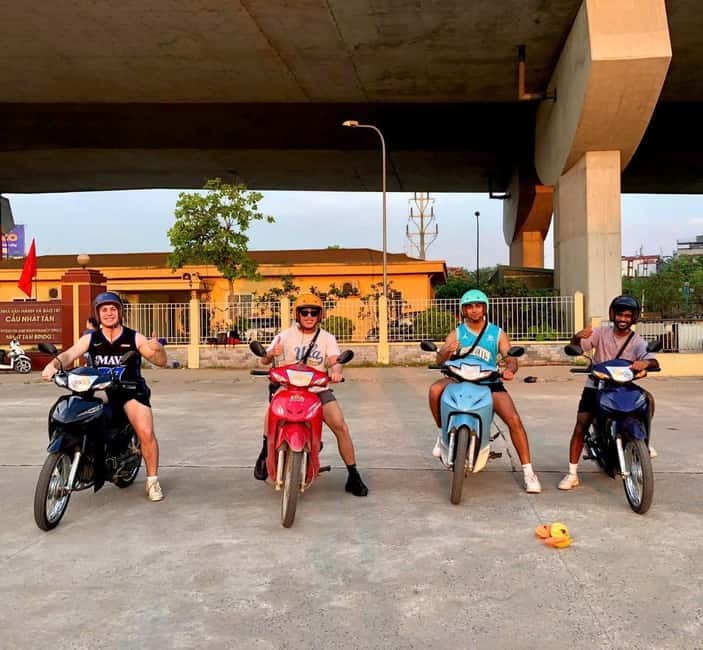
Before you ride, you get a briefing that keeps things grounded in road rules and motorbike basics. You’ll also get a safety setup: a helmet, riding pads, and a poncho (so you’re not dealing with surprise weather issues while you’re focused on control).
This pre-ride stage matters more than it sounds. When you understand how the bike works—where to look, how to coordinate your clutch/brake/acceleration, and what the road expects—you stop guessing. You’re also less likely to develop bad habits early, like grabbing the brakes too hard or staring at the ground when you should be scanning the lane ahead.
A quick word on your gear and comfort
Come ready to move. You’ll be wearing the provided safety items, but you still need comfortable clothes and closed-toe shoes. Add sunscreen and water. Hanoi heat and sudden sun can turn an otherwise smooth lesson into a distraction.
Phase one: balancing and steering until it becomes muscle memory
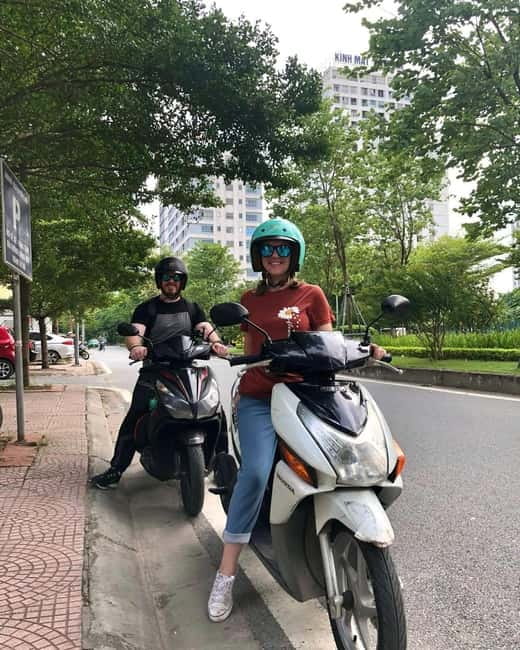
The training starts where most people struggle: balance and steering. Expect drills that focus on what feels awkward at first—foot placement, slow-speed control, and how to make small steering corrections without overreacting.
This is where the structure shows. You’re not thrown into traffic immediately. You build basic control in a low-pressure environment, so when you later ride through Hanoi streets, your bike handling is less fragile.
If you’re switching from riding an automatic scooter to a manual motorcycle, this is also where you can straighten out the rhythm. One of the standout themes from past participants is gaining confidence on manual control—so your lesson isn’t just about moving forward. It’s about doing it smoothly and predictably.
Phase two: starting, stopping, and turning on real pavement
Once you can handle the bike with basic balance and steering, the lesson moves to key actions:
- starting
- stopping
- turning safely
This is more than learning the sequence. It’s learning when to apply what—timing matters. For example, stopping isn’t just squeezing the brake. It’s staying balanced as you slow down, and doing it in a way that won’t surprise the rider behind you.
Turning is similar. If you rush the turn, you lose stability. If you don’t look far enough ahead, your body follows your eyes and the bike drifts where you didn’t intend. The coaching here is about control under imperfect conditions, which is what you’ll meet in Vietnam.




The small drawback: you’ll need patience with your own learning curve
This is hands-on training. Early on, your legs and arms will feel like they did extra reps at the gym. That’s normal. If you go into it thinking you’ll look graceful on day one, you’ll have a bad time. The lesson style is realistic: you learn through repetition and feedback.
Phase three: quiet-road confidence before you face the real street
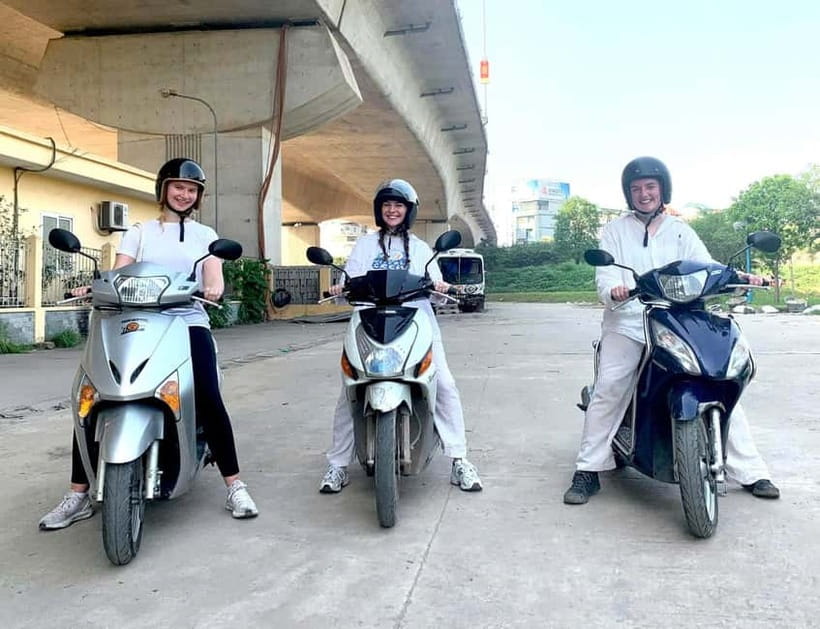
After the controlled drills, you’ll ride on calmer roads and then move into a short street ride through Hanoi. That step-up is smart. It lets you feel how the bike behaves when you’re not just practicing a single move.
This transition is where you start understanding Vietnamese street conditions in a safer way. Instead of trying to “beat” traffic, you learn to ride with the flow. You practice holding your line, controlling your speed, and making turns with awareness of what’s around you.
And yes, you’ll likely feel like you’re learning a language. The communication is visual and behavioral. The instruction helps you interpret it without overthinking.
Instructor coaching that’s friendly—and specific
The best part of this type of lesson is not the bike. It’s the feedback. Past participants highlighted how instructors are friendly and teach with real clarity, including strong English.
Names you might hear in the course include Quang Thảo and Thao. That matters because you can build trust quickly when your instructor is both calm and easy to understand. The coaching style is practical: you don’t just get told what to do; you get told what to fix, and you try again.
If you like clear, direct correction, you’ll probably do well here. If you need lots of emotional reassurance, you may still get it—but the real strength is competence.
Traffic navigation in Hanoi: learning the rhythm, not the panic
Once you’re on the street, the lesson shifts toward traffic navigation training. This is the piece that can save you later when you’re navigating on your own.
You’ll practice:
- how to move through traffic safely
- how to handle your lane position while bikes weave and merge
- how to respond rather than freeze
The goal isn’t to ride like a local from day one. The goal is to ride confidently enough that you can make decisions without turning every moment into a stress test.
This is also where the lesson becomes valuable for future trips. If you’re aiming at the Ha Giang loop, Hanoi streets are your warm-up. The more comfortable you get managing speed and balance in traffic, the less overwhelming the bigger road will feel.
Hill training that actually matters for Ha Giang
If Ha Giang is on your future route, hill practice is a must. This lesson includes hill training, including uphill and downhill techniques. That’s not just a nice add-on. It’s one of the highest-impact skills you can build before you commit to mountain roads.
Why it helps:
- Uphill riding tests your control and coordination
- Downhill riding tests braking and stability
- Both challenge your confidence, especially if you’re still getting used to manual control
When you practice these techniques with guidance, you’re less likely to treat hills as emergencies. Instead, you learn a method you can repeat. That’s the difference between stalling and staying calm, between sliding a bit and managing your descent.
Manual confidence: upgrading from automatic habits
Some people come to Hanoi already riding—often on automatic scooters. If that’s you, this lesson can help you level up to manual motorcycle control. One participant specifically mentioned wanting more confidence on a manual after riding a lot on automatic, and the coaching helped with exactly what they needed.
Even if you’re not aiming for manual, the skill transfer is real. Learning how clutch and timing interact makes you smoother overall. Smoother riding means more confidence when traffic tightens and when you need to adjust speed quickly.
Tips for group rides and questions about motorbiking in Vietnam
At the end of the practical work, you’ll also get group riding tips. That matters if you’re traveling with friends and planning to ride together. Group riding isn’t just about who goes first. It’s spacing, consistency, and communication so nobody surprises the others.
You’ll also have time to ask questions about motorbiking in Vietnam. This is underrated value. The rules you learn in a classroom and the rules you live on the road aren’t identical. Having a human instructor to answer your specific concerns helps you avoid guesswork later.
Price and value: why $45 can be worth it
At $45 per person, this lesson sits in the “small price, big payoff” category. The value isn’t only the instruction—it’s the risk reduction.
Learning to ride on your own in Vietnam, without coaching, can cost you more than money. It can cost you confidence, time, and the stress of dealing with a bike while you’re also learning traffic patterns. This lesson compresses that learning curve with guidance, real-road practice, and hill training.
It’s also good value because the essentials are included. You get safety equipment (helmet, pads, poncho) and real road riding experience, plus traffic navigation training and hill practice. What’s not included is a motorbike rental and personal insurance, so you’ll want to plan those separately.
Who should book this lesson (and who should reconsider)
This is a strong fit if:
- you want hands-on instruction in Hanoi traffic
- you’re a beginner or working on core skills like starting/stopping/turning
- you’re planning the Ha Giang loop and need hill practice
- you want manual motorcycle confidence if you’re used to automatic
There’s also some important reality checks from the provider info:
- not suitable for pregnant women
- not suitable for people with back problems
- the provider notes it may not be suitable for people without experience, even though the lesson is described as beginner-friendly—so if you’re truly brand new, contact them and confirm fit before you book
If you’re unsure, that quick message to the operator is worth it. You want to know you’ll be placed in the right level of practice.
Should you book Chicks n Bikes in Hanoi?
Yes, if you want to ride with fewer surprises. This lesson is built around skill progression: balance, steering, braking control, turns, then real Hanoi street riding, plus hill training that connects directly to Ha Giang.
Book it especially if you’re anxious about traffic or if your plan includes mountain roads soon. The structure, the friendly coaching style from instructors like Quang Thảo and Thao, and the hands-on practice are the reasons this feels like good value.
Skip or reconsider if you can’t do the physical riding aspect comfortably, or if you have back issues or pregnancy. In those cases, you’ll likely be better off choosing a different kind of training or a different trip plan.
FAQ
What does the lesson include?
The lesson includes personalized motorbike riding instruction, safety equipment (helmet, riding pads, poncho), a lesson briefing, real road riding experience, traffic navigation training, hill training, and group riding tips.
Is a motorbike rental included?
No. Motorbike rental is not included.
Is personal insurance included?
No. Personal insurance is not included.
What should I bring to the lesson?
Bring sunscreen, water, comfortable clothes, and closed-toe shoes.
What safety equipment will I get?
You’ll be provided with a helmet, riding pads, and a poncho.
Do I need a driver’s license?
You should bring your driver’s license, and an international driver’s license if applicable.
Are there language options?
Yes. The lesson is available in English and Vietnamese.
Is this suitable for total beginners?
The experience is described as helping beginners build confidence. However, the provider also lists it as not suitable for people without experience. If you are truly starting from zero, confirm fit with the provider before booking.
Is it okay if it rains or gets hot?
The poncho is provided for weather. You should still bring sunscreen and water.
Who should not take the lesson?
It is not suitable for pregnant women or people with back problems. Smoking and alcohol or drugs are not allowed before or during the lesson.
What are the rules on alcohol and drugs?
Alcohol and drugs are not allowed, and you should avoid consuming them before the lesson.