REVIEW · HO CHI MINH CITY
Saigon History & Cu Chi Tunnels with War Museum 1-Day Tour
Book on GetYourGuide →Operated by Joy_Journeys · Bookable on GetYourGuide
Crawling underground changes how you see the war. I loved the small-group size and the hands-on way you get into the 100-meter tunnel system with an English-speaking guide. One thing to weigh first: the tunnels and bunkers are tight and physical, so they may not be comfortable if you dislike crawling or claustrophobic spaces.
This 1-day outing also stacks the emotional punch with the War Remnants Museum and a look at the hidden bunker area, then finishes with Saigon landmarks like the Post Office and Notre-Dame Cathedral Church. With pickup options in District 1 and District 4, it’s a straightforward way to cover a lot without stress.
In This Review
- Key Highlights You’ll Care About
- Why Cu Chi Tunnels and War Remnants Museum in One Day Works
- Pickup, Small-Group Size, and the Pace You’ll Feel
- Getting Oriented: Handicraft Stop and the Cu Chi Documentary
- Cu Chi Tunnels: How the 100-Meter Crawl Changes Everything
- Understanding Booby Traps Without Turning It Into a Fear Tour
- Touch the Ex-US Army Tank: A Small Moment With Big Impact
- Lunch Near the Tunnels: Pho and a Taste of Local Food
- War Remnants Museum and the Hidden Weapon Bunker
- Saigon Landmarks After a Long Day: Post Office and Notre-Dame Cathedral Church
- Guide Quality: The Real Difference in a Day Like This
- Price and Value: Is $54 Good for All This?
- Who Should Book This Tour (and Who Might Reconsider)
- Should You Book This Cu Chi and War History Day Trip?
- FAQ
- How long is the tour?
- What does the tour cost?
- Is this a small-group tour?
- What language is the guide?
- Where are the pickup and drop-off locations?
- Do we get food during the tour?
- Is ticket entry included?
- Will there be time to explore the tunnels?
- Is there war-related content in the day?
- What Saigon landmarks are included?
Key Highlights You’ll Care About
- Small group (up to 10) keeps the day from feeling rushed or crowded
- Crawl into a 100-meter tunnel section to understand what guerrilla life meant in practice
- War Remnants Museum + hidden bunker stop for a clearer picture of the conflict
- Handicraft stop and a Cu Chi propaganda documentary adds context before you go underground
- Landmarks finish with the Post Office and Notre-Dame Cathedral Church in the same day
- English-speaking guide who can explain details as you go
Why Cu Chi Tunnels and War Remnants Museum in One Day Works
If you want your day in Saigon to mean something, this combo is a smart choice. Cu Chi isn’t presented as a vague story. You see the tunnel system, you learn how traps were set up, and you experience a short crawl that makes the setting feel real.
Then you don’t just stop at underground history. You move into the War Remnants Museum and the hidden weapon bunker area to connect what you saw underground with what the war looked like in wider terms. It’s the kind of day where the morning sets your brain up, and the afternoon helps you put it all together.
You can also read our reviews of more historical tours in Ho Chi Minh City

Pickup, Small-Group Size, and the Pace You’ll Feel
This runs as a small-group tour, with a maximum of 10 guests. That matters more than it sounds. In a place where you’re walking, listening, and sometimes squeezing through openings, fewer people means you spend more time with the guide and less time waiting.
You’ll also appreciate that the tour is organized around two pickup options in Saigon—District 4 and District 1—with drop-offs back in those same areas. If you’re not in the pickup zones, you might meet the group at Notre-Dame Cathedral Church. Either way, you can plan your morning without guessing too much.
Expect a full day: about 8.5 to 9 hours total, with a big block of time for travel plus your main Cu Chi visit and lunch. The schedule is built around keeping you moving, not lingering. If you like slow museum days, you might find the pace busy. If you want a complete overview, it’s efficient.
Getting Oriented: Handicraft Stop and the Cu Chi Documentary
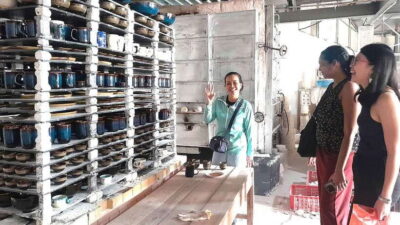
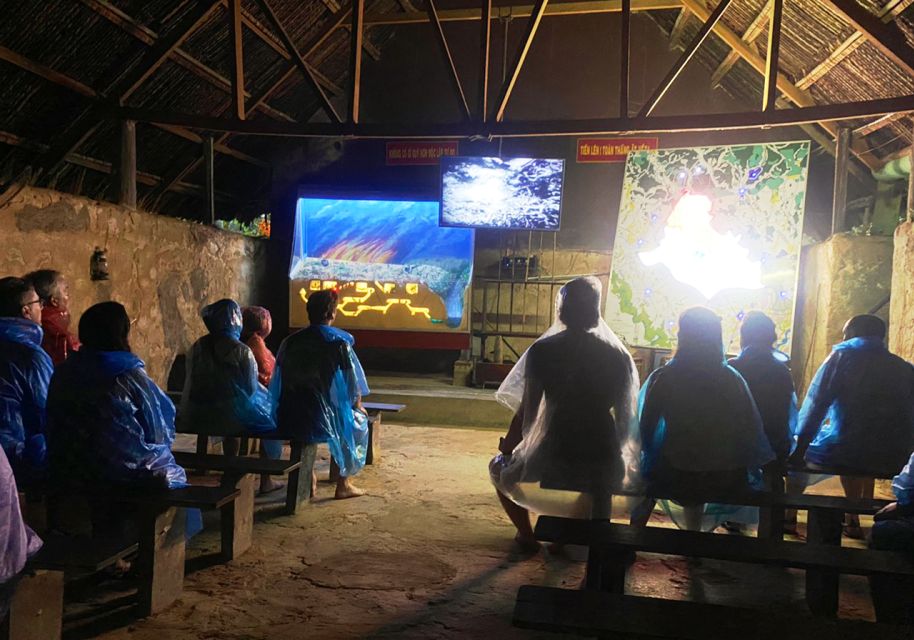
Before you go into the tunnels, you get a couple of context-building stops. First is a handicraft visit, plus time to watch a Cu Chi-themed propaganda documentary.
I like this order because it helps you understand what the site is trying to communicate before you enter the most physical part of the tour. The documentary also gives you a framework for questions that come up later, like how the tunnel system was used and why the traps were set the way they were.
This isn’t meant to be a passive add-on. It sets you up so that when the guide starts explaining the tunnel layout and trap concepts, you can follow along instead of feeling lost.
Cu Chi Tunnels: How the 100-Meter Crawl Changes Everything
The Cu Chi segment is the main event, and it’s structured for guided learning plus actual movement. You’ll get a guided tour, plus time to walk on-site, and then you’ll experience a “secret entrance” setup and crawl into a tunnel section measuring about 100 meters.
Here’s what makes this special: you’re not only shown tunnels. You get a turn navigating them. The crawl is short, but it hits the senses fast—low ceilings, narrow space, and the physical effort of moving carefully. It’s also where the guide’s explanations matter most, because you can connect what you hear about the tunnel system with what you feel in your body.
One practical consideration: this is not a stroll. If you’re very tall, have knee or back issues, or simply don’t do well in cramped spaces, go in with realistic expectations. Even the reviews I saw emphasized how challenging it can be for taller people to climb into tight bunker-like areas. You’ll want to move slowly, listen to instructions, and pace yourself.
Understanding Booby Traps Without Turning It Into a Fear Tour
Another key element is learning about the tunnel system and booby trap setups in the area. This is handled as part of the guided experience, not as shock value. The point is understanding the logic of protection and survival in that environment.
I appreciate this approach because it helps you connect the “why” behind what you see. When you understand traps as part of a larger defensive system, the site stops being just a set of holes in the ground. It becomes a designed space meant to control movement.
Just keep in mind that this is war-related content. If you’d rather avoid intense war themes, you’ll still find it factual and educational rather than sensational, but it’s not a light topic.
You can also read our reviews of more museum experiences in Ho Chi Minh City
Touch the Ex-US Army Tank: A Small Moment With Big Impact
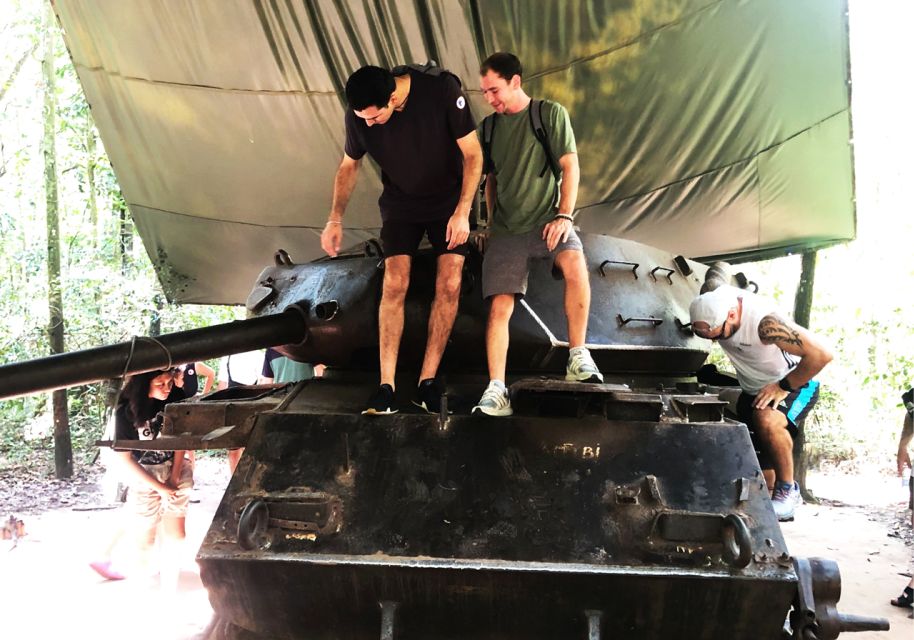
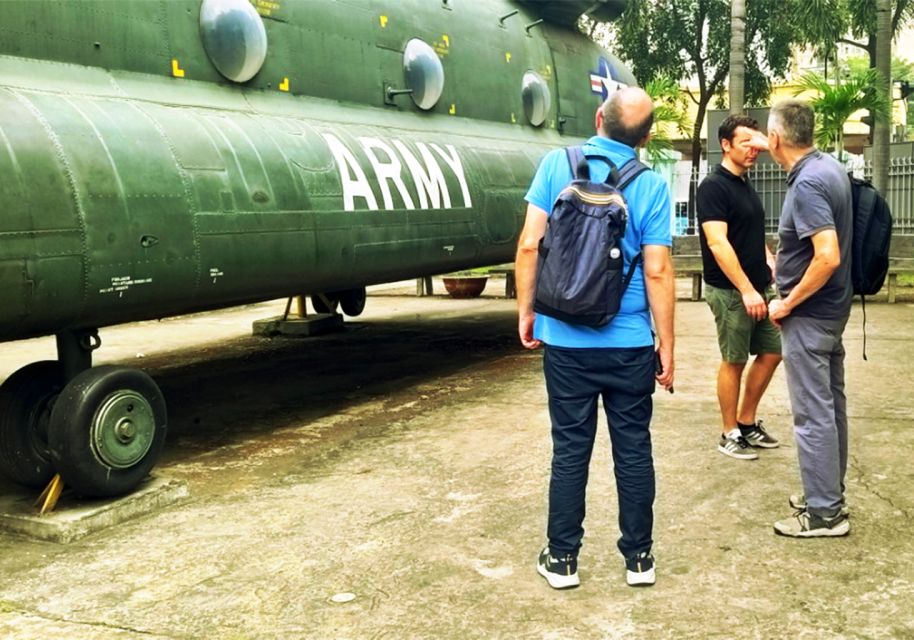
You also get the chance to experience an ex-US Army tank display by touching it. That kind of “close-up” moment is surprisingly powerful.
A photo can’t show scale the same way. Physical contact gives you a different sense of size and material weight—useful when you’re already thinking about the war environment through tunnels and bunkers. It’s a short stop, but it helps the day feel concrete.
Lunch Near the Tunnels: Pho and a Taste of Local Food
Lunch is included, and you’ll have a break during the day to eat. The tour offers pho (Vietnamese beef or chicken noodle soup) or vegetarian lunch on request. You’ll also get water and snacks.
There’s also mention of tasting locally grown Viet Cong food—tapioca—near the tunnels. I like that addition because it’s not another bland “tourist lunch.” It ties the meal to the setting you’re standing in, even if it’s just a small taste.
If you’re planning your day, this is a good time to refuel. Between walking and crawling, you’ll be glad you have a real sit-down break with included food.
War Remnants Museum and the Hidden Weapon Bunker
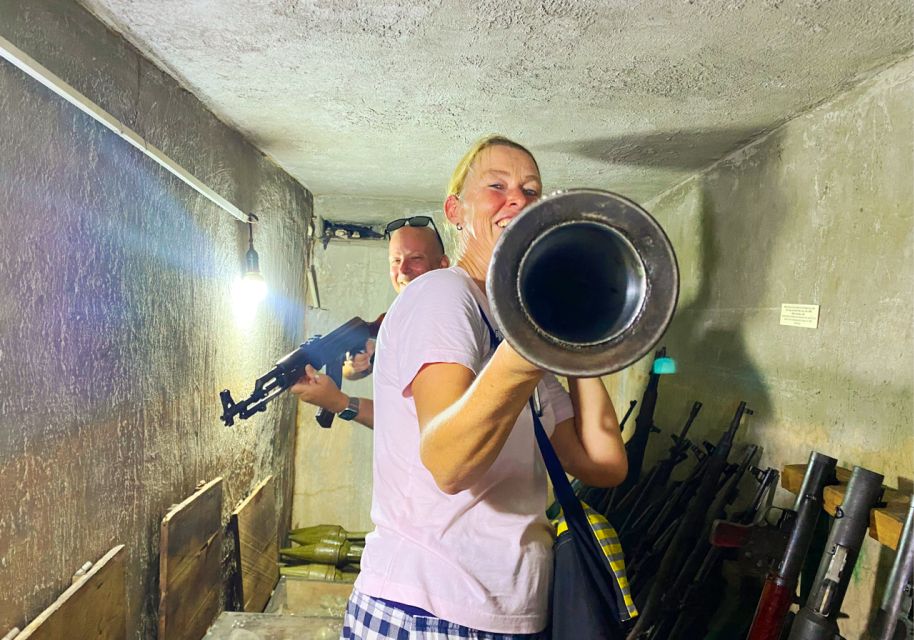
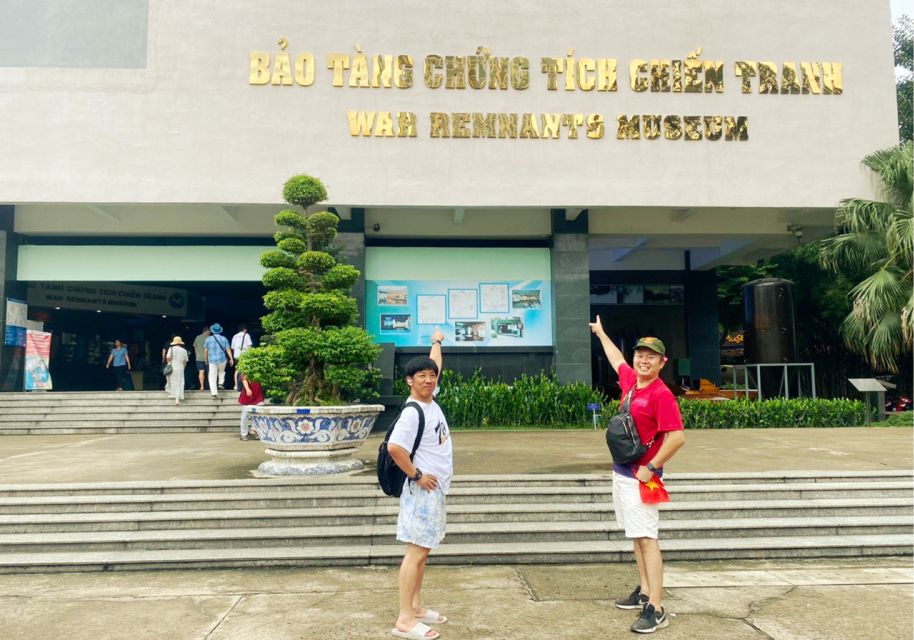
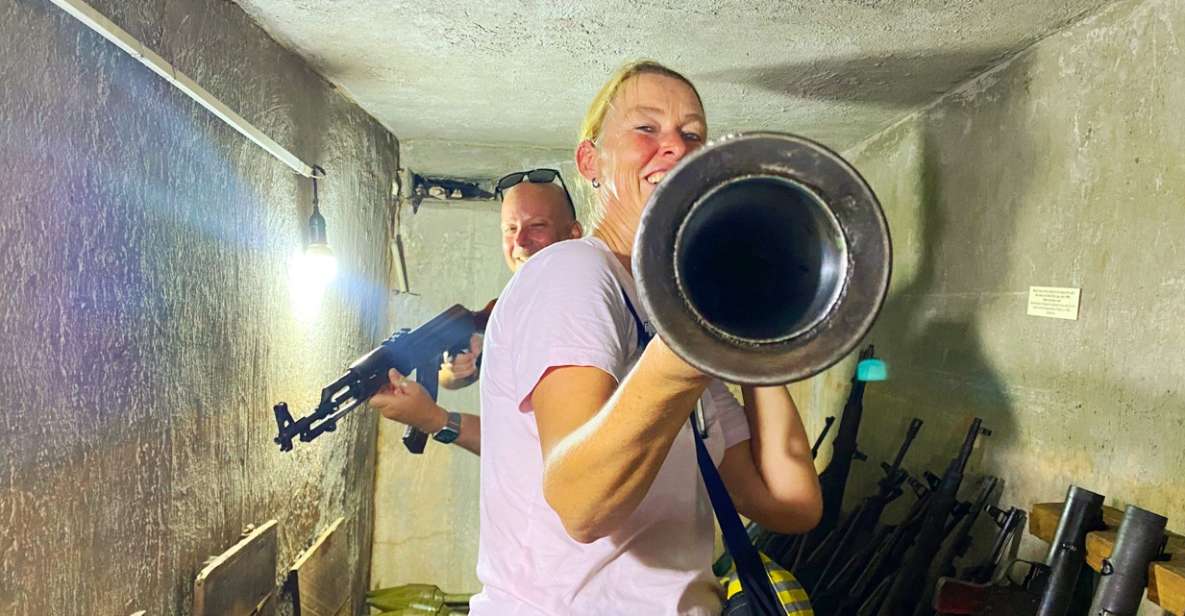
After Cu Chi, you go into Ho Chi Minh City and toward deeper war context. The War Remnants Museum gives you a more complete look at the conflict, and then there’s a stop at the hidden weapon bunker area to understand guerrilla tactics at a tactical level.
This is a good pairing because it answers a question people often have after Cu Chi: what happened beyond the tunnels? The bunker stop helps you see how concealed spaces were used for defense and operations. And the museum provides the broader backdrop to place those ideas into a wider story.
From a practical standpoint, this part of the day can feel emotionally heavy. If you like museums but not hard-hitting war exhibits, consider going in ready for reflective time rather than expecting fun.
Saigon Landmarks After a Long Day: Post Office and Notre-Dame Cathedral Church
The final stretch includes classic Saigon landmarks: the Post Office and Notre-Dame Cathedral Church. These stops are a change of pace after tunnels and museum exhibits.
I see them as a helpful finishing touch. After hours of history, you get to stand somewhere iconic and see the city’s older architecture and energy. It’s also an easy way to end your day with familiar sights without needing extra planning.
Don’t expect these stops to erase what you learned earlier. But they do help your brain reset.
Guide Quality: The Real Difference in a Day Like This
In tours like this, the guide isn’t just translating. A strong guide turns a checklist of stops into a story with cause and effect.
Joy Journeys guides are English-speaking, and you’ll know the tour guide by the Joy Journeys t-shirt. In reviews connected to this experience, guides like Logan and Nhia were specifically praised for being entertaining and informative, with Logan highlighted for making the day feel like the highlight of the trip and Nhia noted for handling everything smoothly and being a big help.
If you care about explanations that actually connect to what you’re experiencing underground, this is worth putting near the top of your Saigon priorities.
Price and Value: Is $54 Good for All This?
At $54 per person for an 8.5 to 9 hour day, you’re paying for more than just a bus ride. You’re getting:
- small-group access (max 10)
- a guided visit to Cu Chi tunnels with a guided crawl experience
- museum and bunker access as part of the program
- included lunch (pho or vegetarian)
- water and snacks
- pickup and drop-off service in District 1 and District 4
- skip the ticket line included in the experience
In other words, this isn’t a bare-bones “transport only” tour. It’s built around guided time at multiple sites and included food. If you want one day that covers Cu Chi plus serious museum context plus a bit of Saigon sightseeing, the price feels fair.
Who Should Book This Tour (and Who Might Reconsider)
I’d recommend this if:
- you want a guided Cu Chi crawl rather than a quick photo stop
- you like history you can physically understand through the tunnel environment
- you want museum context in the same day so the story feels complete
- you prefer a small group (max 10) with time to ask questions
You might want to reconsider if:
- you dislike crawling, tight spaces, or climbing into cramped areas
- you’re traveling with someone who has mobility limitations that could be strained by bunker-style entrances
This isn’t a gentle walking day, and the design of the tunnels makes that unavoidable.
Should You Book This Cu Chi and War History Day Trip?
Yes, if your goal is one high-impact day that connects underground tunnel life with museum context and Saigon landmarks. I think the value comes from the small group, the guided explanations, and the fact that you don’t only look—you crawl. That single experience changes how the rest of the history lands in your head.
If you’re worried about physical comfort, plan honestly for tight spaces and take your time during the tunnel crawl. As long as you can handle that, this is the kind of day you’ll remember long after you’ve left Saigon.
FAQ
How long is the tour?
The duration is about 8.5 to 9 hours, depending on the starting time shown when you check availability.
What does the tour cost?
It’s priced at $54 per person.
Is this a small-group tour?
Yes. It’s a small group with a maximum of 10 guests.
What language is the guide?
The tour includes a live English-speaking guide.
Where are the pickup and drop-off locations?
Pickup is available in District 1 and District 4, and drop-off is also in District 1 and District 4. If you’re outside the pickup zone, you might see the group at Notre-Dame Cathedral Church.
Do we get food during the tour?
Yes. Lunch is included (pho with beef or chicken, or vegetarian on request). Water and snacks are also provided.
Is ticket entry included?
Yes. The tour includes skip-the-ticket-line entry.
Will there be time to explore the tunnels?
Yes. You’ll have a guided tour, time to walk, and then you’ll crawl into a tunnel section about 100 meters long.
Is there war-related content in the day?
Yes. You’ll visit the War Remnants Museum and a hidden weapon bunker area, along with learning about the tunnel system and booby traps.
What Saigon landmarks are included?
You’ll visit the Post Office and Notre-Dame Cathedral Church as part of the day’s wrap-up.