
REVIEW · HANOI
Explore Bat trang village & Ceramics factories / local guide
Book on GetYourGuide →Operated by Authentic Bat Trang · Bookable on GetYourGuide
Pottery in Bat Trang feels real, not staged. This half-day trip from Hanoi brings you into the working world of Vietnamese ceramics, plus the chance to paint and make your own pieces with an English/Vietnamese guide.
I especially love how the day mixes factory know-how with an old-village feel, so you see both the tools and the people behind them. One thing to watch: lunch is billed as authentic, and if you’re vegetarian you’ll want to flag it ahead of time.
In This Review
- Key highlights you’ll care about
- Why Bat Trang ceramics are worth the trip from Hanoi
- Hanoi pickup at 115 P. Hàng Gai and the ride out to Dong Bac
- Factory stop: seeing ceramics made and hand-painted
- Lo Bau Co: the oldest pottery kiln and why it’s more than a photo stop
- Lunch in Bat Trang: fueling up without killing your momentum
- Bat Trang traditional village time: shopping with craft context
- The pottery class: what you make and what you’ll need to plan
- Price and logistics: does $50 feel fair for a ceramics day?
- Who this tour is perfect for (and who might skip it)
- Should you book the Bat Trang ceramics factory and pottery class tour?
- FAQ
- How long is the Bat Trang tour?
- Where do we meet and where do we return?
- What’s included in the price?
- What will I see at Bat Trang?
- Is lunch included, and can you accommodate vegetarians?
- Will I be able to communicate in English?
Key highlights you’ll care about
- Hands-on pottery class with materials included, not just a showroom visit
- Factory viewing of how ceramics are made and hand-painted
- Lo Bau Co oldest pottery kiln stop for historical context you can actually see
- Bat Trang Traditional Village time for browsing and understanding the craft
- Lunch included during the flow of the tour, which saves you time in Hanoi
Why Bat Trang ceramics are worth the trip from Hanoi
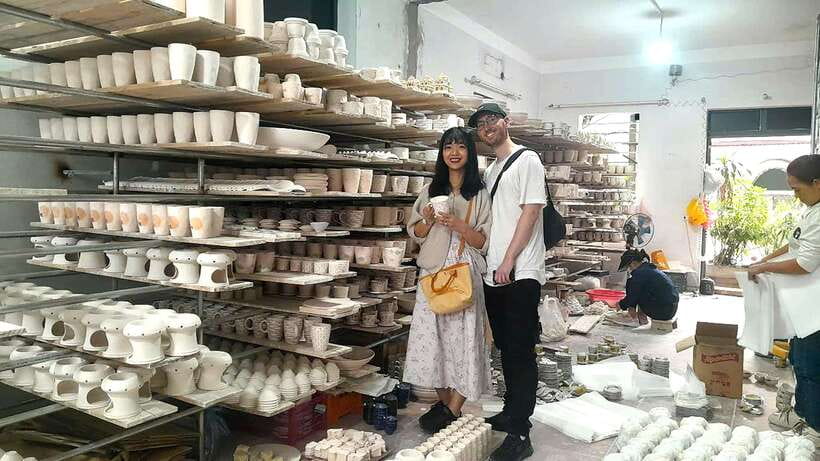
Bat Trang is only about 15 km from Hanoi’s Old Quarter, but it feels like a different rhythm. Instead of rushing through markets, you’re watching how everyday objects are born: shaped, dried, painted, and fired. That process matters because Vietnamese ceramics are not just decorative. They’re practical, repeatable craft work—passed down and refined over generations.
I like that this tour keeps your eyes on the process. You’re not only looking at finished vases and plates; you’re learning what goes into getting consistent results. And because it includes a pottery class, you’ll leave with more than photos. Even if your hands are new to clay, you’ll start to understand why certain designs take patience and why timing matters.
One more good point: the guide isn’t just translating words. On tours with guides like Sony and Tony, the explanations focus on how the workshop side and the village side connect, so your shopping (or lack of it) feels informed instead of random.
You can also read our reviews of more guided tours in Hanoi

Hanoi pickup at 115 P. Hàng Gai and the ride out to Dong Bac
You meet at 115 P. Hàng Gai and you’ll return there at the end. That pickup point is handy because it keeps the logistics simple if you’re staying around Hoan Kiem.
From there, the transport takes you out to Bat Trang in Dong Bac. The drive is long enough to reset your brain, but short enough that you still get a full, active day without feeling like you escaped to the suburbs and forgot why you left.
A small-group benefit can happen. In one guided format, there were only two people on the tour, which meant a more comfortable ride. You can’t bank on that every time, but it’s a nice reminder: if you value a calmer pace, booking for smaller parties often helps.
Factory stop: seeing ceramics made and hand-painted
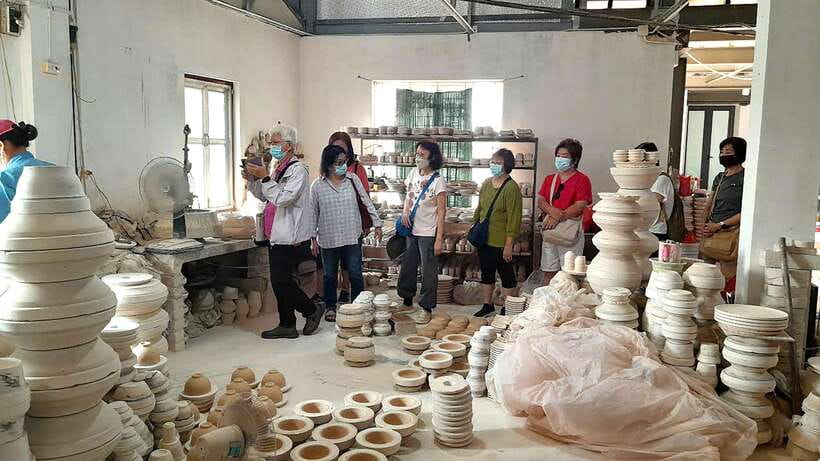
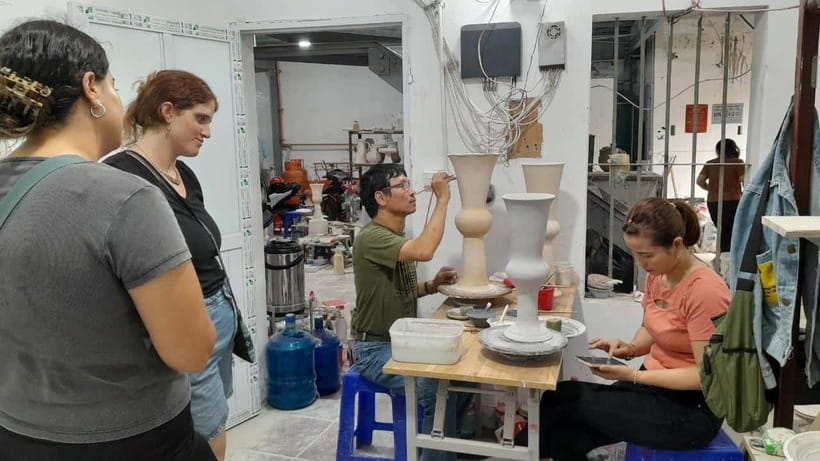
The first big payoff is the ceramics-making and painting factory visit. This is where you’ll see how work moves through stages, from shaping to decorating. The tour is designed so you can connect the finished items you’ll later see in shops with the actual steps that produced them.
Here’s what I find valuable: you get to watch how workers handle clay and how decoration gets planned. Hand-painted ceramics look effortless when you’re just browsing shelves, but up close you’ll notice repetition, careful brushwork, and a steady rhythm. That’s the point of doing this with a guide. Without context, it can just look like busy hands. With context, it becomes a craft you can describe and even copy in a small way later in the day.
You may also notice that not all products are the same. Some designs are more suited to certain techniques and firing results. Even if you’re not trying to become a ceramic expert, seeing that variety helps you shop smarter. You start asking better questions, like what kind of glaze finish you’re looking at and why the pattern styles differ.
Lo Bau Co: the oldest pottery kiln and why it’s more than a photo stop
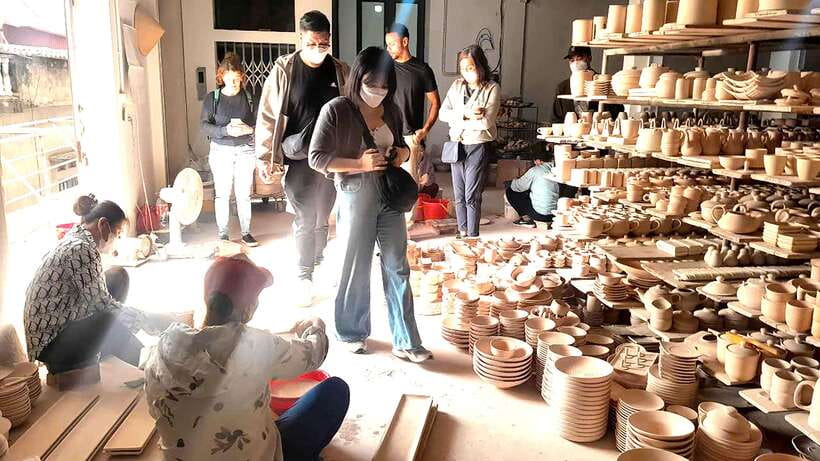
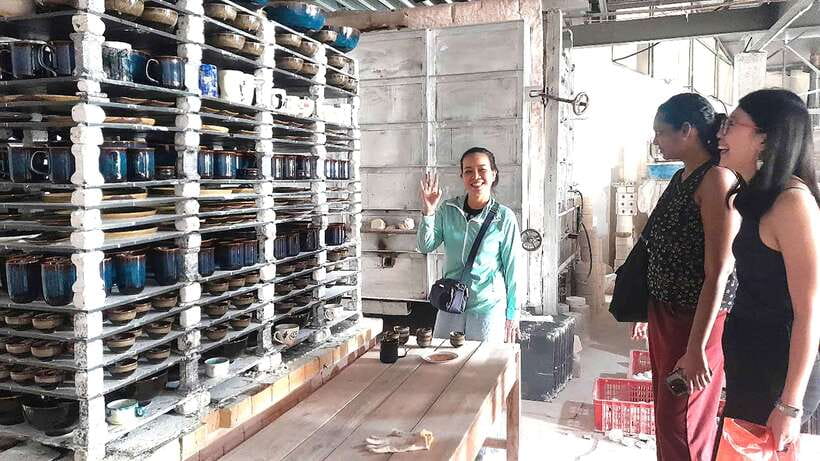
Next comes Lo Bau Co, listed as the oldest pottery kiln. This stop adds weight to the day. A factory visit shows you what’s happening now; an old kiln stop helps you understand that the skills didn’t appear out of nowhere.
What makes Lo Bau Co useful on a tour like this is that it gives you a tangible anchor. You’re not just hearing about heritage in vague terms. You’re looking at the place where firing traditions developed and continue to influence how people produce ceramics.
Also, this is a good moment to slow down. If your earlier factory stop felt fast, Lo Bau Co gives your brain something to process. It’s easier to appreciate design choices after you’ve seen the kiln side of the craft, because firing affects color depth, texture, and durability.
Lunch in Bat Trang: fueling up without killing your momentum
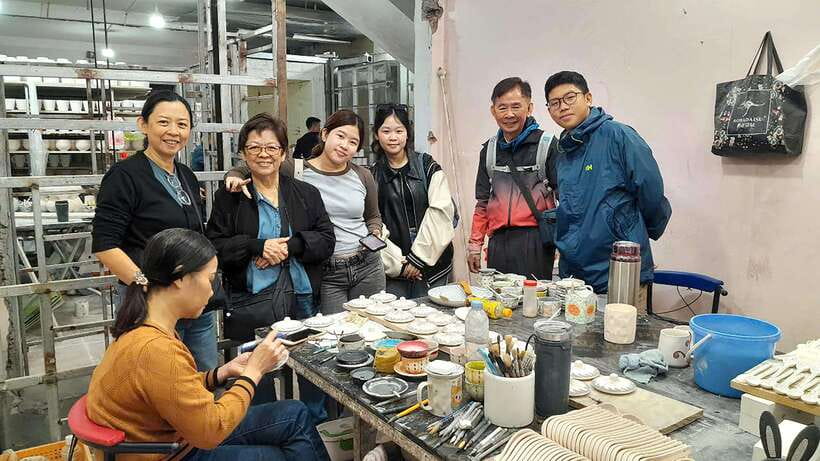
Lunch is included, and the tour keeps it within the flow of the day so you don’t lose time hunting for food on your own. In Bat Trang, lunch is the kind of practical break you’ll be thankful for because the rest of the afternoon includes walking, observing, and then hands-on clay work.
One important practical note: the lunch is described as authentic Vietnamese food, and if you’re vegetarian, make sure you inform the operator before your visit. That’s not picky detail. It’s the difference between settling in comfortably and having an awkward meal that doesn’t match your needs.
If you have dietary restrictions beyond vegetarian (allergies, no pork, gluten limits), you should also plan on sharing them. The tour data only explicitly flags vegetarian, so don’t assume they’ll handle everything without advance notice.






Bat Trang traditional village time: shopping with craft context

After lunch, you’ll head into Bat Trang Traditional Village time. This is where ceramics move from workshop knowledge to everyday culture. You’ll see storefronts, displays, and the broader village setting that made this craft famous.
This is also where your factory experience pays off. When you’re browsing, you’ll recognize the design logic you saw earlier. You’ll spot differences in patterns and decoration style, and you’ll understand why certain items look more carefully finished.
A smart approach here is to treat shopping as research. Decide what you actually want to buy—something you’ll use, gift, or keep as a memory—and then compare items based on how the decoration appears and how it’s presented. Because ceramics here come in many grades and styles, you’ll get more satisfaction if you don’t just buy the first thing that looks pretty.
If custom pieces interest you, keep in mind that some workshops may offer personalized decoration. On one guided stop, a personalised plate with family wedding details was priced at 880,000 VND. That tells you there’s room for customization if you ask, but you should still confirm costs and how the final piece will be handled before you commit.
The pottery class: what you make and what you’ll need to plan
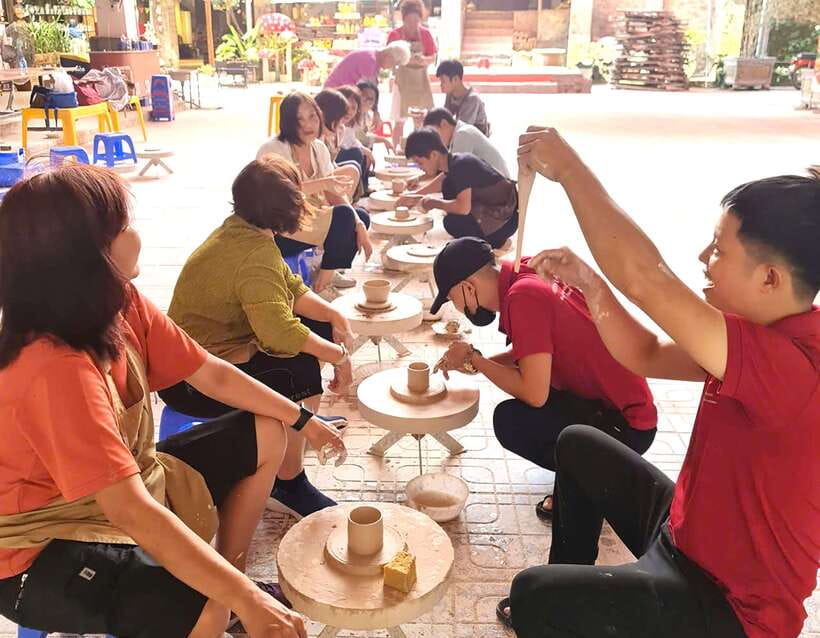
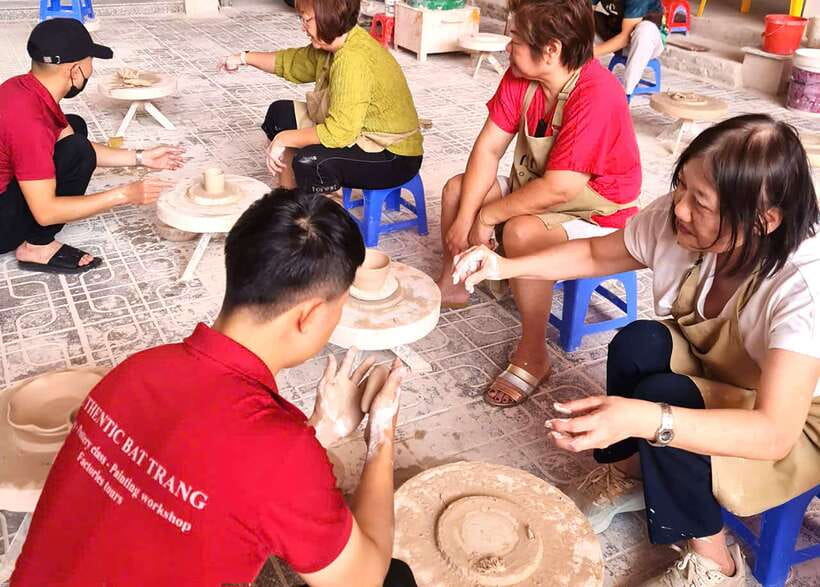
The final hands-on portion is the pottery class, with materials included. This is the part most people will remember because it turns watching into doing.
In one small-group class format, you made three pieces, and one piece would be fired and glazed for free. Extra pieces required additional payment, but the cost was described as reasonable. Your exact output can vary by group and timing, so treat this as an example of what the class can look like rather than a guaranteed package deal.
Here’s the practical takeaway: before you start, ask the guide how the pieces will be finished after your session. If you’re aiming to take something home, you’ll want to know whether firing and glazing happen on-site and how pickup or handling works afterward.
Also, plan when in your Hanoi trip you do this. If you leave the area soon after your class, you may need an option to send pieces to your next destination. In one case, the guide helped with posting, and the poster described the postage as reasonable. The lesson is simple: do the class early enough that you have time to sort out shipping or pickup.
And yes, the class really is about patience. Guides and staff stay with you through shaping and decoration, so even if you think you’re not artistic, you’re not on your own.
Price and logistics: does $50 feel fair for a ceramics day?
At $50 per person for a roughly half-day experience, the real question is value, not math. You’re paying for a full guided day that includes:
- transport to and from Bat Trang
- entry to Bat Trang Ceramic Village
- lunch
- pottery class materials
- an English/Vietnamese guide
That’s not just a lecture. You’re getting an organized route: factory viewing, an old kiln stop at Lo Bau Co, village time for context and browsing, and then the class where your hands learn what your eyes saw.
Where the price can feel extra worth it is when you factor in time saved. Doing Bat Trang on your own means coordinating transport, finding the right workshops, arranging a class, and piecing together where to go for the old kiln. With a guide, the day feels like a coherent craft route instead of a scavenger hunt.
The only “cost” to consider is that Bat Trang is also a shopping environment. That can be a plus or a distraction depending on your style. If you’re price-sensitive, decide your budget before you go into village shops so you don’t get swept up by the sheer variety of ceramics.
Who this tour is perfect for (and who might skip it)
This tour is a strong fit if you:
- want a hands-on pottery class without researching workshops on your own
- like learning through observation—watching how things are actually made
- enjoy culture stops that connect to a craft, not just a landmark photo
- want a guided day from Hanoi’s Old Quarter area with minimal hassle
You might prefer a different approach if you:
- only want to browse ceramics shops and don’t care about making anything
- have strict dietary needs beyond vegetarian and want very specific menus (the tour data only flags vegetarian)
- don’t have flexibility in your schedule, because the day runs on set timing and you’ll likely want to finish the class and get your pieces handled afterward
Should you book the Bat Trang ceramics factory and pottery class tour?
Yes, I think you should book it if you want more than a cookie-cutter market stop. This itinerary is built around the craft itself: factory viewing, Lo Bau Co, village time, and then making your own piece. That combination is what makes the day feel useful instead of merely entertaining.
Book it especially if you’re the type who learns best with your eyes and your hands. The class turns the day from watching ceramics happen into understanding why it happens. And with an English/Vietnamese guide—on tours led by guides like Sony or Tony—your questions won’t float in the air. You’ll get real explanations that connect the workshop work to what you see in the shops.
If you do book, plan one simple thing: do the pottery class early enough that you’re not rushing to ship or retrieve fired pieces on your last day in Hanoi. That one decision makes the souvenir much easier.
FAQ
How long is the Bat Trang tour?
The tour is listed as valid for 7 hours, and you should check availability to see starting times. It also runs as a half-day style itinerary from Hanoi.
Where do we meet and where do we return?
You meet at 115 P. Hàng Gai and the tour returns you there at the end.
What’s included in the price?
The tour includes transport to and from Bat Trang, entry tickets to Bat Trang Ceramic Village, lunch, materials for the pottery class, and an English/Vietnamese guide.
What will I see at Bat Trang?
You’ll visit pottery-making and painting areas, see Lo Bau Co (the oldest pottery kiln), and spend time in the Bat Trang Traditional Village.
Is lunch included, and can you accommodate vegetarians?
Lunch is included. The tour notes that if you are vegetarian, you should inform the operator prior to your visit.
Will I be able to communicate in English?
Yes. The tour provides a live guide in English and Vietnamese.