REVIEW · HO CHI MINH CITY
Cu Chi Tunnels Guided Tour: Vietnam War History Half-Day
Book on GetYourGuide →Operated by SST Travel · Bookable on GetYourGuide
Cu Chi Tunnels hit harder than you expect. A guided half-day tour takes you from Ho Chi Minh City by A/C bus to the underground world, with an English-speaking guide setting the Vietnam War context before you step into history.
I love the hands-on way the site is explained: you’ll see preserved tunnel spaces, hidden trapdoors, and war-era areas like bunkers, kitchens, and improvised hospital rooms—then you can try an optional crawl through a section of tunnel. One thing to think about up front: the tour is not suitable if claustrophobia is an issue, since passages are tight and there are stairs and uneven steps to manage.
In This Review
- Key moments that make this tour worth your time
- Getting to Cu Chi: the A/C ride that makes the day work
- Your guide in the front seat: war stories you can follow
- What you’ll see underground: traps, hidden rooms, and day-to-day survival
- The optional crawl: what “tunnel life” feels like in real space
- Snacks, tea, and the artsy restroom stop
- Group size choice: personal vibe vs better price
- Price and value: what $16 covers (and what costs extra)
- What to bring and how to avoid small frustrations
- Who should book this tour, and who should skip it
- Should you book the Cu Chi Tunnels half-day guided tour?
- FAQ
- What is included in the Cu Chi Tunnels half-day guided tour?
- Do I need to pay extra for lunch?
- What are the tour departure times?
- Is the tunnel crawl required?
- Is this tour suitable for people with claustrophobia?
- Is smoking allowed during the tour?
- What should I bring with me?
- What happens during the restroom break?
- Are there any extra charges on certain travel dates?
Key moments that make this tour worth your time
- Fast half-day format with morning and afternoon departures, so you don’t lose a whole day to one site.
- English guide storytelling that ties the tunnels to what life and strategy looked like during the Vietnam War.
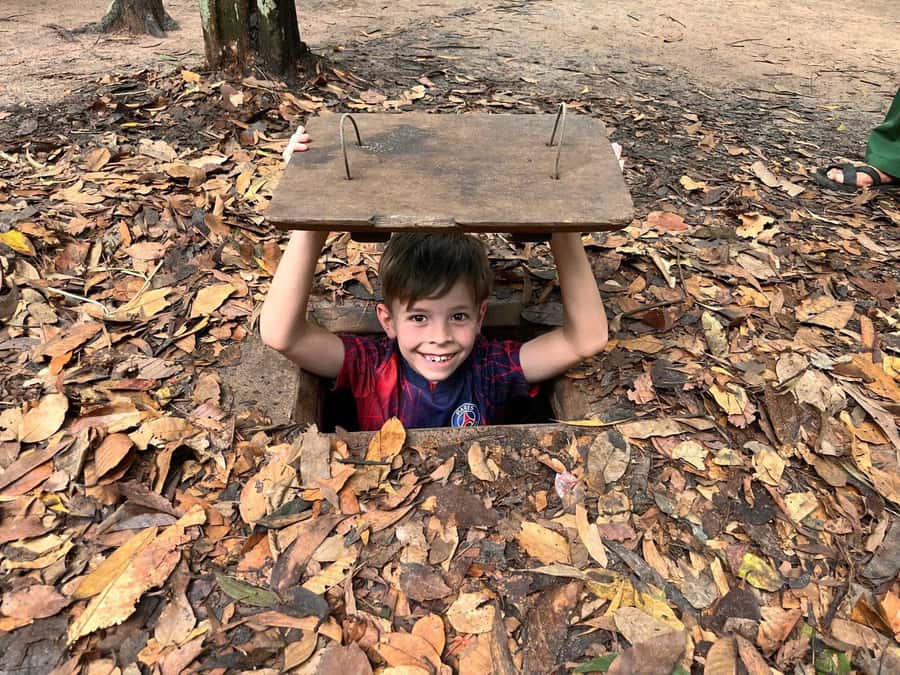
- Preserved tunnel systems you can walk through, with trap features and underground spaces you can actually see.
- Optional crawl inside the tunnels for a physical sense of what being underground feels like.
- Small-group option (up to 16) if you want more back-and-forth with your guide, versus a bigger group for lower cost.
- Included snacks and drinks like tapioca, hot tea, bottled water, plus wet tissue for the heat and dust.
Getting to Cu Chi: the A/C ride that makes the day work
The biggest practical win here is the timing plus transport. You’re picked up from central Ho Chi Minh City and whisked out on an air-conditioned bus or van (it depends on which vehicle option you book). This matters because Cu Chi is far enough that self-arranging can eat up your energy.
You can choose a morning run (about 7:30 AM–2:30 PM) or an afternoon run (about 12:30 PM–7:30 PM). The morning option is great if you want to get it done early and still have daylight to explore Ho Chi Minh City afterward. The afternoon option fits better if you’re sleeping in, dealing with city plans, or you just want the tunnels to be your late-day history stop.
Pickup times are approximate, and the guide may arrive a bit earlier or later. Here’s the part you should treat seriously: if you’re more than 10 minutes late, your booking can be cancelled with no refund. I’d rather you arrive early with a coffee in your hand than sprint to the curb.
You can also read our reviews of more guided tours in Ho Chi Minh City

Your guide in the front seat: war stories you can follow
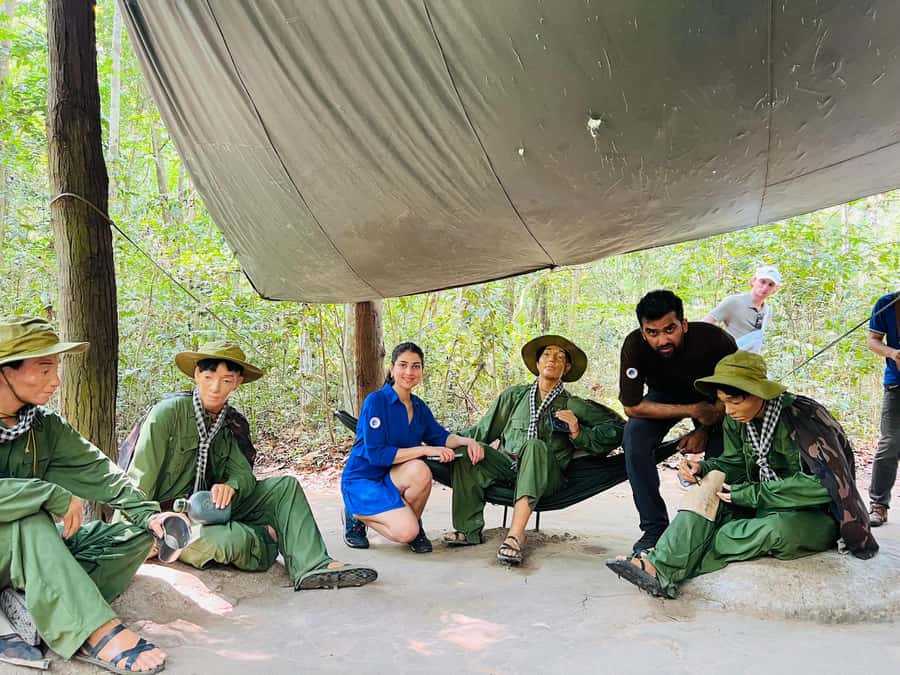
Cu Chi works best when someone helps you connect the dots. That’s why the guide is such a big deal on this tour. The format is designed so you’re not just staring at tunnels—you’re hearing how the Cu Chi region became a symbol of resistance, and why these underground systems were built the way they were.
Across many departures, the best guides bring the story alive with vivid details and quick answers. Names that have shown up in the tour experience include Khoa, Lenny, Robert, Bao, Khang, and Rick. Even when you don’t get one of those exact guides, the key point stays the same: this is a guided stop with an English-speaking narrator, not a silent walk-through.
If you like asking questions, you’ll likely enjoy the pace. The tour is structured enough that you can learn the “why” behind what you’re seeing, while still having time to ask practical things like how people moved through the tunnels or what certain traps were meant to do.
What you’ll see underground: traps, hidden rooms, and day-to-day survival
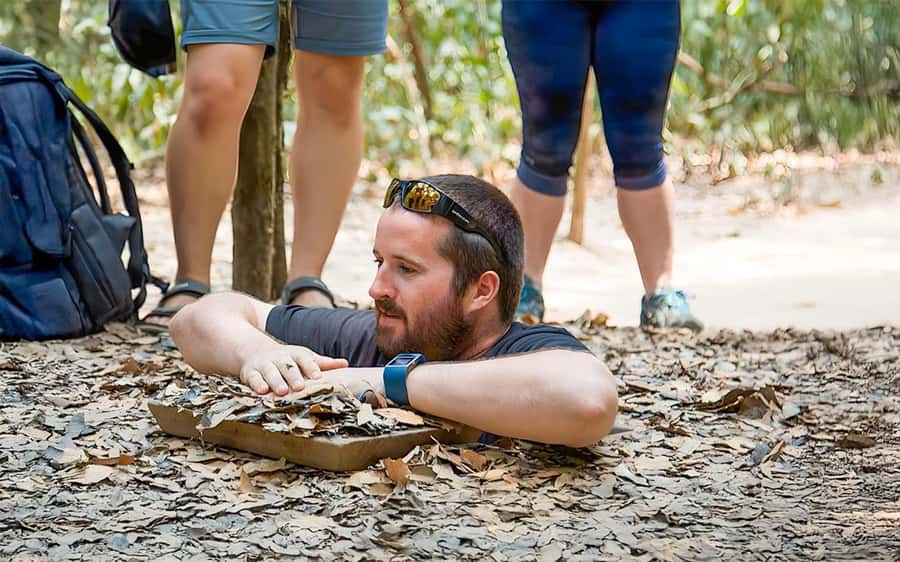
When you arrive, you explore a preserved section of the vast tunnel network. This is where the tour turns from educational to memorable.
Expect to spot features that make the tunnels feel engineered, not just dug-out holes. You’ll see:
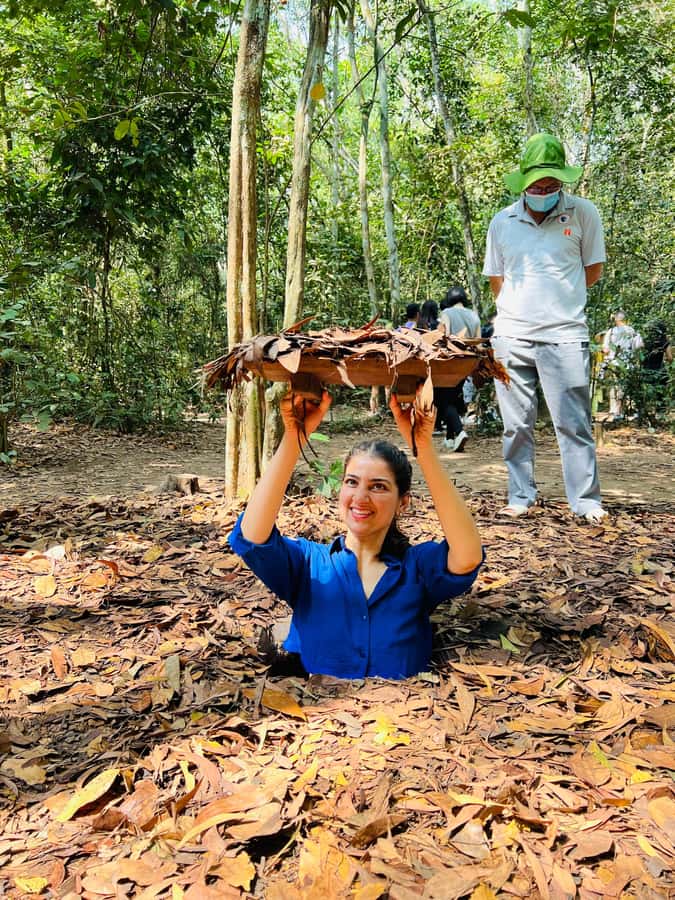
- Hidden trapdoors and concealed openings
- Underground bunkers
- Improvised hospital and kitchen areas
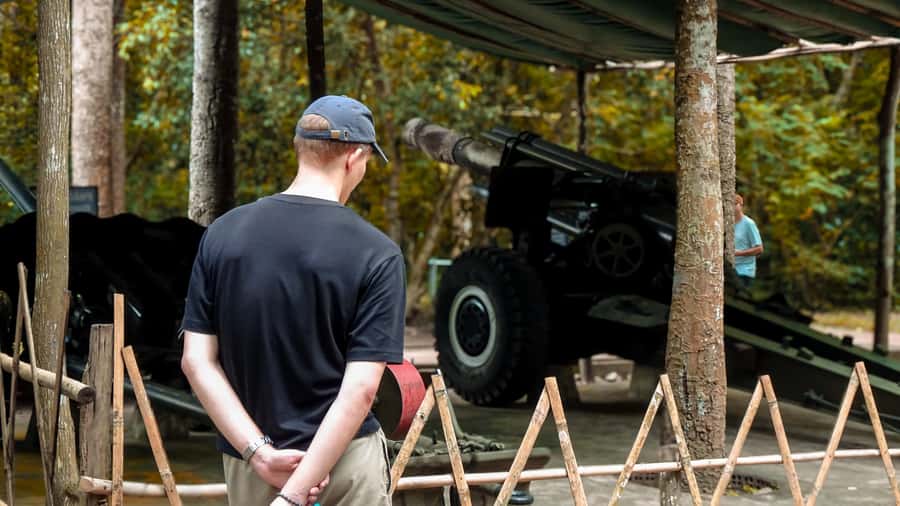
- Displays that help explain weapons and booby traps (so you get context, not just shock-value)
The value here is how much the guide connects the physical details to daily life. A kitchen space isn’t just a kitchen space—it’s a survival setup. A bunker isn’t just a bunker—it’s a place meant for hiding, waiting, and staying functional under pressure.
Also, you’ll get time to look around at weapon and trap displays before you head deeper into the tunnel experience. This helps because it gives you a reference point for what you’re about to feel underground.
The optional crawl: what “tunnel life” feels like in real space
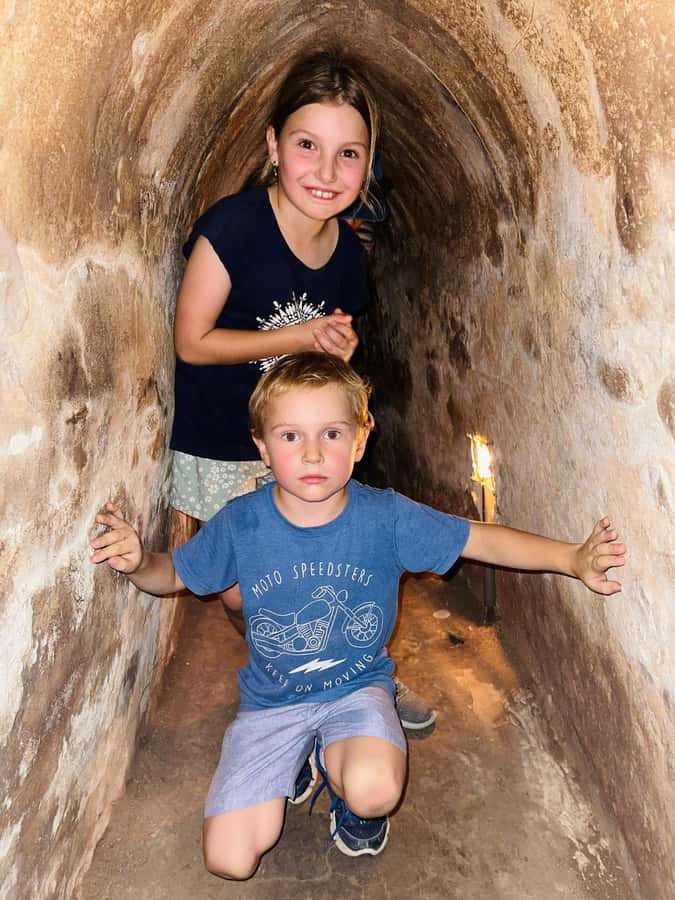
This tour offers an optional crawl through a tunnel section. You’re not required to do it, but if you can manage it, you’ll get a much stronger sense of what conditions were like.
A key consideration: it’s tight. Even if the crawl section is short, it’s still a true “you are underground now” moment. One guide-led experience shared that the crawl was about 10 meters, with up-and-down steps and good lighting. You should treat that as guidance for what to expect, not a guarantee for every departure.
If you’re tall, pack that into your mental planning. One practical note from the experience details is that the bus space can be tight for tall people—so you’ll want to come prepared with a comfortable posture and shoes you can handle on stairs at the site.
If you’re considering the crawl and you’re on the edge of uncomfortable, don’t push it. The tour is not suitable for people with claustrophobia, and you should listen to your own limits. Underground history is powerful—but it shouldn’t become a panic situation.
Snacks, tea, and the artsy restroom stop
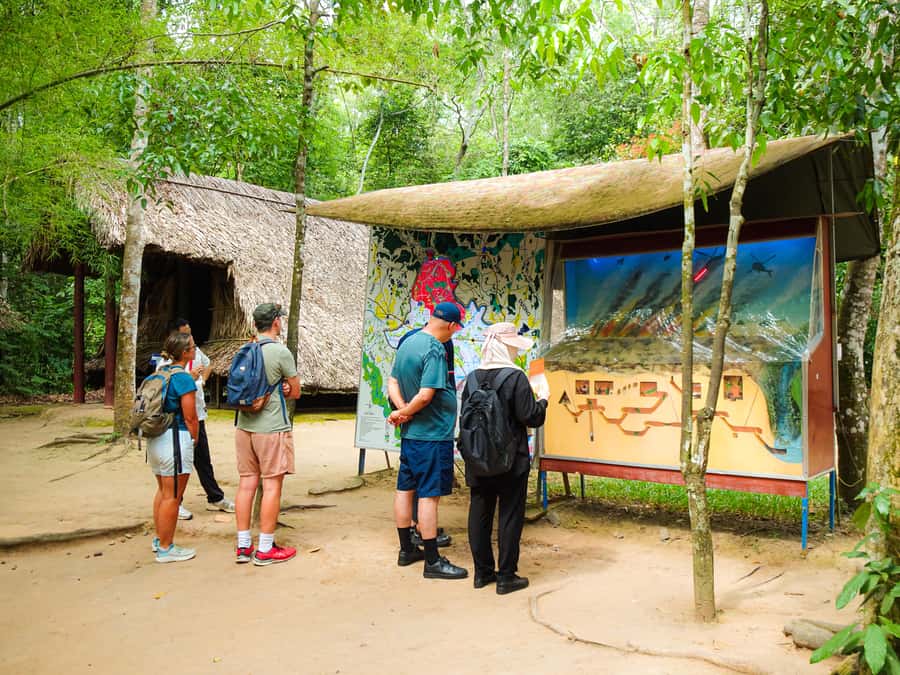
The tour keeps you moving, and it does provide comfort basics along the way. Included are bottled water, a snack, and tapioca with hot tea, plus wet tissue. In Ho Chi Minh City heat, that small package matters more than you’d think.
There’s also a restroom break with an art exhibition featuring traditional lacquer paintings. Purchasing is optional. This stop is usually a breather where you can reset before you continue.
One extra pattern shows up in some versions of this overall experience: you might have a chance to visit a local workshop making mother-of-pearl artwork (some experiences also link this work to communities impacted by agent orange). On certain days, there’s also been an opportunity to try shooting with an AK47 at a shooting range, but that’s separate and requires cash in Vietnamese dong if you choose it.
If you want these extras, ask your guide on the day what’s on the schedule at that moment. It’s the kind of question that saves surprises.
You can also read our reviews of more historical tours in Ho Chi Minh City

Group size choice: personal vibe vs better price
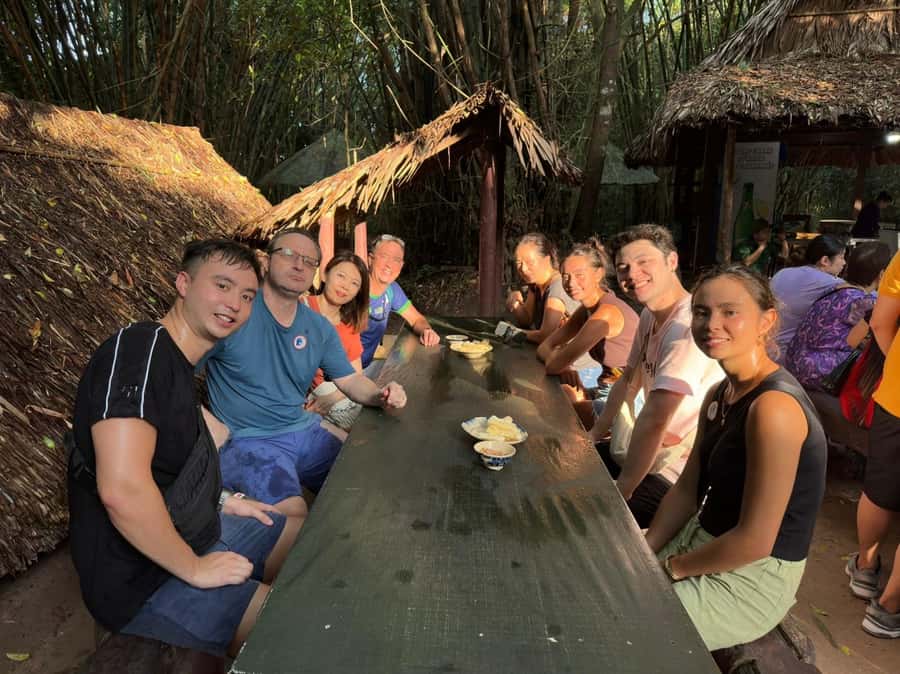
You can choose between:
- Small group (max 16 pax) for a more personal feel and more time to interact with your guide
- Big group (up to 35 pax) for better pricing and a more social, meet-new-people energy
This is one of those rare cases where group size actually affects your experience. In a tunnel site, there’s a natural rhythm—stop, explain, walk, explain, repeat. With a smaller group, it’s easier to hear the guide clearly, ask questions, and keep your pace comfortable. With a larger group, you’ll still learn plenty, but you may do more “follow along” than “talk it through.”
If Cu Chi is one of the main highlights of your trip and you care about the story details, I’d lean small. If you’re optimizing budget and you just want a strong guided introduction, the bigger group can make a lot of sense.
Price and value: what $16 covers (and what costs extra)
At about $16 per person, this tour is priced like a practical, guided access pass—especially for something far enough out that you’d spend time and money just getting there.
What you’re getting for that price is more than the tunnel entrance:
- Round-trip pickup/drop-off (as per your selected option)
- A/C transport to Cu Chi
- Cu Chi entrance ticket
- English-speaking guide
- Tapioca and hot tea, plus a snack, bottled water, and wet tissue
Lunch isn’t included, so you’ll either eat on your own afterward or plan a pre/post meal around your tour time.
One more cost note: a holiday surcharge of 100,000 VND applies for travel on certain dates (listed for 2025 and 2026). If your dates match one of those, you’ll pay on-site.
If you’re comparing value, think about this way: you’re paying for transport, ticket, guide interpretation, and basic refreshment. That’s why the price feels workable even if you decide later you want to spend a bit extra on the city’s museums.
What to bring and how to avoid small frustrations
This is one of the tours where “small basics” prevent the day from turning annoying.
Bring:
- Comfortable shoes (expect stairs and uneven steps)
- A hat (sun and heat are real when you’re outside)
- A camera (photos are a big part of the iconic tunnel moment)
- Water (it’s included, but having a little extra never hurts)
- Comfortable clothes you can move in
Don’t plan on smoking at the site. It’s not allowed.
Also plan your day so you’re not rushing afterward. You’ll want time for the feelings this place gives you, plus time to eat. If you’re connecting to other Ho Chi Minh City sights, the timing works well—but don’t schedule dinner 10 minutes after pickup time. That’s how people miss buses.
One more helpful tip: if you’re worried about luggage, some experiences note that staff handled luggage needs and could drop you closer to other stops when it’s on the route. Still, don’t assume that every day is identical—just pack smart and keep valuables with you.
Who should book this tour, and who should skip it
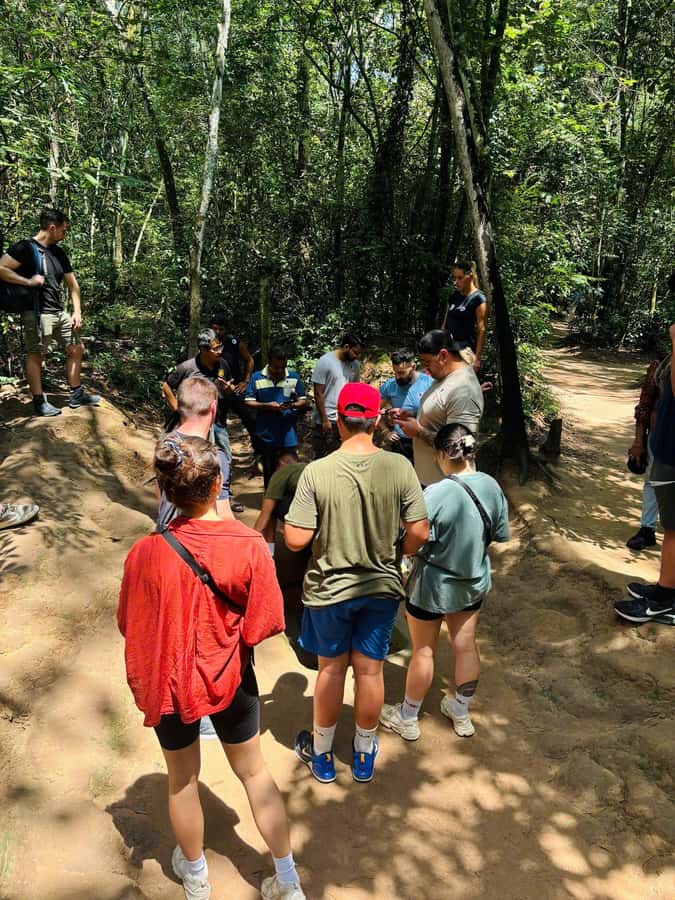
This Cu Chi option is a good fit if you want:
- A guided introduction to Cu Chi and the Vietnam War
- A half-day structure that doesn’t steal your whole trip
- An experience with both explanation and hands-on tunnel time
- The convenience of hotel pickup/drop-off plus A/C transport
It’s not the right fit if:
- You’re pregnant
- You have claustrophobia or feel strongly uncomfortable with tight spaces
- You want a long, slow, self-paced visit (this is set up for a half-day block, not hours and hours of wandering)
If you’re the type who likes to learn as you go—question, walk, listen, look—this will land well.
Should you book the Cu Chi Tunnels half-day guided tour?
Book it if you want a solid, structured visit with an English-speaking guide, A/C transport out of the city, and enough tunnel time to feel the reality of the underground life. At around $16, the included guide + transport + ticket + refreshments is hard to beat for a war-history stop.
Hold off if you’re likely to struggle with tight spaces, or if your idea of the perfect museum day is silent and self-paced. In that case, you’ll be fighting the physical limits more than learning the story.
If you book, do one thing that pays off: show up on time. Then bring good shoes and a hat, and treat the tunnel crawl as optional. You’ll still get the meaning—without forcing discomfort.
FAQ
What is included in the Cu Chi Tunnels half-day guided tour?
It includes hotel pickup and drop-off (as per the selected option), air-conditioned transportation, the Cu Chi entrance ticket, an English-speaking guide, tapioca and hot tea, a snack, bottled water, and wet tissue.
Do I need to pay extra for lunch?
Yes. Lunch is not included.
What are the tour departure times?
There are two options: a morning tour (about 7:30 AM to 2:30 PM) and an afternoon tour (about 12:30 PM to 7:30 PM).
Is the tunnel crawl required?
No. The crawl is optional.
Is this tour suitable for people with claustrophobia?
No. It is not suitable for people with claustrophobia.
Is smoking allowed during the tour?
No. Smoking is not allowed.
What should I bring with me?
You’ll want comfortable shoes, a hat, a camera, water, and comfortable clothes.
What happens during the restroom break?
There’s a stop for restrooms and an art exhibition with traditional lacquer paintings. Buying the art is not mandatory.
Are there any extra charges on certain travel dates?
Yes. A holiday surcharge of 100,000 VND applies on specific dates listed for 2025 and 2026, and it’s paid on-site.