REVIEW · HO CHI MINH CITY
HCMC: Cu Chi Less-Crowded Ben Duoc Tunnels Half-Day Tour
Book on GetYourGuide →Operated by Joy_Journeys · Bookable on GetYourGuide
Crawling Cu Chi is not for the claustrophobic. This less-crowded Ben Duoc half-day tour takes you away from the biggest crowds, and guides like Ken often turn the tunnels into a real story instead of a slideshow. I love the secret entrance crawl and preserved booby traps you can actually spot, and I love how personal, human details come through from your guide’s war-era storytelling. The main drawback to plan for: the tunnels are tight, dark, and warm, so claustrophobia or weak knees can be a real issue.
Beyond the underground part, the day includes a countryside van ride from Ho Chi Minh City, pickup and drop-off in District 1 and District 4, a stop at a local handicraft center, and tapioca tastings after you surface. If you want an extra thrill, there’s an optional onsite shooting range upgrade for real-gun practice (AK47, M16, and possibly M1), with fees paid onsite.
In This Review
- Key Points You’ll Care About
- Why Ben Duoc Feels Different From the Main Cu Chi Route
- The Secret Entrance Crawl: Tight Passages, Booby Traps, and a Tank Relic
- Tan Phu Trung Ward: Propaganda and the Hoang Cam Underground Kitchen
- Handicrafts and Tapioca Tastings: Small Stops With Real Meaning
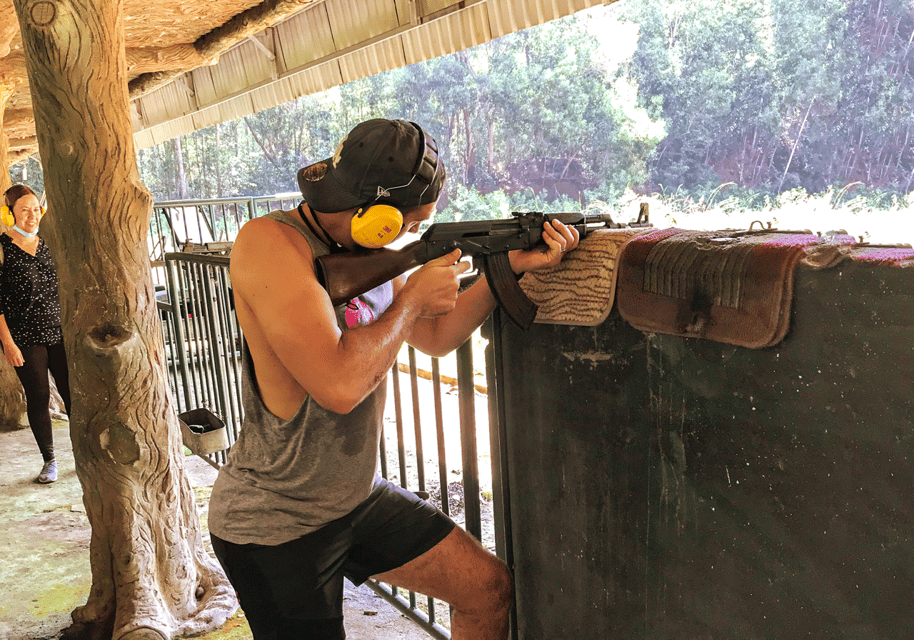
- Optional AK47 and M16 Shooting Range: Thrill, Fees, and Safety Basics
- Getting There From District 1 or 4 and How Long It Really Takes
- Value for $31: What You Get for the Money
- Should You Book This Less-Crowded Ben Duoc Tour?
- FAQ
- How long is the Cu Chi Less-Crowded Ben Duoc Tunnels tour?
- What’s included in the tour price?
- Is the shooting range included?
- Where do hotel pickup and drop-off happen?
- Is the tour guide available in English?
- Is there any food included besides water?
- What should I bring?
- Who is this tour not suitable for?
- What if the tour is canceled due to weather or not meeting the minimum travelers?
Key Points You’ll Care About
- Ben Duoc, not the main crush. You’re heading to a less-touristy section of the Cu Chi system.
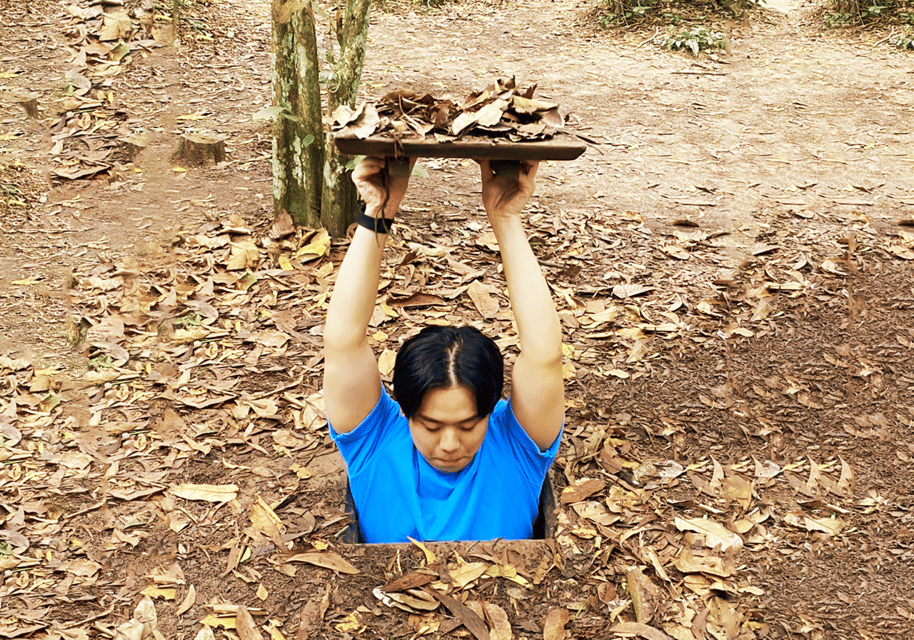
- Secret entrance crawling. You don’t just walk through exhibits—you get low and move like a soldier did.
- Booby traps you can see up close. Many are preserved to explain how the tunnels were protected.
- Propaganda + the Hoang Cam underground kitchen. You’ll connect the tunnels to everyday wartime survival tricks.
- Tapioca tastings after the crawl. It’s a simple food stop, but it lands because you just saw the context.
- Optional shooting range upgrade. Costs extra onsite, but it’s one of the biggest “choose-your-own-thrill” moments.
Why Ben Duoc Feels Different From the Main Cu Chi Route
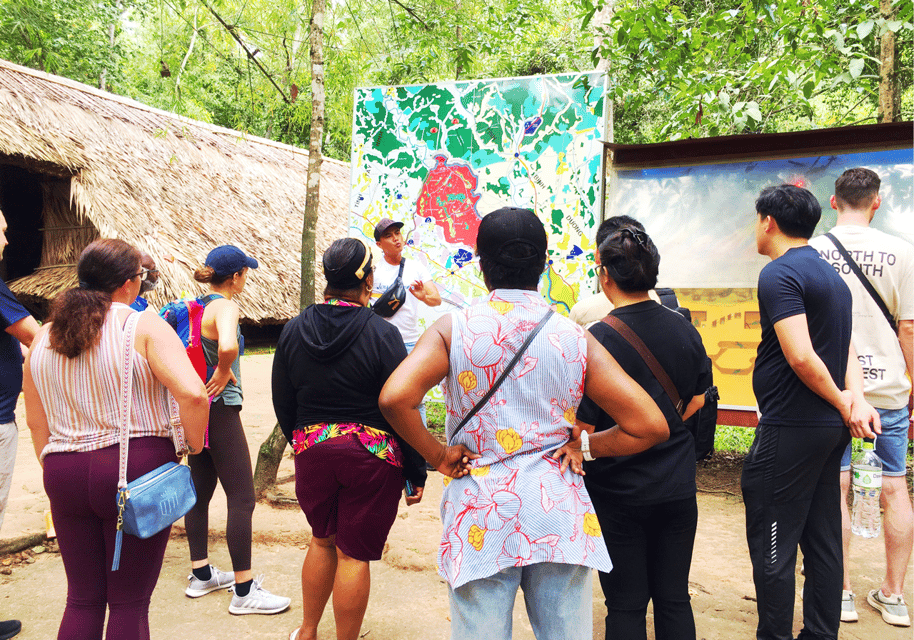
The big promise here is the Ben Duoc area, positioned as the less-crowded side of Cu Chi. In practice, that matters because the tunnels are physically restrictive. If you’re stuck behind a line of people, it turns the experience into stop-and-go stress. When the group is smaller and the route is quieter, you can move at a more realistic pace—slow enough to look, crouch, and process, not sprint through.
I also like the way this tour sets expectations: it’s not trying to sell you a Hollywood version of the war. The focus is underground life—how people hid, moved, and fought—so you get more than a quick photo stop. Guides tied to this tour (names you may hear include Ken, Tommy, Tri, Kero, Nia, and Huy) tend to use clear, story-based explanations, including personal or family-linked details shared in plain English.
One more practical upside: the less-touristy setting helps you ask questions without the pressure of a packed schedule. You’ll often spend real time at specific tunnel points, including demonstrations tied to trap design and the “logic” of the tunnels. That’s where this tour earns its “worth it” reputation.
You can also read our reviews of more tours and experiences in Ho Chi Minh City

The Secret Entrance Crawl: Tight Passages, Booby Traps, and a Tank Relic
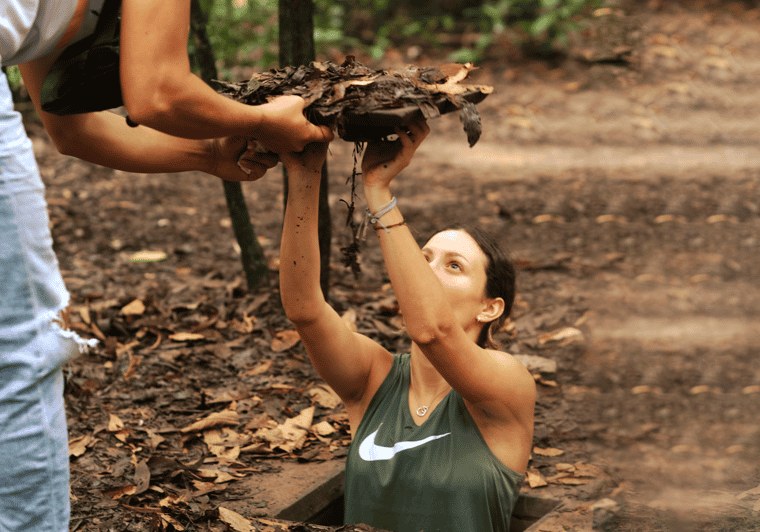
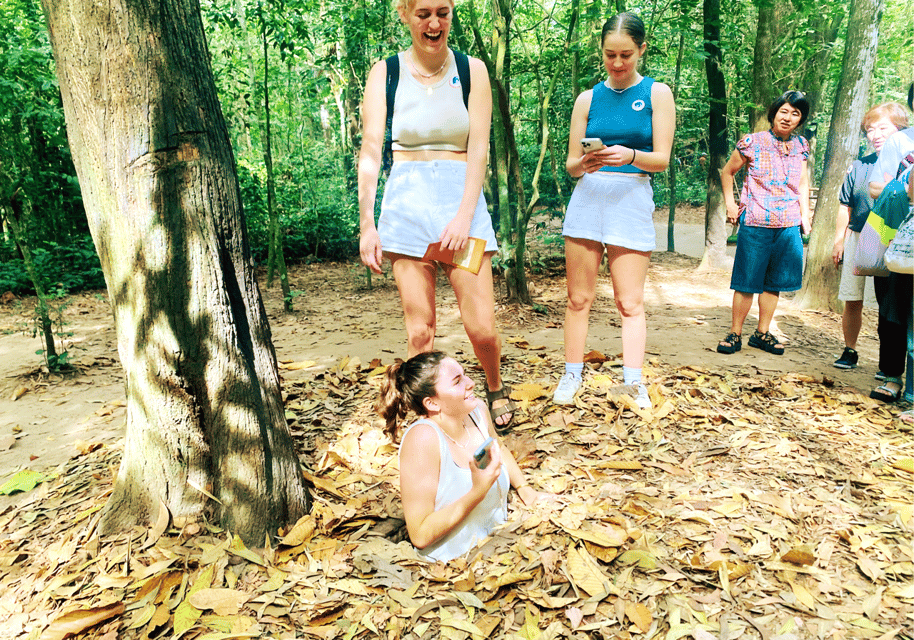
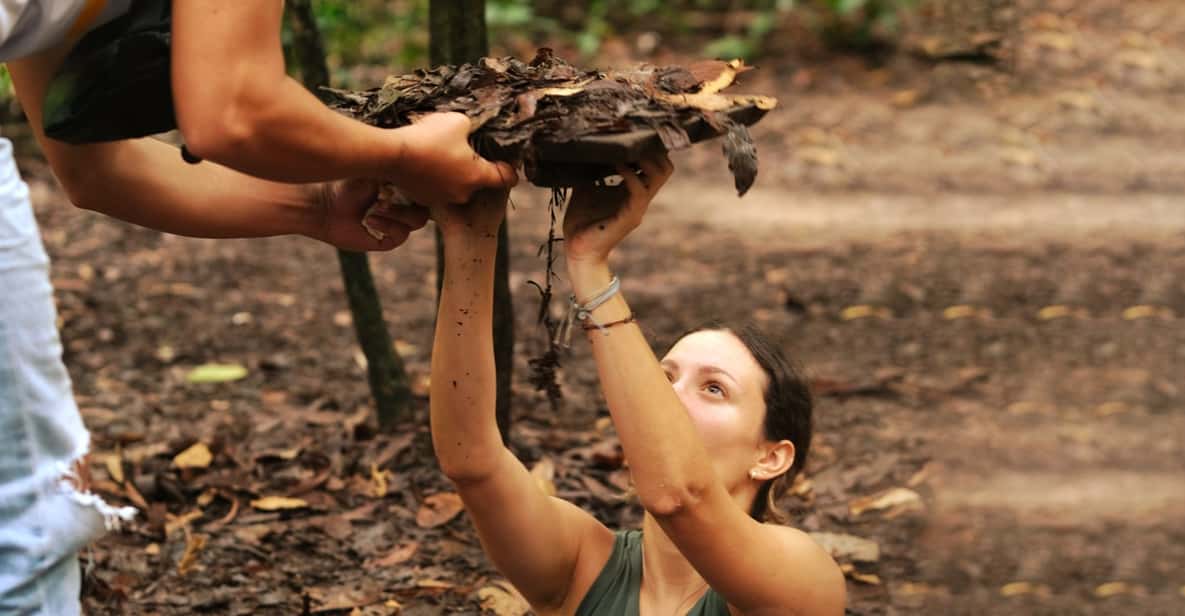
This is the heart of the Cu Chi tunnels experience. You arrive at the tunnels area with your group and guide, then you go straight into the crawl phase rather than spending all your time in souvenir-style viewing areas. You’ll be led to a secret entrance, and then you’ll crouch low and move through narrow, dim passageways.
What makes this part memorable is not just the crawl—it’s the way the guide points out what you’re seeing. You’ll encounter booby traps preserved to demonstrate how the tunnels system was protected. Expect to slow down for each one. Even if you’ve watched documentaries, it’s different when you’re standing in the same kind of restricted space where protection was built into the environment.
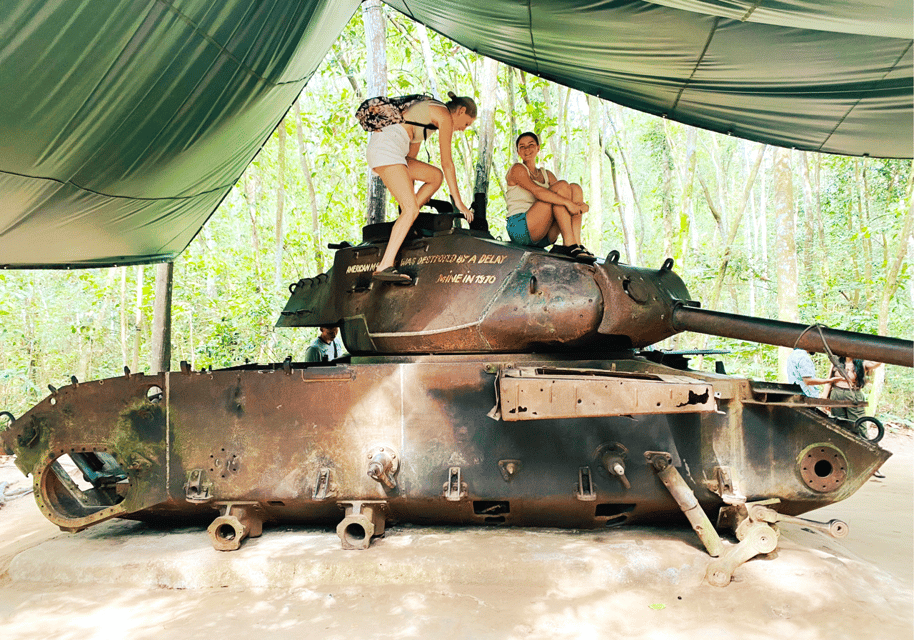
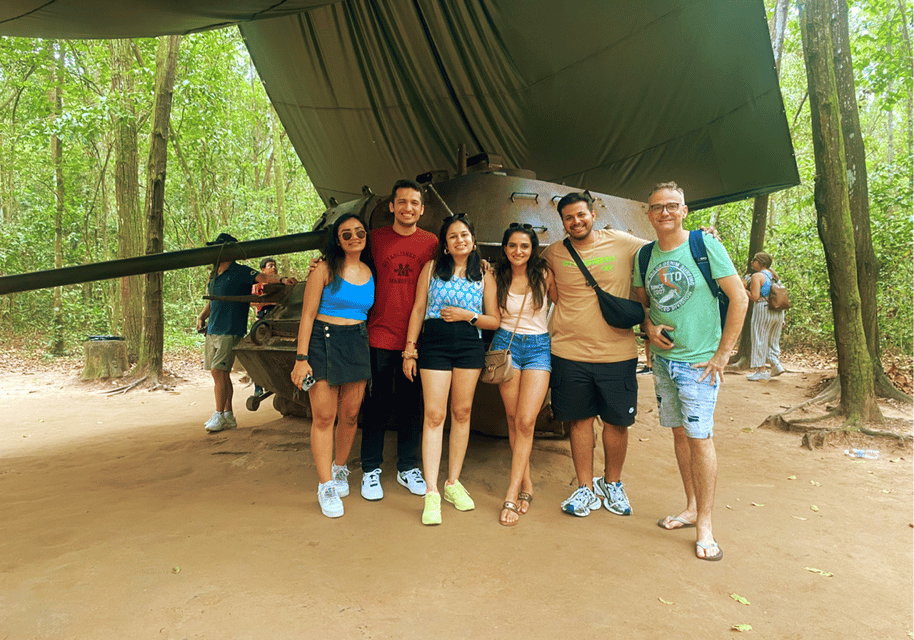
There’s also a tank reminder: you’ll stop to touch the rusted hull of a US Army tank. It’s a small moment, but it adds scale. You go from thinking about “tunnels” to realizing the tunnels were part of a battlefield that included armor, heavy fighting, and constant pressure from above.
A quick reality check before you go: this is physically demanding. The tunnels are tight and dark, and they can feel warm. If you’re bringing camera gear, go simple and secure—moving carefully matters more than getting every shot. And if you know you’re prone to panic in enclosed spaces, it’s worth taking that seriously.
Tan Phu Trung Ward: Propaganda and the Hoang Cam Underground Kitchen
Once you surface, the tour shifts from “tactical underground survival” to how wartime thinking worked on the ground. You’ll visit Tan Phu Trung Ward, where the day looks at wartime propaganda and an underground kitchen setup known as the Hoang Cam kitchen.
This is valuable because it answers a question people often miss: not just how fighters lived in tunnels, but how they tried to avoid being detected. The Hoang Cam kitchen is described as a clever invention meant to keep cooking smoke hidden from enemy eyes. That’s the kind of detail that makes the tunnels feel less like a static historical site and more like a living network designed around threat.
The propaganda element also matters. It helps you understand that the tunnels were not just engineering. They were part of a larger system of resistance, messaging, and morale. When the tour ties those pieces together, you come away with a clearer picture of how the war affected Vietnamese society—not only on the battlefield, but in everyday survival choices.
You’ll likely feel that the pacing changes here: less crawling, more explanation and context. If you’re tired after the tunnel crawl, this part can feel like a necessary breather while still keeping the story grounded.
Handicrafts and Tapioca Tastings: Small Stops With Real Meaning
The day isn’t only tunnels. You start with pickup from your Ho Chi Minh City hotel area, then you head out by van through the countryside. Along the way, there’s a stop at a local handicraft center, built in as a leg-stretcher and souvenir browsing chance.
This matters because Cu Chi needs a practical frame. You’re traveling out of the city for hours, so a planned stop helps you reset. Plus, it’s a chance to buy small, handmade items that feel more connected to Vietnamese life than mass-produced tourist goods.
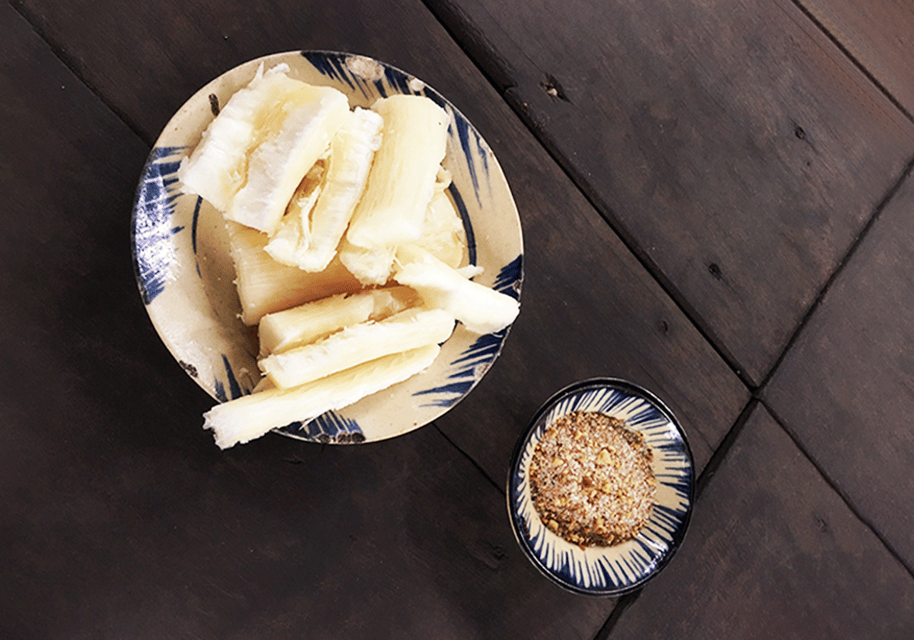
Then comes the food moment. After you finish exploring the tunnels, you’ll try tapioca—the simple kind of food associated with Viet Cong life. It’s not a fancy meal, and that’s the point. The flavor is humble, but you’re tasting it right after you’ve seen the physical conditions of underground living. That timing makes the food stop do more than fill your stomach.
If you have a sensitive stomach or strong preferences, keep this in mind: the tour provides tapioca tastings, not a full restaurant-style lunch. Bring snacks if you know you get hungry, and you’ll feel more comfortable overall.
Optional AK47 and M16 Shooting Range: Thrill, Fees, and Safety Basics
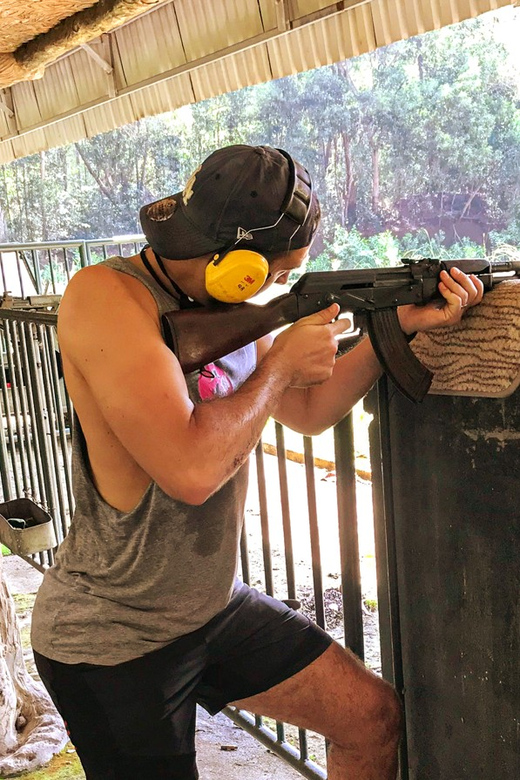
If you want to add the adrenaline moment, there’s an optional onsite shooting range upgrade. The concept is straightforward: you can pay extra onsite to shoot real guns such as AK47 and M16 (with the highlights also mentioning M1 as an example option).
Two important notes for your decision:
- The tour price doesn’t include shooting fees. Expect an additional cost paid onsite.
- It’s optional, so you can choose based on your comfort and interest. If you’re more there for the tunnels and history, you can skip this upgrade and keep the day focused.
From a practical standpoint, bring cash and/or a credit card since you may need it for onsite fees. Also, plan for a little extra time on that final stretch of the day.
Is it worth it? For some people, yes, because it gives a visceral connection to what you just learned about. For others, the tunnel crawl already does the heavy emotional lift. Either way, the key is to decide before you get tired—tunnels are physically demanding, and you’ll enjoy the last part more if you’re not running on empty.



Getting There From District 1 or 4 and How Long It Really Takes
Despite the name saying half-day, the total time listed is 390–450 minutes—think about 6.5 to 7.5 hours door-to-door. That includes hotel pickup by van, the drive out, tunnel time, and the ride back to Ho Chi Minh City.
Pickup and drop-off are included within District 1 and District 4, with additional coverage from parts of District 3 mentioned for pickup. You’ll meet your guide outside your hotel, and you should look for someone wearing a Joy Journeys t-shirt. Your pickup confirmation should arrive about one day beforehand.
The drive is part of the experience. It breaks up city time with countryside scenery, and it gives you time to mentally switch from modern HCMC into war-era context. The van ride is generally set up as comfortable and air-conditioned, and you’ll have two bottles of water per person included.
One consideration: van comfort can vary. You’ll be in a vehicle for hours, so if you’re tall or easily uncomfortable in tight seating, it’s worth tempering expectations. Also, the day depends on good weather, since the experience requires it—so choose a day when conditions look stable.
Value for $31: What You Get for the Money
At $31 per person, this tour sits in the “serious value if you like history” category. What you’re paying for isn’t just the tunnel ticket. The included value stack is:
- Tunnel entrance ticket (and you skip the ticket line)
- Hotel pickup and drop-off in District 1 and District 4
- Air-conditioned vehicle
- Live English guide
- Water
- Tapioca tastings
Add in the less-crowded Ben Duoc focus, and you start to see where the money goes. Cu Chi is popular, and crowds reduce your ability to look closely and move comfortably in confined spaces. A quieter route plus a small-group feel can turn the same tunnel systems into a more human experience.
Where costs can rise is optional shooting. Those shooting fees are not included and are paid onsite. If you want the shooting range add-on, budget extra. If you don’t, this stays a straightforward, fixed-fee day.
The biggest value signal I’d watch for is whether you want the less-touristy tunnels and guide-led storytelling. If you just want a quick sightseeing loop, you may feel it’s too much time. If you want to understand what the tunnels meant, $31 suddenly looks pretty reasonable.
Should You Book This Less-Crowded Ben Duoc Tour?
I’d book this tour if you:
- want Ben Duoc’s less-crowded approach to Cu Chi
- care about crawling and trap demonstrations more than standing behind a fence
- like a guide who answers questions and uses clear, story-led context
- want optional shooting range thrills without being forced into it
I’d think twice if you:
- get anxious in tight, dark spaces
- know you struggle with physical exertion for enclosed crawling
- expect a classic “quick museum visit” pace (this is a working, crawling day)
If you do book it, pack for comfort: breathable clothing, a hat, camera, and practical footwear. Bring cash and credit card for any onsite upgrade. And plan to treat the tapioca and Hoang Cam kitchen stop as part of the story, not as snacks between attractions.
FAQ
How long is the Cu Chi Less-Crowded Ben Duoc Tunnels tour?
The tour duration is listed as 390 to 450 minutes (about 6.5 to 7.5 hours). Check availability for the exact starting time for your date.
What’s included in the tour price?
The price includes the tunnel entrance ticket, hotel pickup and drop-off within District 1 and District 4, an air-conditioned vehicle, a live English guide, two bottles of water per person, and tapioca tastings.
Is the shooting range included?
No. Shooting fees are not included and are paid onsite if you choose the optional shooting upgrade.
Where do hotel pickup and drop-off happen?
Pickup and drop-off are included in District 1 and District 4. Pickup is also mentioned for some areas in District 3.
Is the tour guide available in English?
Yes. The tour provides a live English guide.
Is there any food included besides water?
You’ll have tapioca tastings included after the tunnel portion. Water is also included during the tour.
What should I bring?
Bring a hat, camera, breathable clothing, shorts, credit card, cash, and food and drinks if you want them. Weather can affect how comfortable you are, so plan for what you’ll need.
Who is this tour not suitable for?
The tour isn’t suitable for babies under 1 year or people over 95 years.
What if the tour is canceled due to weather or not meeting the minimum travelers?
If it’s canceled because of poor weather or minimum traveler requirements, you’ll be offered a different date or a full refund.