REVIEW · HUE VIETNAM
From Hue: DMZ Tour with Vinh Moc Tunnels and Khe Sanh Base
Book on GetYourGuide →Operated by CONNECTTRAVEL · Bookable on GetYourGuide
War history hits hardest in the DMZ. This 10-hour Hue tour stitches together key Vietnam War sites across Quang Tri, with the Vinh Moc Tunnel and the Geneva-era boundary at Ben Hai River as major anchor points. In a small group (up to 12), you also get English storytelling that makes the geography and the timeline easier to hold in your head.
Two things I like a lot: the way you connect each stop to the wider conflict, and the hands-on, real-world feeling of places like the Vinh Moc tunnel system and Khe Sanh-era relics at Ta Con Airport. Guides such as Hoa (often called Flower in English) are especially good at turning long drives into a moving lesson, with music and clear explanations along the way.
One consideration: it’s a full day with serious road time between multiple stops, so the pace may feel heavy if you prefer shorter, slower visits. You’ll still spend meaningful time on each site, but plan your energy for a long outing.
In This Review
- Key moments that make this DMZ tour work
- War in Focus: What the Hue DMZ day really shows
- 07:30 pickup, small-group pace, and why timing matters
- Horror Highway and Long Hung Church: how the suffering becomes real
- Quang Tri Ancient Citadel: a stop with dress rules
- Dakrong Bridge to Ta Con Airport: from contested crossings to a tank-and-plane museum
- Vinh Moc Tunnels: the highlight that makes everything else click
- Hien Luong Bridge and the Ben Hai River: the line on the map
- Price and value: what $54 includes on a long day
- Who should book this DMZ tour from Hue
- FAQ
- FAQ
- What time does the DMZ tour pickup happen in Hue?
- How long is the Hue DMZ tour with Vinh Moc and Khe Sanh sites?
- Is the tour English guided and what size is the group?
- What does the tour cost and what’s included?
- Do I need to dress formally for Quang Tri Ancient Citadel?
- Are any major expenses not included?
- Should you book this DMZ tour from Hue?
Key moments that make this DMZ tour work
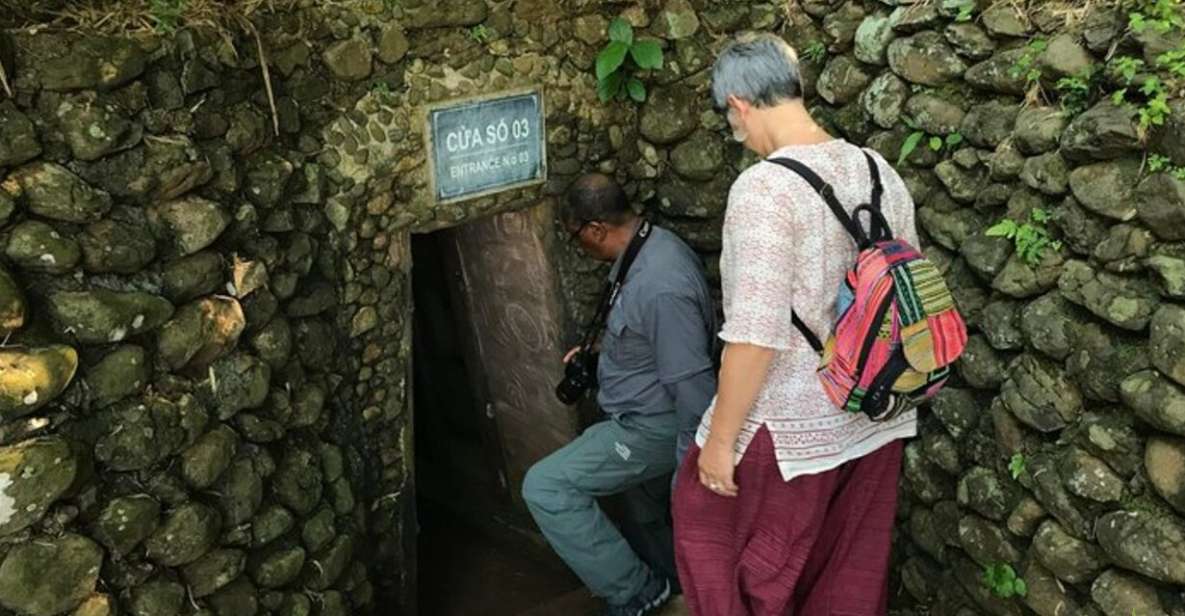
- Vinh Moc Tunnels: Vietnam’s largest and longest tunnel system, built for survival under intense bombing
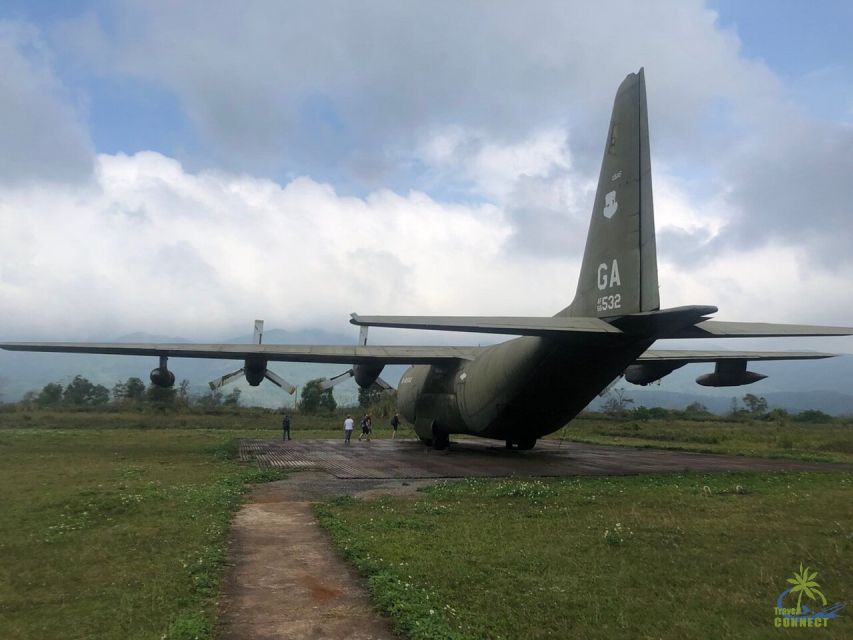
- Ta Con Airport / Khe Sanh Combat Base Museum: a preserved boneyard of captured U.S. aircraft and tanks
- Horror Highway (May 1, 1972): a stark reminder of the scale of civilian suffering along Highway 1
- Quang Tri Ancient Citadel: bomb-scarred testimony of 1972 fighting and the national relic status
- Hien Luong Bridge (Peace Bridge): walk across the boundary tied to the 17th Parallel after 1954
- Dakrong Bridge: a contested crossing linked to the Ho Chi Minh Trail network
War in Focus: What the Hue DMZ day really shows
A DMZ tour can turn into a checklist. This one works better because it builds a chain: roads, bridges, churches, forts, then survival spaces underground. You start to understand how fighting, movement, and civilian life were all tangled together in the same stretch of land.
The big emotional anchor is the Vinh Moc Tunnel complex. It’s not just a photo stop. The point is to help you picture what life meant when villages had to go underground to stay alive. After that, you move back toward the surface and the political map of the era, especially at the Ben Hai River boundary and Hien Luong Bridge.
And while this is Vietnam War focused, you’ll also get the longer view from earlier conflicts into the American-era fighting. That wider timeline is one reason the day feels educational rather than just grim.
You can also read our reviews of more tours and experiences in Hue Vietnam.
07:30 pickup, small-group pace, and why timing matters
The day begins with hotel pickup at around 07:30 in central Hue, then you ride out to Quang Tri province. You’ll be in a car for multiple stretches, which is part of the trade-off for seeing several key locations in one day.
The good news: the drive isn’t just dead time. Many guides keep the story rolling with spoken context, and you may hear music tied to the era during the van ride. People often remember this as what made the long hours feel shorter, because you’re not staring out a window with nothing to connect it to.
The tour runs about 10 hours total. That duration is important to know because it sets expectations: you’ll see a lot, but you won’t linger for hours in any one place. If you’re the type who hates rushed museum time, you may want to treat this as your “big hits” day rather than your only DMZ day.
Horror Highway and Long Hung Church: how the suffering becomes real
One of the first stops centers on the tragedy of May 1, 1972, often referred to as Horror Highway. This isn’t a vague museum exhibit. It’s a place tied to the reality that civilians were caught in violent bombardment and shooting events along Vietnam Highway 1.
What makes this stop valuable is the way it frames the DMZ as a living zone, not a historical label. You’re looking at a route people used for daily life and supply—and seeing how quickly “normal” got crushed. The scale of civilian losses is part of the story here, especially the mention of elders, women, children, and soldiers caught up in the chaos.
From there, you head to Long Hung Church, one of the few buildings left standing in Quang Tri town after the “Fire Summer” or Eastern Offensive period in 1972. Even if you don’t know the building’s architectural details, it still hits because the stop is about survival in physical form. It’s a reminder that war doesn’t only destroy armies—it also leaves scars on everyday structures.
Quang Tri Ancient Citadel: a stop with dress rules
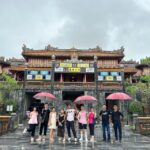
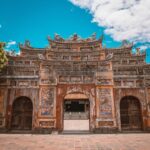
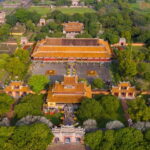
Next up is Quang Tri Ancient Citadel, which is described as an eyewitness point of fierce battles during the anti-American resistance war in 1972. US bombing during the 81-day fighting nearly destroyed the citadel, and the site now functions as a national relic tied to education and commemoration.
Here’s the practical detail you should plan for: formal dress is required. If you show up in shorts, you can rent a cover for 10,000 VND so you can go in. It’s an easy fix, but it’s better than hunting for a cover at the last second.
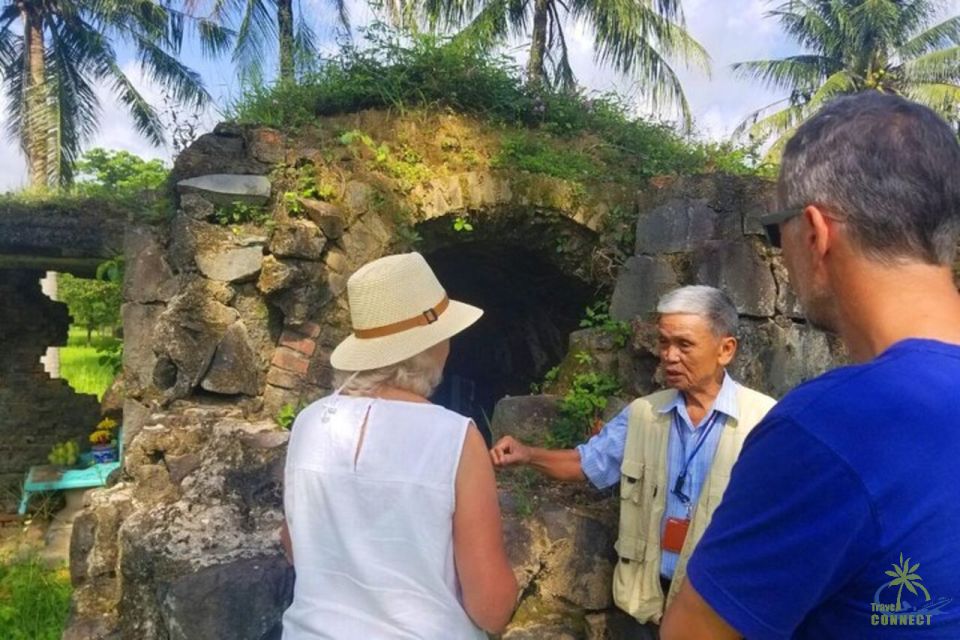
This is also one of those locations where the guide’s storytelling matters. Without context, you might just see walls and a layout. With the full timeline explained, you start to understand why the citadel is treated as a teaching tool for younger generations.
Dakrong Bridge to Ta Con Airport: from contested crossings to a tank-and-plane museum
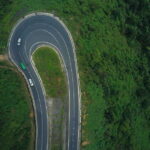
Dakrong Bridge is a classic “how do you move through war?” stop. It’s linked with the beginning of the Ho Chi Minh Trail network, and it was hotly contested for years. The story here is about how often a crossing can be attacked, rebuilt, and attacked again. The tour frames today’s bridge as a kind of comeback: you’re seeing a structure that survived enough to stand as a physical symbol.
You may also have a chance to see a Paco minority village along the way, depending on timing. The important thing is to stay flexible. That sort of side glimpse is never the main event, but it can add texture beyond the military stops.
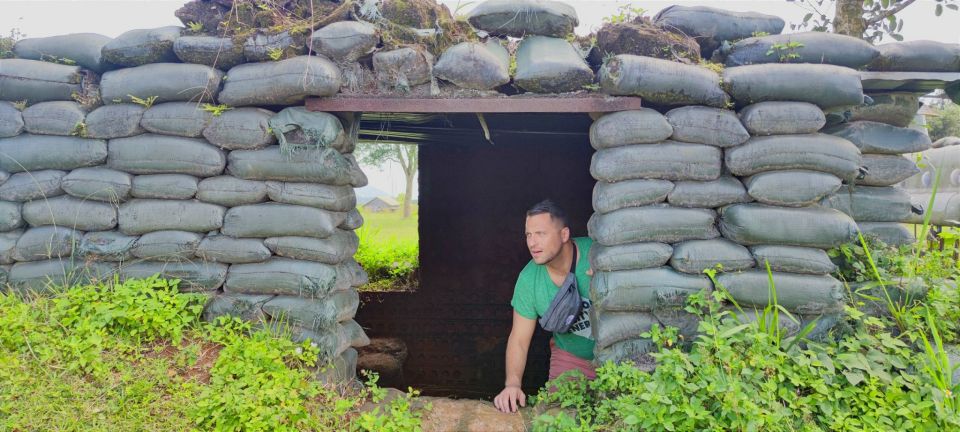
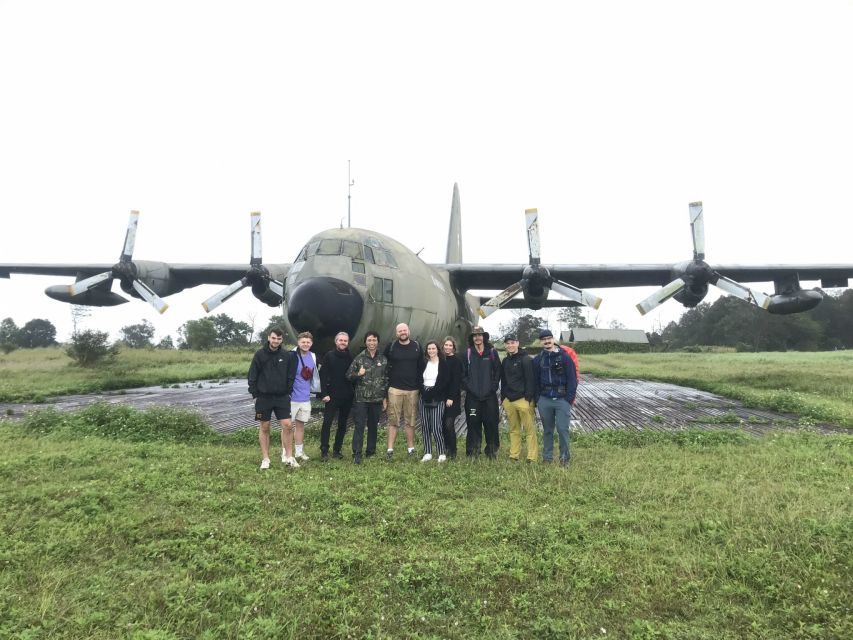
Then you head to Ta Con Airport, which is now the Khe Sanh Combat Base Museum. This is one of the most visually memorable segments of the day. You’ll see a boneyard-like display of captured U.S. tanks and aircraft destroyed during the Battle of Khe Sanh. The museum’s official accounts provided on-site mention that 197 U.S. planes were either shot down or captured across a 170-day battle window.
You’ll also get free snacks during this stretch, and you can try Khe Sanh coffee if you want, which is listed as an own-expense option. That matters because this part can be long on the feet, and a small bite helps you keep going without feeling like you’re waiting for the next meal.

Vinh Moc Tunnels: the highlight that makes everything else click
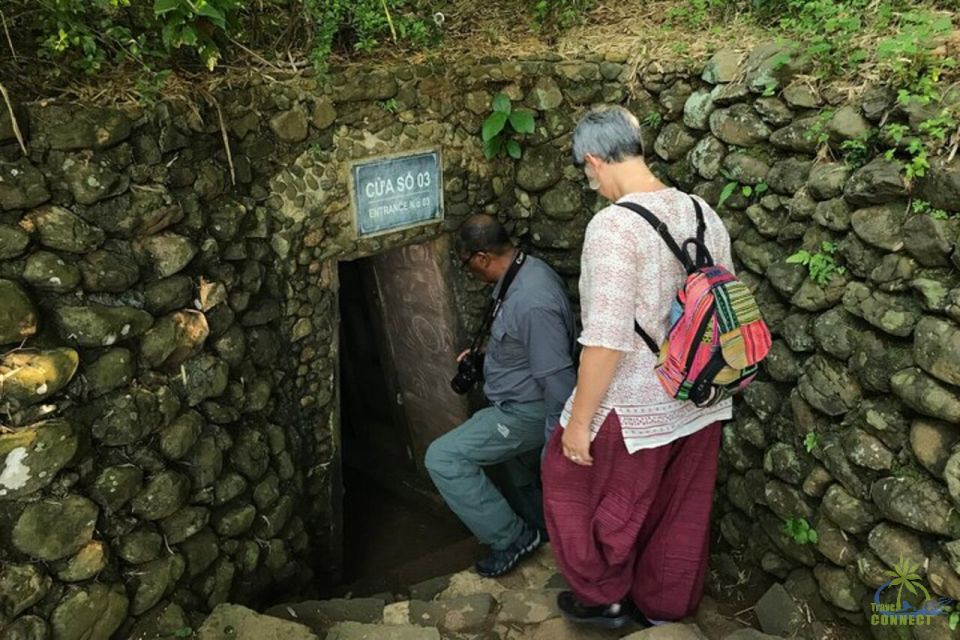
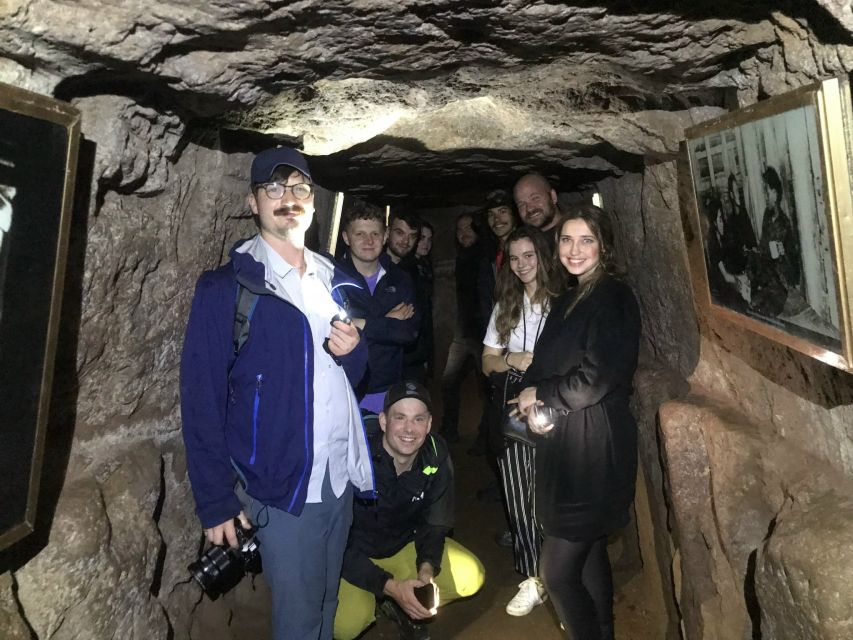
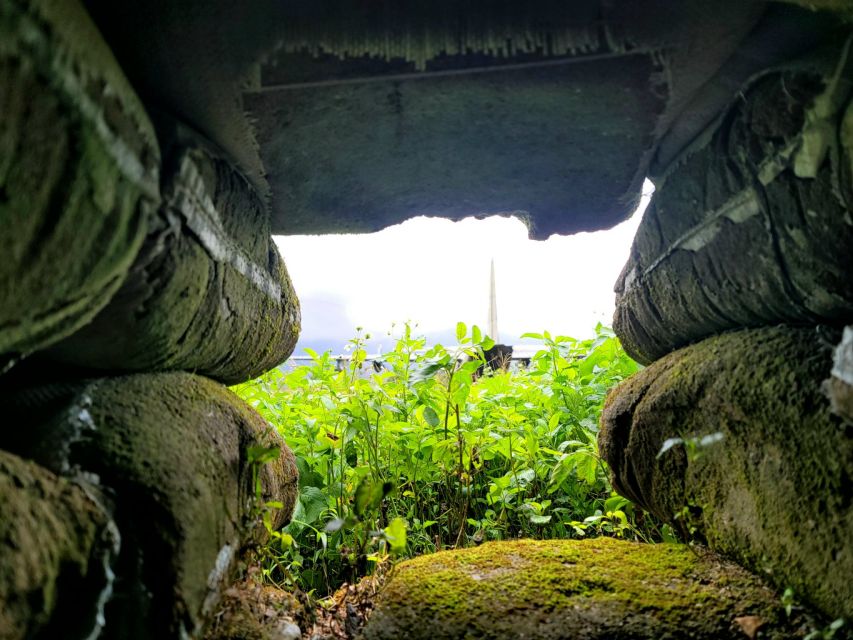
If you’re choosing just one part of the day to remember, it’s the Vinh Moc Tunnels and the tunnels museum. This is presented as the highlight of the DMZ tour for a reason: the tunnel complex was built deep enough that it helped protect local villagers from the intense bombing of the area.
The tour explains that the tunnels weren’t only for hiding. They supported living conditions to help people keep fighting back. In plain terms, it helps you understand that underground shelters were part of a whole system—food, movement, and survival—not just a hiding hole.
In the more emotional scenes of the day, the tunnel setting does the work for you. Light, narrow passages, and the sheer scale of the system change how you interpret the surface stops you visited earlier. Horror Highway and Quang Tri make sense as contexts for why people needed to survive like this. Dakrong Bridge makes sense as a route of conflict pressure. Then you go under the ground and see the human response to that pressure.
Practical tip: wear comfortable shoes and be ready for a physical environment. Tunnels are cool and tight by nature, and you’ll feel it when you actually enter.
Hien Luong Bridge and the Ben Hai River: the line on the map
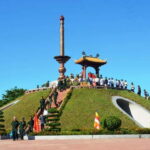
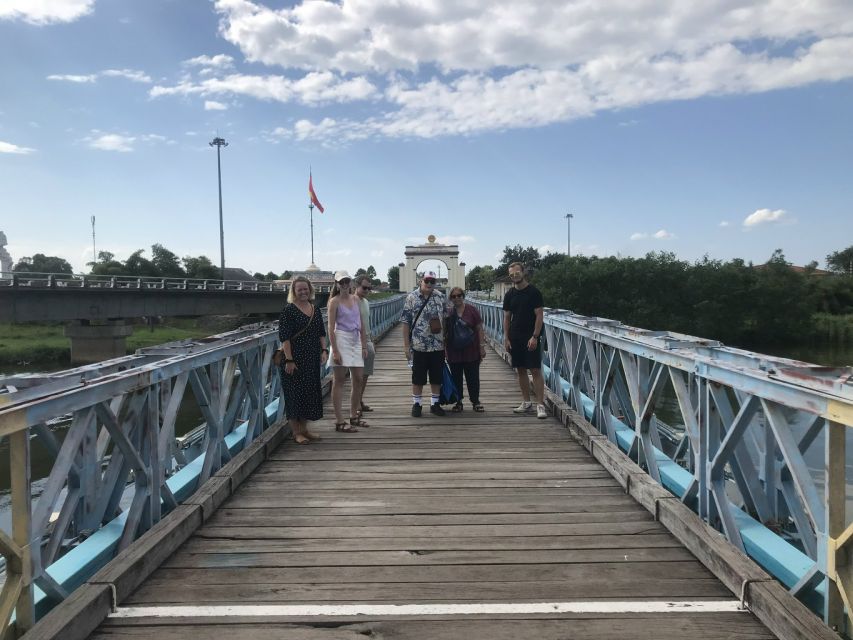
After the museum portion, the tour returns to war-related sites including the Ben Hai River area and Hien Luong Bridge, also called the Peace Bridge.
This stop is tied to the Geneva Agreements on Vietnam in 1954, when the country was divided into North and South along the 17th Parallel. The Ben Hai River runs through Quang Tri province at that boundary, and the French built Hien Luong Bridge in 1950. The tour notes that it took 21 years for the North and South to unite after this division.
The bridge itself matters because you’re not only looking at history. You’re walking a literal connector between two sides of a divided country. You’ll feel the symbolism more than you’ll read it on a sign.
Price and value: what $54 includes on a long day
At $54 per person, this tour can feel like a lot or like a bargain depending on what you compare it to. Here’s the value logic: you’re getting hotel pickup and drop-off, a live English-speaking guide, transportation, lunch, bottled water, entry tickets, travel insurance, and even a souvenir. You’re also getting a driver who handles the day-long route.
Compared with piecing together DMZ stops on your own, the price makes more sense when you factor in the time cost of transit and the benefit of guide-led context at each site. The best part is that the tour doesn’t just park you at one big attraction and call it a day. It pairs major highlights like Vinh Moc with smaller-but-important places like Long Hung Church and Horror Highway.
Where you might spend extra is simple: Khe Sanh coffee is own expense, and the citadel’s dress requirement may mean paying for a rental cover if you’re in shorts.
Who should book this DMZ tour from Hue
Book this if you want one focused day that covers the DMZ’s most important physical stories: survival underground at Vinh Moc, siege-era context around Khe Sanh, and the map-and-border symbolism at Ben Hai River and Hien Luong Bridge.
You’ll probably enjoy it most if you:
- like war history but want it explained clearly, not as a random stack of ruins
- prefer a small group setting where questions can actually happen
- can handle a long day of driving in exchange for seeing multiple sites
You might want to think twice if:
- you hate long transit time and would rather spend more time at fewer stops
- you’re looking for lots of downtime, because the day is structured and full
Guides like Hoa (often called Flower), Thuy, and others are repeatedly praised for turning the day into a coherent story with English explanations and era-themed music during drives. If strong narration is what makes history feel real to you, this tour has the right ingredients.
FAQ
FAQ
What time does the DMZ tour pickup happen in Hue?
Pickup is included and you should be ready from 07:30am in central Hue.
How long is the Hue DMZ tour with Vinh Moc and Khe Sanh sites?
The tour runs for about 10 hours.
Is the tour English guided and what size is the group?
Yes. It’s a live English tour guide, and the group is limited to 12 participants.
What does the tour cost and what’s included?
The price is $54 per person. Included items are hotel pickup/drop-off, lunch, tour guide, bottled water, travel insurance, entry tickets, transportation, and a souvenir.
Do I need to dress formally for Quang Tri Ancient Citadel?
Yes, the citadel requires formal dress. If you wear shorts, you can rent a cover for 10,000 VND.
Are any major expenses not included?
Other expenses are not included. For example, Khe Sanh coffee is listed as own expense, and you may need to pay for the citadel cover if you’re in shorts.
Should you book this DMZ tour from Hue?
If you want a single day that hits the DMZ’s most meaningful landmarks with a guide who can connect the dots, I’d say yes—this is a strong value choice for the price, especially with lunch and entry tickets included. Just go in knowing it’s a 10-hour day with a lot of road time, and wear clothes you can handle for citadel dress rules. If you match that pace, you’ll leave with a clearer understanding of how these places shaped real lives.