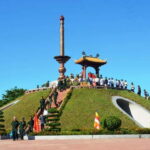
Underground stories start after sunrise. This full-day DMZ route from Hue strings together Quang Tri Citadel and Vinh Moc Tunnels, with war sites that feel less like history class and more like a place you can stand in.
I also like how the day moves with clear structure: early pickup, a sequence of sites that each explain a different wartime angle, and a guide who keeps answering questions. The main drawback is simply the reality of the route: it’s a long day with lots of driving, plus walking and time underground—so it’s not a good fit if you’re dealing with back problems or claustrophobia.
In This Review
- Key highlights at a glance
- From Hue at 6:00 AM: why the early start matters
- Quang Tri Ancient Citadel: seeing 81 days of 1972 in context
- Route 9 and Da Krong Bridge: following the Ho Chi Minh Trail story
- Ta Con Airbase (Khe Sanh): relics from a 170-day siege
- Lunch in Quang Tri: simple fuel before the underground
- Vinh Moc Tunnels: life underground in a 3-level world
- Hien Luong Bridge on the Ben Hai River: the 17th parallel you can photograph
- La Vang Holy Land: a calmer photo break at day’s end
- Price and value: what $85 buys you (and what to watch for)
- Who this tour fits best
- The guide factor: how you get more out of each stop
- Should you book the DMZ and Hidden Stories of War tour from Hue?
- FAQ
- What time does the tour depart from Hue?
- What sites are included in the full-day program?
- Is lunch included, and can I eat vegetarian?
- What tickets are covered in the price?
- What should I bring for the tour?
- Is this tour suitable for everyone?
Key highlights at a glance
- Quang Tri Ancient Citadel and the 81-day battle of summer 1972
- Da Krong Bridge as a symbol tied to the Ho Chi Minh Trail supply route
- Ta Con Airbase (Khe Sanh) with relics from the 170-day siege in 1968
- Vinh Moc Tunnels: a 3-level system nearly 2km long, built for life underground
- Hien Luong Bridge (Ben Hai River) and the 17th parallel story of division and reunification
- La Vang Holy Land as a calmer photo stop to close the day
From Hue at 6:00 AM: why the early start matters
This tour is built around an early departure from Hue at 06:00 AM, with pickup in central Hue. You’ll spend the day traveling through central Vietnam’s former warfront corridors, and starting early helps you get solid daylight for outdoor stops like bridges and citadel grounds.
You’ll be in a modern air-conditioned vehicle, which matters because Route 9 and the DMZ approach involve a lot of hours on the road. The day runs until about 06:00 PM, with drop-off in Dong Hoi (city center/train station/airport) or a return to Hue if you request it.
You can also read our reviews of more tours and experiences in Hue Vietnam
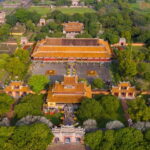
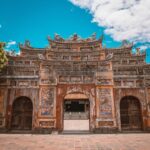
Quang Tri Ancient Citadel: seeing 81 days of 1972 in context
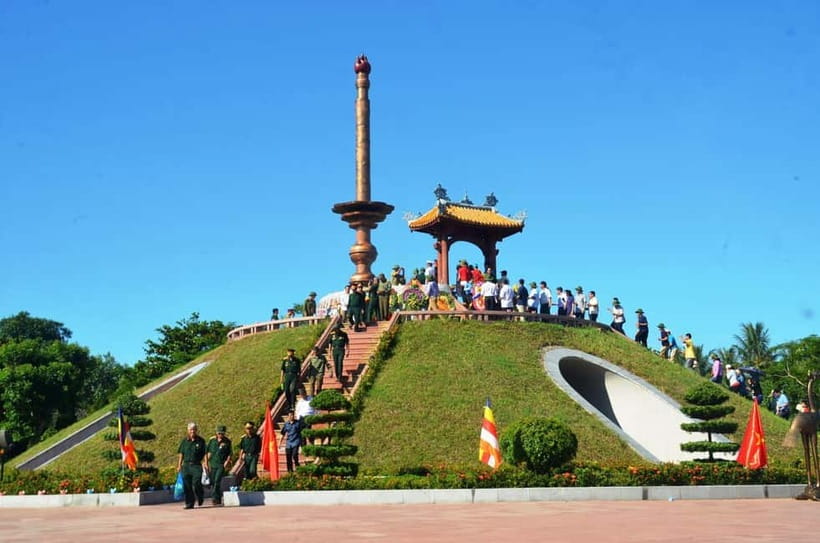
The first major stop is Quang Tri Ancient Citadel, around 07:30 AM. This site is presented as a solemn witness to the 81 fierce days of fighting in the summer of 1972, so the tone is understandably heavier than a typical museum visit.
What’s valuable here is not just the wow-factor of old walls—it’s the strategic framing. The guide explains why the citadel mattered, what combat looked like on the ground, and the scale of sacrifice tied to defending the area. If you care about understanding the war as a sequence of decisions and consequences (not just dates), this stop gives you that backbone.
Practical note: you’ll be walking in a daytime setting, so comfortable shoes are key. A hat and sunscreen aren’t optional if the sun is strong.
Route 9 and Da Krong Bridge: following the Ho Chi Minh Trail story
Next you’ll head along National Highway 9 (Route 9), which the tour describes as a vital east-west supply route during the war, connecting the sides of the Truong Son (Annamite) mountain range. Even if you’re not into military logistics, it helps to see how geography shaped movement.
At about 10:00 AM, you’ll stop at Da Krong Bridge, presented as a symbol connected to the legendary Ho Chi Minh Trail. The focus here is the role of the route in transporting weapons and supplies to the southern frontlines. It’s a smaller stop than the citadel, but it connects the big battlefield story to the everyday problem of moving material—often the deciding factor in a long conflict.
If you’re the type who enjoys photos, this is a good point of the day for it: you’ll likely have a clearer sense of place before the later underground portion of the schedule.
Ta Con Airbase (Khe Sanh): relics from a 170-day siege
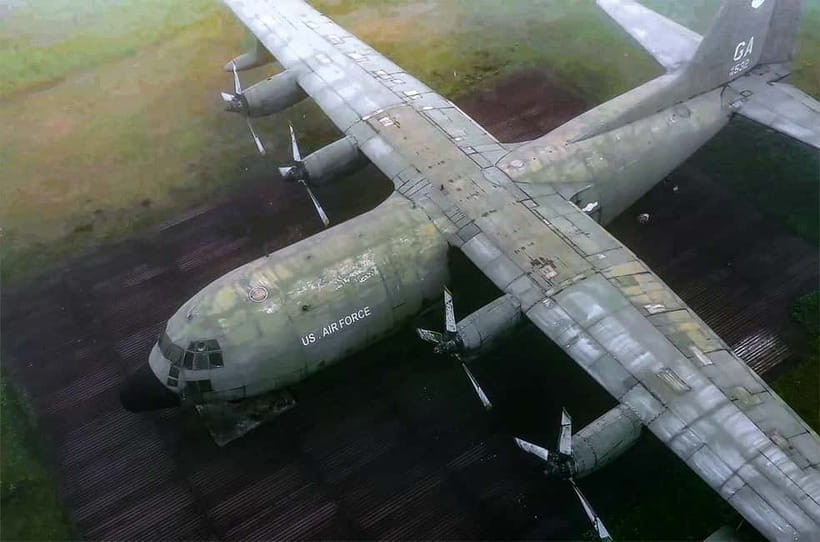
Around 10:30 AM, the tour moves to Ta Con Airbase (Khe Sanh). This is tied to the Khe Sanh siege that lasted 170 days in 1968, and the experience is built around seeing the physical leftovers: original relics, runways, bunkers, and remaining defense structures.
A big reason this stop hits is that it doesn’t feel abstract. You’re looking at features that were made for operations and defense, then hearing how the siege shaped what happened. It’s also one of the best places in the day to ask questions, because the tour’s layout gives you time to absorb details without rushing.
Timing and comfort: by late morning you’ll likely feel the long travel time already, so it’s smart to pace yourself. Don’t try to race through the structures just to fit everything in.
Lunch in Quang Tri: simple fuel before the underground
Lunch happens at about 11:30 AM at a local restaurant in Quang Tri, with an option for vegetarian dishes. This is one of those unglamorous parts that can make or break an all-day tour. A real sit-down meal (instead of a quick snack) helps you handle the later walking and the underground stop without running on empty.
Keep your expectations practical: the meal is described as lunch at a local restaurant, so think hearty and straightforward rather than fancy. Hydrate too—there’s water during the tour, but the day still has a lot going on.


Vinh Moc Tunnels: life underground in a 3-level world
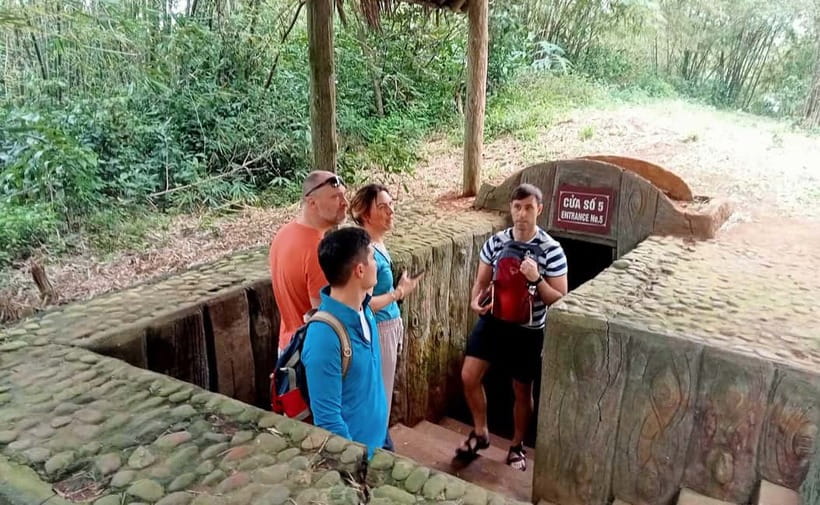
If you’re choosing between war-site stops, Vinh Moc Tunnels are the one many people talk about most. The tour heads to the coastal area around 01:00 PM, near Vinh Linh, a place where local people once lived and fought underground during intense bombing campaigns.
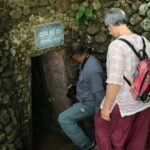
At about 03:00 PM, you go into the tunnels. You’ll be exploring a 3-level tunnel system nearly 2km long, once home to over 60 families and local soldiers. The tour emphasizes what life looked like inside: living quarters, meeting rooms, clinics, kitchens, and more, all built underground.
Here’s what I think makes this stop so powerful for you as a visitor: you’re not only seeing “where battles happened,” you’re seeing how people tried to function as humans while surrounded by war. It turns the conflict from a distant narrative into something lived day-to-day.
Important reality check: this is underground. The tour is not suitable for claustrophobia, and it’s also not a fit if you have back problems. Even if you’re comfortable underground, wear shoes that grip well. This isn’t a “quick peek and leave” kind of stop—you need to move carefully and take your time.
Hien Luong Bridge on the Ben Hai River: the 17th parallel you can photograph
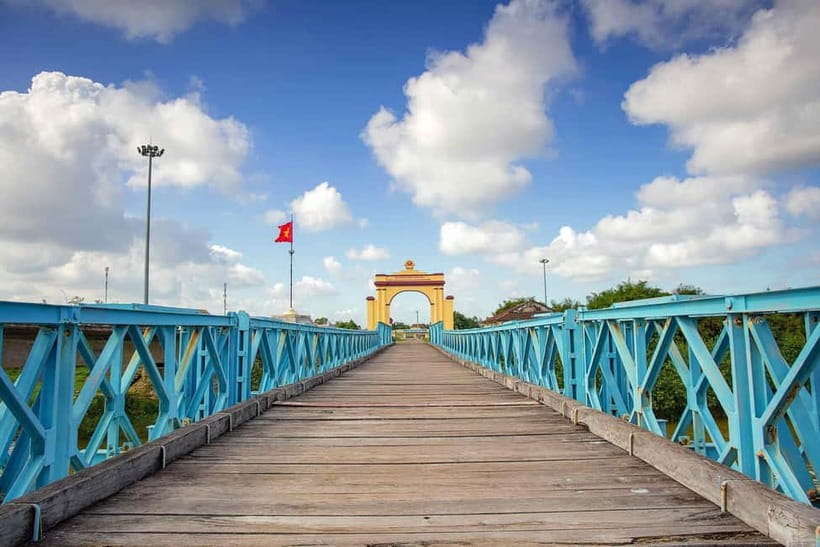
Around 04:00 PM, you transfer to Hien Luong Bridge on the Ben Hai River. This is the symbolic endpoint of the day’s “division” theme: the bridge served as a division line between North and South Vietnam for over 20 years, tied to the 17th parallel.
When you reach the site, you’ll listen to the story behind that line and take photos at key historical elements like the demarcation line, museum, and loudspeakers, among other features described as part of the stop.
This is also a good time to slow down emotionally. If earlier stops felt like “systems of war,” this one is framed around political and national separation followed by reunification. It’s a different kind of history lesson—one that’s easier to process when you’ve already seen the human cost of conflict.
La Vang Holy Land: a calmer photo break at day’s end
After Hien Luong, you’ll have a short photo break at La Vang Holy Land. The tour places it as a closing moment at about 06:00 PM, which works well after a day full of heavy sites. You still get something meaningful, just with a different emotional register.
It’s also practical: by this point you’ve been on the go all day, so a brief pause helps you reset before the vehicle drop-off.
Price and value: what $85 buys you (and what to watch for)
At $85 per person, this tour isn’t a budget half-day. But it also isn’t trying to be. You’re paying for a full-day loop that strings together major entry-ticket sites—Quang Tri Ancient Citadel, Ta Con Airbase, Vinh Moc tunnel, and Hien Luong Bridge—plus transportation by modern air-conditioned vehicle and an English-speaking guide who stays with you for the full route.
You’re also not left to solve small logistics yourself. The tour includes lunch at a restaurant in Quang Tri (with vegetarian choice), bottled water (Lavie 500ml, two bottles per guest per day), and cold towels (two per guest per day). For an all-day schedule with multiple stops, that kind of built-in comfort is real value.
The trade-off is that the day is packed enough that it can feel like a sprint if you hate structure. If you want a super relaxed pace, look at shorter options. If you’re fine with a long schedule and want the biggest “DMZ overview day” in one go, this one makes a lot of sense.
Who this tour fits best
This is a strong choice if you:
- want a single-day route that covers citadel, airbase, tunnels, and the 17th parallel bridge
- like guided interpretation that stays detailed but keeps moving
- appreciate both the human side (tunnel life) and the tactical side (battlefields and siege sites)
It’s not the tour for you if you:
- have mobility limitations, wheelchair needs, or back problems
- are claustrophobic (tunnels are a core part of the day)
- don’t do well with long days that start early and include walking
The guide factor: how you get more out of each stop
This tour leans on the guide to connect each location into one story. The guide is described as English-speaking and specialized for the entire route, and the experience is built around explanation at each site, not just admission and free time.
One tip that’s easy to take: come with a few questions in mind. If you’re curious about why Route 9 mattered, how the airbase relates to the Khe Sanh siege timeline, or what life inside the tunnels was designed to support, asking early helps you build understanding while the sites are fresh.
Should you book the DMZ and Hidden Stories of War tour from Hue?
Yes—if you want one full day that gives you the core “DMZ story arc” in a structured, ticketed route, and you’re ready for early mornings, walking, and an underground stop. The mix of Quang Tri Citadel, Ta Con Airbase, Vinh Moc Tunnels, and Hien Luong Bridge is hard to beat when you only have limited time in central Vietnam.
Skip it if you know you’ll struggle with tunnels or long walking days. Also, go in with the right expectations: this is educational and emotional, not a casual sightseeing day.
Bring comfortable shoes, hat/sunscreen, and a camera. And if you’re sensitive to enclosed spaces, take that seriously before you commit—because Vinh Moc Tunnels are a main event, not an optional add-on.
FAQ
What time does the tour depart from Hue?
Pickup starts in central Hue at 06:00 AM, and the day runs until around 06:00 PM with drop-off in Dong Hoi or return to Hue if requested.
What sites are included in the full-day program?
The tour includes Quang Tri Ancient Citadel, a stop at Da Krong Bridge, Ta Con Airbase (Khe Sanh), Vinh Moc Tunnels, and Hien Luong Bridge on the Ben Hai River, plus a short photo break at La Vang Holy Land.
Is lunch included, and can I eat vegetarian?
Yes. Lunch is included at a local restaurant in Quang Tri, and there’s an option to choose vegetarian dishes.
What tickets are covered in the price?
Entrance tickets are included for Vinh Moc tunnels, Hien Luong bridge, Ta Con airport (airbase), and Quang Tri ancient citadel.
What should I bring for the tour?
Bring comfortable shoes and comfortable clothes. A hat and sunscreen are recommended, and a camera can help for photos. Water is provided, but bringing extra can be helpful too.
Is this tour suitable for everyone?
It isn’t suitable for wheelchair users, people with mobility impairments, claustrophobia, or back problems. It also notes it is not suitable for non-swimmers.