REVIEW · HOI AN
Farming with Farmers at ancient vegetable Village “Tra Que”
Book on GetYourGuide →Operated by Tra Que Water Wheels Company Limited · Bookable on GetYourGuide
Farming here feels hands-on and real. I love the peaceful countryside ride and how the day turns into a proper herb-and-vegetable farm lesson in Tra Que Vegetable Village. It’s one of those Central Vietnam activities where you’re not just watching farming from a distance—you’re learning the rhythm.
You should, though, expect farm reality: you’ll get outdoors, you’ll be moving, and lunch prep includes being in the fields long enough that soil and plant smells are part of the deal. If you hate messy hands, plan for a spare layer and a quick clean-up before you head back toward Hoi An.
In This Review
- Key highlights that make this day tick
- Tra Que Vegetable Village: the quiet place that teaches how food is made
- Getting to Tra Que from your hotel: choose your ride, enjoy the countryside
- Inside Tra Que: 300+ years of herb growing, still done the hands-on way
- Farming with farmers: what you do in the fields (and why it matters)
- The water buffalo ride and basket boat: the fun break between garden tasks
- Lunch at the Tra Que Water Wheel: cooking with local ingredients and real flexibility
- Price and value: $41 that buys transport, farm time, and lunch
- Timing, pace, and what to bring (so you enjoy the day instead of managing it)
- Who should book this, and who might not love it
- Should you book Farming with Farmers at Tra Que?
- FAQ
- What does the $41 per person include?
- How long is the cycle through the rice fields?
- What activities are included at Tra Que?
- Is lunch included, and can they handle allergies?
- What language is the tour guide?
- If I choose car pickup, does the car also take me back?
- Can I reserve and pay later, and what’s the cancellation window?
Key highlights that make this day tick
- A 20-minute ride through rice fields to set the tone: fresh air, cows and ducks, and calm countryside views
- A visit to Tra Que’s herb village with 300+ years of vegetable growing using manual methods
- Hands-on farming tasks like raking soil with traditional tools, sowing, watering, and harvesting herbs
- Water buffalo and basket-boat time for a fun break from garden work
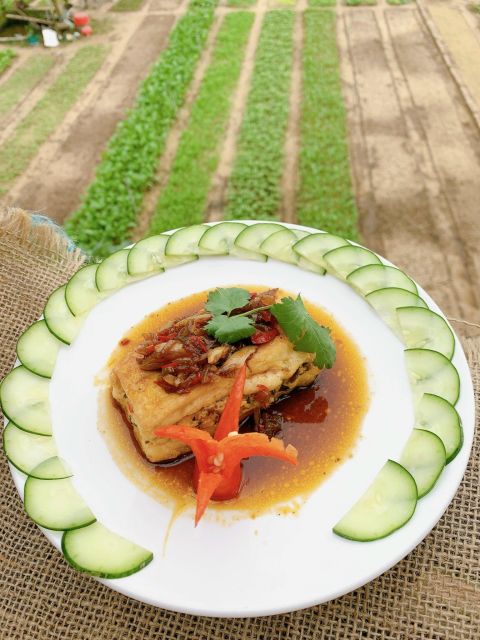
- Cooking lunch with the chef and family using local ingredients, with options for allergies
- A return pedal back to Hoi An’s energy while you still remember the quiet of the village
Tra Que Vegetable Village: the quiet place that teaches how food is made
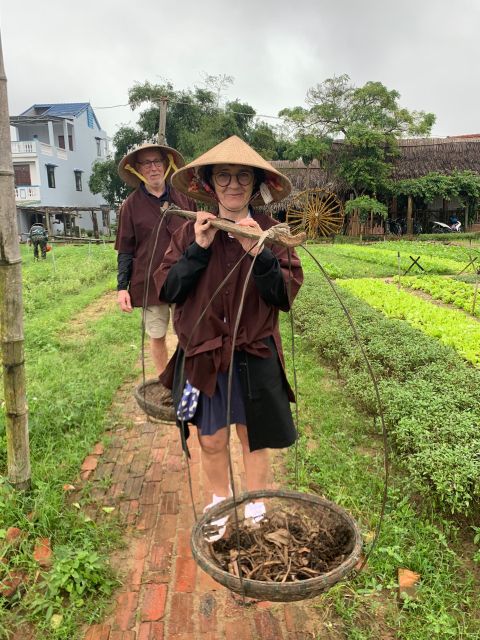
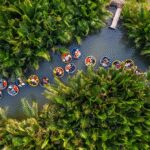
Tra Que is a small vegetable area outside Hoi An, famous for growing herbs and vegetables the traditional way. What makes it special is the setting: green fields, lots of herbs, and a river-adjacent fertile area that feels a world away from traffic.
Here’s what you really take home: you see how local meals start long before the plate. The day shows the whole chain—from preparing soil and using seaweed for fertilizing to harvesting herbs for lunch—so your food story makes sense when you eat again later in town.
I also like that it’s not framed as a performance. You’re guided through practical steps, and the family side matters. The chef and farm team explain ingredients and routines in a way that feels like everyday work, not a scripted show.
You can also read our reviews of more tours and experiences in Hoi An
Getting to Tra Que from your hotel: choose your ride, enjoy the countryside
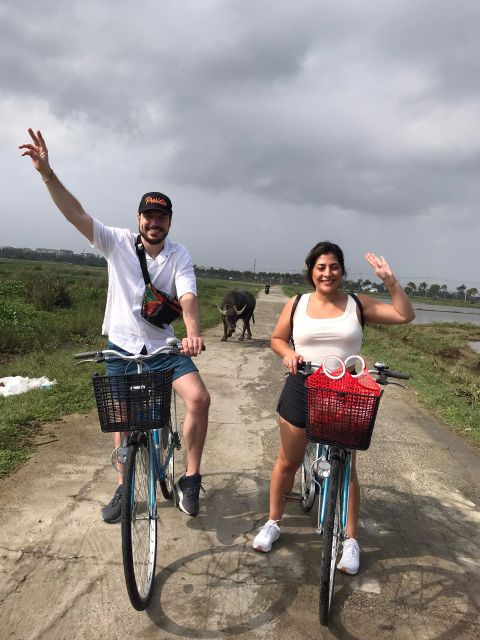
The experience starts with pickup from your hotel. You can go by bicycle, motorbike, or car, based on what you prefer.
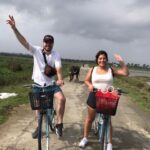
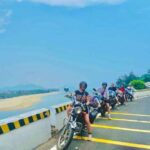
If you choose the bicycle option, you’ll cycle for about 20 minutes through rice fields. This is more than transport. It’s the warm-up moment when the day slows down: you pass farms with cows, ducks, and buffalo, and you get that countryside air that you can’t fake in a city.
If you pick up by car, you still get that first transfer out to the countryside. One practical note: you’ll take a private taxi back to town if you go with a car pickup. So if you’re trying to keep everything identical door-to-door, a car adds a small logistics twist.
Inside Tra Que: 300+ years of herb growing, still done the hands-on way
Once you arrive, you step into an old-style vegetable village with a heritage feel. The focus is herbs and vegetables, with the area growing more than 30 types using manual methods.
You’ll notice the difference right away: lots of tidy garden beds, careful cultivation, and an atmosphere that’s quiet even when people are working. There’s very little machinery noise here. That matters, because it lets you pay attention to what the guide and farm family are teaching.
You’ll also learn about the ingredients and spices that show up in daily meals. Instead of vague talk like herbs are good for you, you’ll connect specific plants to the flavor profile locals cook with. Even if you don’t leave with a full herb glossary, you’ll understand how common ingredients get sourced.
Farming with farmers: what you do in the fields (and why it matters)
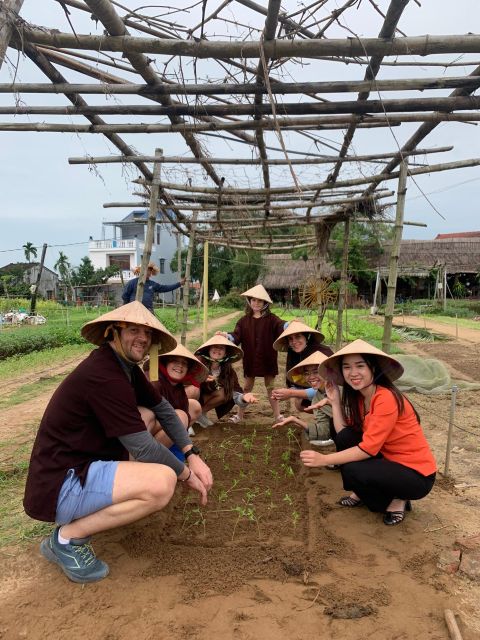
This part is where the day earns its price. You’ll join the farm work—practical steps that show how soil, water, and timing work together.
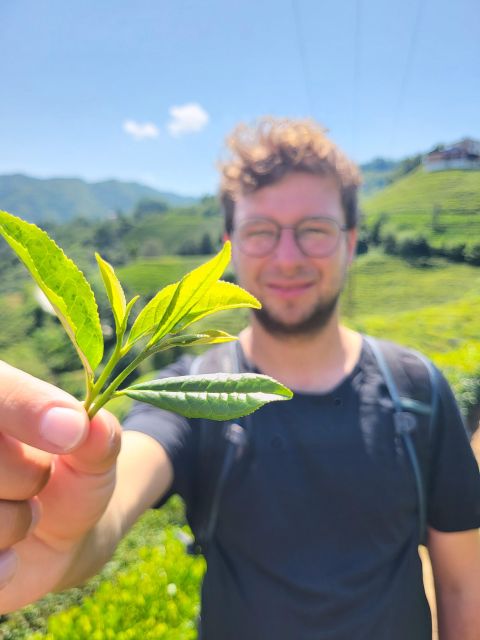
You’ll learn about preparing land and fertilizing using seaweed from a nearby lake. Then you’ll get into the rhythm of manual tools: raking the ground with traditional equipment, sowing new seeds, watering young plants, and picking herbs for your lunch.
Why this matters for you: it changes how you eat. When you learn that the herbs on your plate came from specific tasks—soil prep, fertilizing, careful watering—simple dishes feel more personal. You stop treating lunch as just food and start treating it like the final step of a process.
One more thing: you’re not expected to be a farmer for the day. The aim is hands-on understanding, and you’ll get guidance from the English-speaking guide and the farm team so you know what you’re doing.
The water buffalo ride and basket boat: the fun break between garden tasks
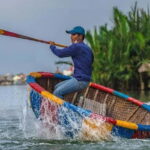
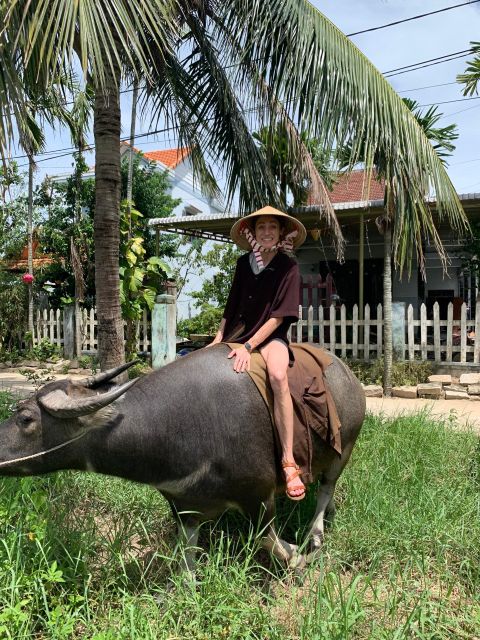
After hands-on herb work, the program turns more playful. You’ll have time to meet two classic rural experiences: riding a water buffalo and rowing a basket boat.
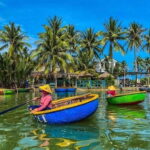
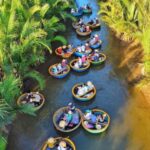
The buffalo experience is local and hands-on in a way that feels genuinely tied to the farming culture. The basket boat part is set among coconut palms, which helps it feel like more than just a quick photo moment. It’s a slower way to see the watery edges of the area where farming life happens.
Practical tip: wear shoes that won’t hate being near water and uneven surfaces. Even if the activity stays short, you’re still moving between farm areas.


Lunch at the Tra Que Water Wheel: cooking with local ingredients and real flexibility
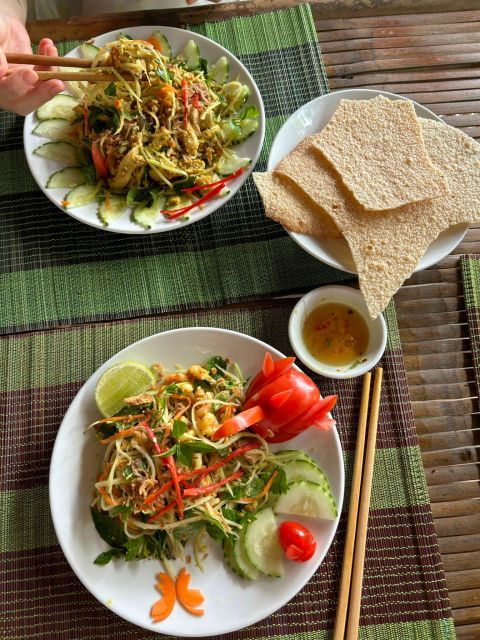
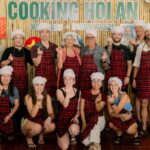
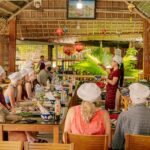
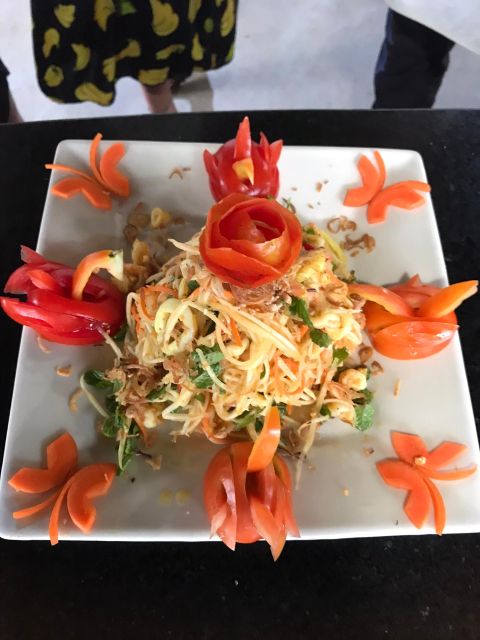
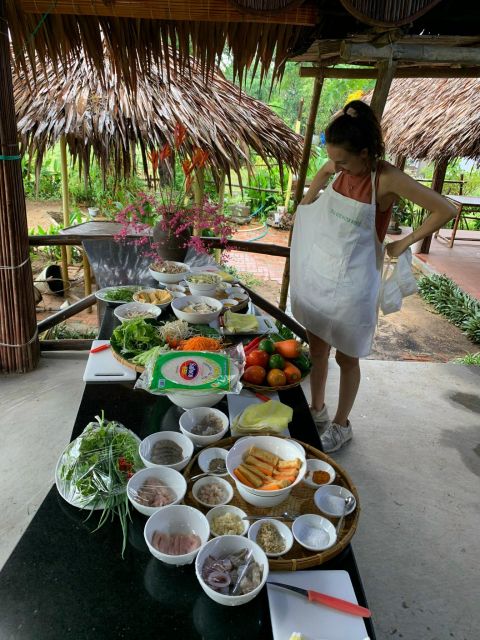
After the fieldwork, lunch is the payoff. You follow the local chef and family member from the Tra Que Water Wheels restaurant. You don’t just get a meal delivered—you cook as part of the lunch experience.
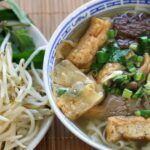
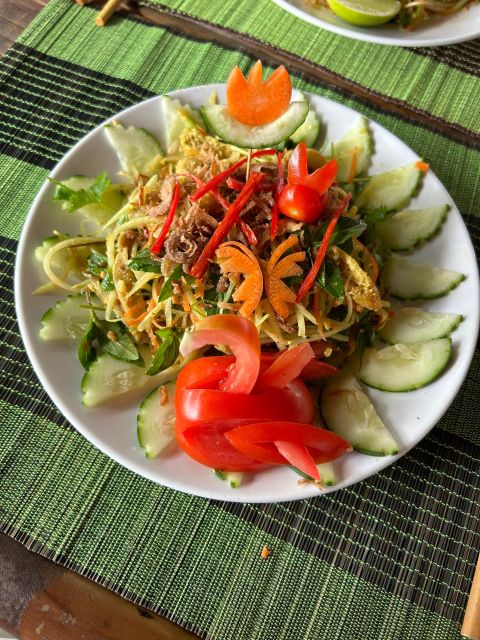
The lunch is described as a menu built around local cuisine. You’ll learn about flavors and ingredients as you cook, and the herbs you picked earlier have a good chance of showing up in the dishes. It’s one of the best ways to turn the farm day into something memorable you can’t scroll past.
They also care about preferences. The program notes they will consider wishes and allergies. In practice, this showed up as an extra dish made without coriander for one participant. That’s a real benefit if your food needs are specific.
You’ll also have a welcome drink before the main meal. It’s a small detail, but it helps the day feel organized and not rushed.
Price and value: $41 that buys transport, farm time, and lunch
At $41 per person, this isn’t just a quick activity. You’re paying for a whole package: hotel pickup and drop-off, an English-speaking guide, an eco-tour through the herb village, hands-on farming time, and lunch with cooking.
The value is in the mix. Many tours do one or two of these well—either food, or animals, or sightseeing. This combines all of them and keeps the center of gravity on the working farm. That’s why the price feels reasonable: you’re not paying for scenery alone.
Also, lunch is included, and you cook it yourself. When food is included and you’re actively part of the process, your day costs less than it would if you had to add separate meals and separate guided activities.
Timing, pace, and what to bring (so you enjoy the day instead of managing it)
This is an outdoor, active experience. You’ll cycle part of the way, then spend time in gardens, then shift into buffalo and basket boat activities, and finally cook and eat.
So plan like it’s a working day outdoors, not a museum day:
- Wear clothes you’re okay with getting dusty near soil and plants.
- Bring something light for the fields and something that covers you if sun is strong.
- Use shoes with decent grip for wet or uneven areas near water.
- If you have coriander or herb sensitivities, mention it ahead of time so they can plan the menu.
If you’re sensitive to smells, remember that herbs and seaweed fertilizing are part of the experience. For most people, that becomes the whole point. For others, it’s the only downside.
Who should book this, and who might not love it
I’d suggest this tour if you want:
- a hands-on look at how vegetables and herbs reach the kitchen,
- a food-focused day in Central Vietnam that doesn’t feel like a lecture,
- a mix of gentle scenery and active tasks,
- local lunch cooking with possible allergy accommodations.
You might want to skip it if you prefer:
- totally low-contact sightseeing,
- minimal physical activity,
- a strictly comfortable, clean environment for the whole day.
This isn’t a sit-down show. You’ll get involved, and that’s why it works.
Should you book Farming with Farmers at Tra Que?
I think you should book it if you’re trying to understand Vietnamese food at the source. For me, the winning combo is the manual farming tasks, the herb village eco-tour, and the lunch cooking that ties it all together. The buffalo ride and basket boat are fun, but they work best as breaks between field learning.
Also consider the small review count behind the rating. The score comes from just three reviews, so it’s not a massive dataset. Still, the feedback pattern is consistent: people leave happy, well-fed, and impressed by the team’s atmosphere and food care.
If you like your travel with a little dirt under the nails and a full stomach at the end, this is a strong choice.
FAQ
What does the $41 per person include?
It includes an English-speaking guide, hotel pickup and drop-off (by bike, or by motorbike/car as you choose), a welcome drink, an eco-tour through the Tra Que herb village, farming with the farmers, and a lunch menu.
How long is the cycle through the rice fields?
You cycle for about 20 minutes through the rice fields as part of the route to Tra Que.
What activities are included at Tra Que?
You’ll explore the herb and vegetable gardens, join traditional farming tasks, ride a water buffalo, and row a basket boat.
Is lunch included, and can they handle allergies?
Yes, lunch is included. You cook as part of the lunch experience, and they care about wishes and allergies—just tell them ahead of time.
What language is the tour guide?
The tour includes an English-speaking guide.
If I choose car pickup, does the car also take me back?
The tour notes that if you choose car pickup, you will take a private taxi back to town.
Can I reserve and pay later, and what’s the cancellation window?
You can reserve and pay later, and you can cancel up to 24 hours in advance for a full refund.