REVIEW · PHU QUOC
From HCM: Mekong Delta Floating Market 3 days exit Phu Quoc
Book on GetYourGuide →Operated by Dragon Sea Travel & Du Lịch Rồng Biển · Bookable on GetYourGuide
A Mekong Delta trip that actually ends on Phu Quoc. I like the mix of boat cruising plus coconut-canals rowing on Day 1, and I also like that you visit the big hitters like Vinh Trang Pagoda and Cai Rang Floating Market without wasting the whole time in the same kind of stop. The main thing to consider is that the “floating market” portion can feel a bit timing-dependent, and the English guide quality and hotel comfort can vary by departure.
This is a smart option if you want to see real river life—floating houses, fish cages, and the rhythm of market boats—then keep moving. You’re not pushed back through Ho Chi Minh City at the end, which is a big deal when you’re trying to get to the beach fast.
In This Review
- Key points worth knowing before you go
- Why this Mekong Delta trip feels different than a day tour
- Day 1 from Ho Chi Minh City to Can Tho: temples, boats, and Ben Tre canals
- Vinh Trang Pagoda: the Mekong Delta’s most recognizable temple
- Mekong River cruise: floating houses and fish cages
- The small-boat moment: hand-rowed canals shaded by coconut trees
- Ben Tre on Day 1: coconut candy, Đờn ca tài tử, honey tea, and a cooking class
- Unicorn Island: folk music and fruit time
- Bee-keeping farm and honey tea
- A typical Mekong Delta house
- Cooking class: learn one local dish, not just watch
- Lunch and the village slowdown
- Getting to Can Tho
- Day 2: Cai Rang Floating Market at the right time, plus noodle making and a monastery
- Cai Rang Floating Market: boats selling directly from the river
- Rice noodle workshop and pineapple tasting
- Local city market time
- Truc Lam Phuong Nam Zen Monastery: a quiet pause
- Lunch, then tourist village free time
- Day 2 into Rach Gia: the big transfer and what it means
- Day 3: the ferry to Phu Quoc, and why the exit feels smart
- Price and value: what your $180 includes (and what it doesn’t)
- The guides make or break it: what I’d watch for
- Watch outs: tourist feel, timing at Cai Rang, and hotel comfort
- Who this Mekong Delta + Phu Quoc exit trip suits best
- Should you book this tour?
- FAQ
- What meals are included on this 3-day tour?
- How long is the tour and when does the day usually start?
- Where do they pick me up in Ho Chi Minh City?
- Do you go back to Ho Chi Minh City after the Mekong Delta?
- Is the ferry to Phu Quoc included?
- What languages are available for the tour guide?
Key points worth knowing before you go
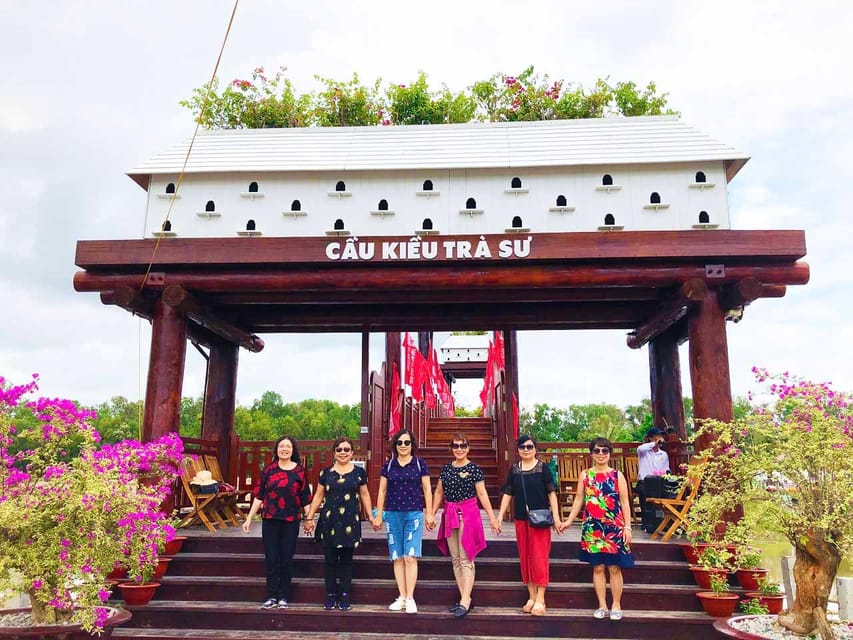
- Day 1 mixes big culture and small waterways: Vinh Trang Pagoda, then boats and a hand-rowed canal ride in Ben Tre
- You get multiple “food moments”: coconut candy tasting, honey tea, fruits, and a cooking class
- Cai Rang Floating Market is early-morning focused: you’ll head out in the morning for the action
- Day 2 has both river and temple time: noodle-making workshop plus Truc Lam Phuong Nam Zen Monastery
- Your exit is practical: ferry to Phu Quoc, so you don’t loop back to Ho Chi Minh City
Why this Mekong Delta trip feels different than a day tour
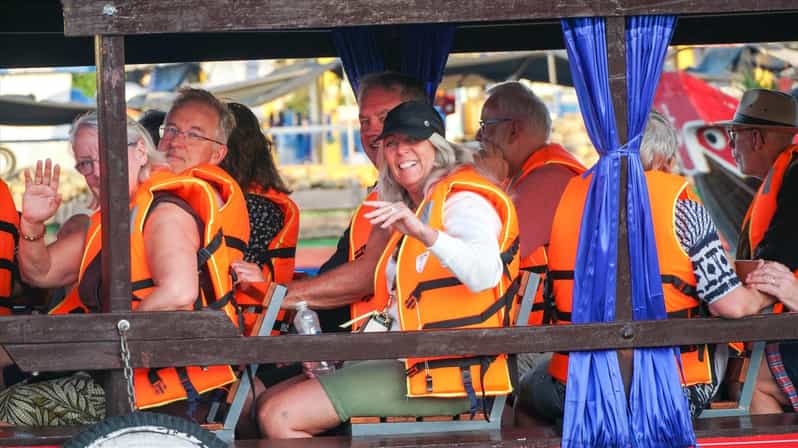
Most Mekong Delta tours either do the highlights and race through, or they turn everything into a single long boat ride with quick photo stops. This one feels more balanced because it layers experiences: temple viewing, river cruising, canal navigation, and then a real floating-market morning.
Even better, the structure matters. You get two overnight stays (Can Tho and Rach Gia) and then you continue onward to Phu Quoc by ferry. That “exit” design is perfect if your next goal is island time. Less backtracking usually means less frustration, especially when you’re already spending hours on buses and transfers.
You can also read our reviews of more tours and experiences in Phu Quoc.

Day 1 from Ho Chi Minh City to Can Tho: temples, boats, and Ben Tre canals
The day starts early with a pick-up around 7:30 AM from 243 De Tham Street in District 1 or your hotel in central District 1. From there, you ride an air-conditioned tourist bus to My Tho, with countryside views along the way—green rice paddies and a calmer pace than the city.
Vinh Trang Pagoda: the Mekong Delta’s most recognizable temple
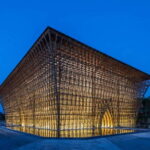
First up is Vinh Trang Pagoda, described as the largest and most iconic Buddhist temple in the Mekong Delta. This stop gives you a solid cultural anchor before the tour gets very “on-the-water.” It’s also a good reset from the road: you can slow down, observe local worship, and get a sense of why temples are such everyday landmarks in southern Vietnam.
Mekong River cruise: floating houses and fish cages
Next, you head onto the Mekong River by boat. The route passes floating houses and fish cages, which are not just scenery—they’re part of how people work and live. If you’re the kind of traveler who likes practical details, this is where you’ll start connecting what you see to daily routines, like fishing and small-scale river farming.
The small-boat moment: hand-rowed canals shaded by coconut trees
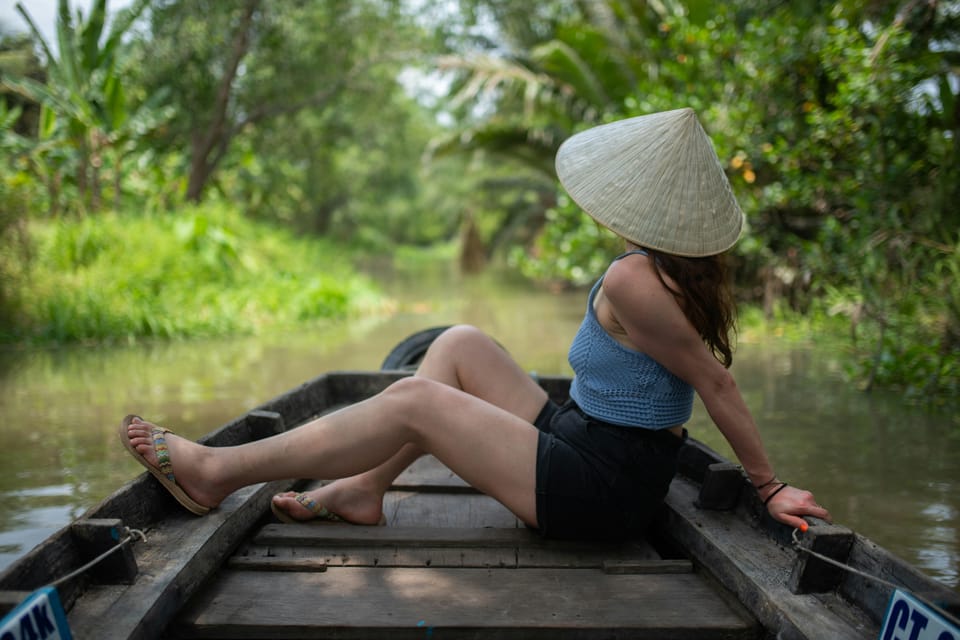
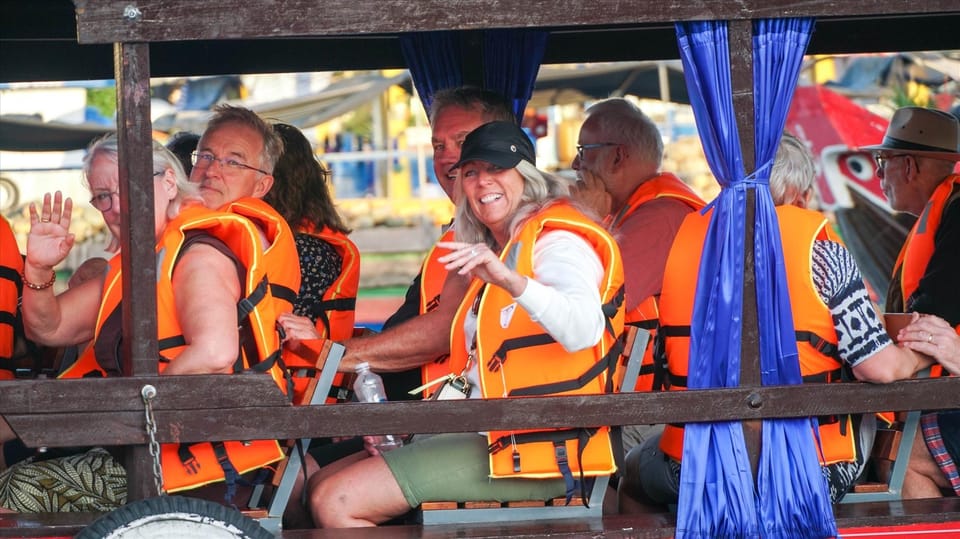
Then comes one of the most praised parts: a transfer to a small hand-rowing boat for a calmer glide through coconut-lined canals. This is the “zoomed in” version of the Mekong. Big boats move you across distance; hand-rowing moves you through atmosphere—quiet water, low branches, and village scenes that feel closer to the human scale.

Ben Tre on Day 1: coconut candy, Đờn ca tài tử, honey tea, and a cooking class
Ben Tre is where this itinerary leans into hands-on, taste-based experiences. After the canal ride, you land on a coconut island and visit a traditional coconut candy workshop. You’ll learn about the handmade production process and sample fresh products. If you’re thinking ahead, this is a good moment to pick up small souvenirs you can actually use—sweet snacks or gifts you can bring home.
Unicorn Island: folk music and fruit time
You then continue to Unicorn Island by motor cart. Here you get Đờn ca tài tử, a traditional Southern Vietnamese folk music experience, plus seasonal tropical fruits. It’s not the kind of cultural performance that requires you to be an expert in Vietnamese music—you’ll mostly enjoy it as a lived-in rhythm, tied to the people and the setting.
Bee-keeping farm and honey tea
After that, there’s a bee-keeping farm where you can enjoy natural honey tea. This tends to be the type of stop that either clicks or feels short, depending on your interests. If you like agricultural stories—how small businesses feed families and visitors—this is worth your attention.
A typical Mekong Delta house
You also explore a typical Mekong Delta house. This helps connect earlier river scenes (floating homes, fishing gear, canals) to how households are arranged and why homes evolve around water and seasonal conditions.
Cooking class: learn one local dish, not just watch
Then you take part in a Vietnamese cooking class. The value here is simple: you’re not only a spectator. Even if the class is basic, it gives you something concrete to remember after you leave the islands—plus a chance to ask questions about ingredients and technique.
Lunch and the village slowdown
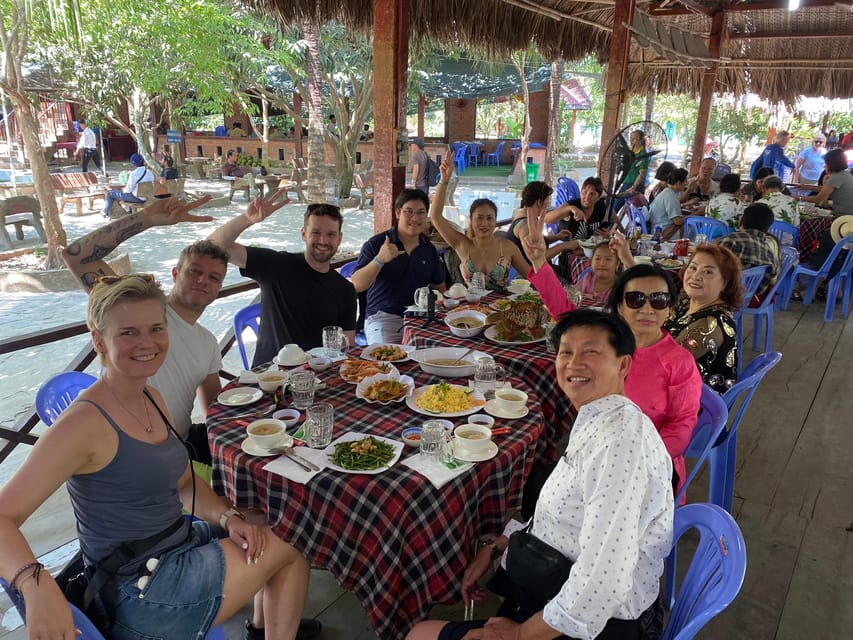
Lunch is included in a garden setting. After eating, you get time to stroll around the village or take a short bicycle ride through quiet countryside paths. This is where your camera can rest and you can just experience the pace. These breaks are important on multi-stop days, or the whole schedule starts to feel like you’re on rails.
Getting to Can Tho
In the afternoon, you cross by ferry and continue to Can Tho, which is often treated as a hub for the Mekong Delta. Dinner is on your own, and you’ll have free time to relax or explore. If you’re tired, that’s not a failure—it’s the right move after long boat and bus segments.
Day 2: Cai Rang Floating Market at the right time, plus noodle making and a monastery
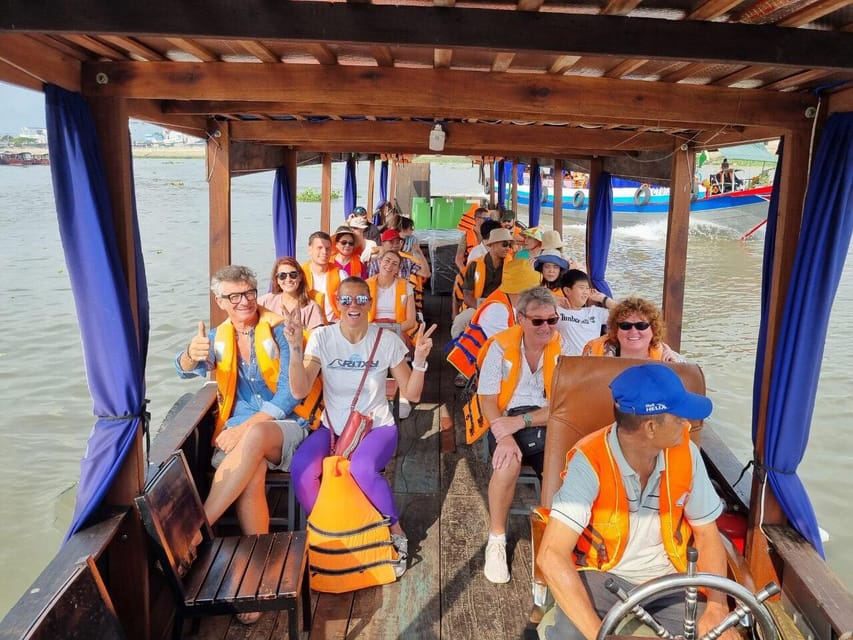
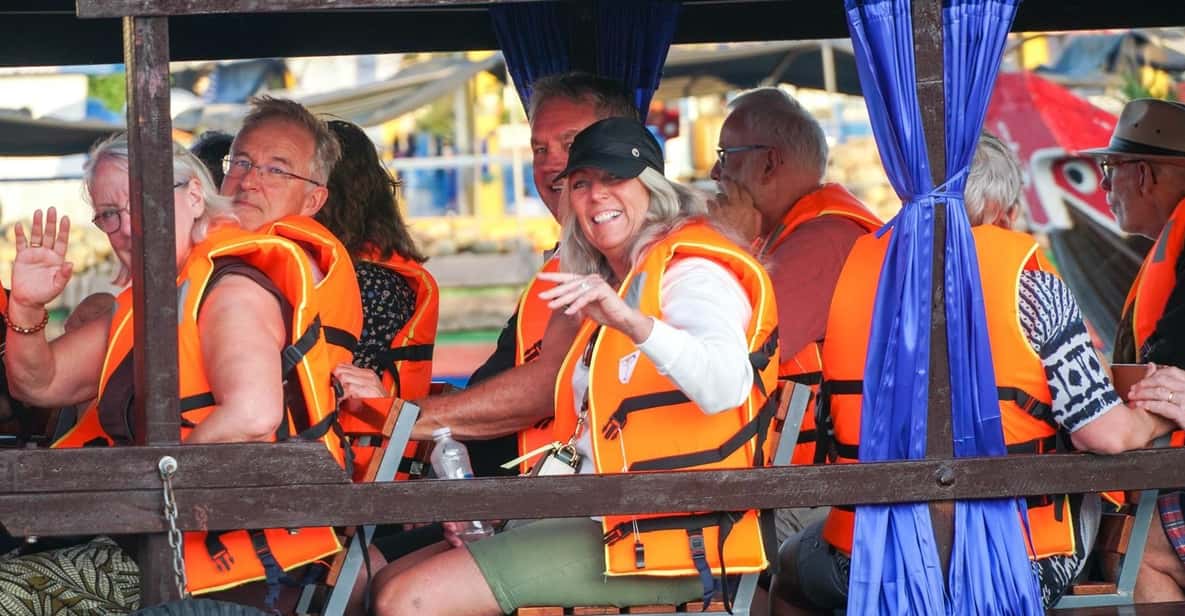
Day 2 starts with breakfast at 6:30 AM, then you go by boat to Cai Rang Floating Market. This is the best-known floating market experience in the region, and the tour’s logic is clear: mornings tend to be when trading looks most active.
Cai Rang Floating Market: boats selling directly from the river
You’ll see the lively atmosphere as traders sell fruits and local products directly from their boats. What makes this special isn’t only the photos—it’s the system. Everything is built around movement: goods are stored for short trips, negotiations happen in motion, and you can feel how river life works as a supply chain.
One key consideration: timing matters. Some departures may feel like you’re seeing the market during a calmer slice of the day rather than the heaviest trading window. You still get the feeling of the market, but if your goal is maximum “back-and-forth” barter and rapid boat-to-boat exchanges, you might wish the schedule allowed more time earlier.
Rice noodle workshop and pineapple tasting
After the floating market, you visit a rice noodle-making workshop. That adds a layer most boat-only trips skip: you see how a staple food gets made, not just how it gets sold.
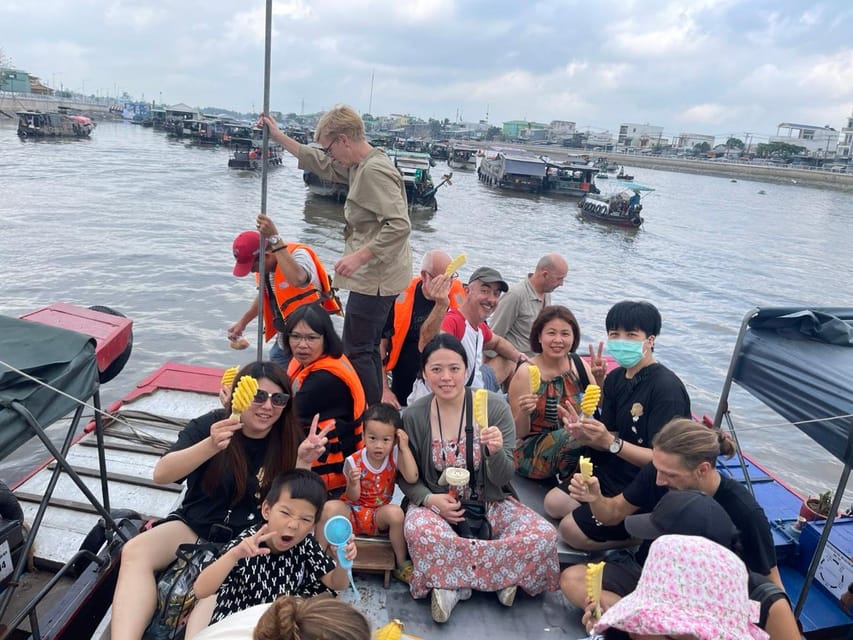
Then you go on a boat ride where you’ll taste fresh pineapple. This small tasting moment keeps the day from becoming purely instructional. It’s also a reminder that fruit isn’t just decoration here—it’s a major part of what the river routes move.
Local city market time
You’ll also explore a local market in the city center. This balances the river scenes with something on land, so you don’t end up with only floating images. It can help you understand what the market products look like before they’re packed and moved.
Truc Lam Phuong Nam Zen Monastery: a quiet pause
Later, you visit Truc Lam Phuong Nam Zen Monastery, a peaceful Buddhist complex with traditional Vietnamese architecture. After a morning filled with boats, noise, and active trading, a calm temple stop helps you reset. It also makes the day feel less like a checklist.
Lunch, then tourist village free time
Lunch is included, then you get free time around the tourist village area. How you use it depends on your energy. If you want downtime, this is where you should take it. If you want photos, wander without rushing.
Day 2 into Rach Gia: the big transfer and what it means
At 1:30 PM, you depart from Can Tho and transfer to Rach Gia by air-conditioned tourist bus. This transfer is listed as without a guide, so you’re relying on the driver and the group’s instructions.
This matters because a good guide doesn’t just translate language—they reduce stress. Without one, you’ll want to stay alert to timing and where the group is instructed to gather. The bus ride is part of the day’s rhythm, but the trade-off is less commentary and fewer mid-ride explanations.
Day 3: the ferry to Phu Quoc, and why the exit feels smart
Day 3 starts with breakfast at 6:30 AM, then transfer to the harbor for ticketing and boarding at around 7:30 AM. The ferry boards at 9:30 AM and arrives around 1:30 PM on Phu Quoc.
This schedule is practical. You don’t burn hours turning around and returning to Ho Chi Minh City. You end your Mekong time in a place designed for a slower pace—beach days, scooter rides, and island evenings.
It also means the tour doesn’t try to squeeze in “one more thing” at the end. That’s a relief on a three-day format where time tends to feel expensive.
Price and value: what your $180 includes (and what it doesn’t)
At $180 per person for three days, you’re paying for more than one boat ride. The tour includes:
- Entrance fees
- Meals: 2 lunches and 2 breakfasts
- Two hotel nights in air-conditioned double or twin rooms
- Boat trip(s) plus biking, fruits, honey tea, and coconut candy tasting
- Mineral water
- English-speaking tour guide
- Ferry to Phu Quoc
What’s not included: meals outside the program and personal costs like drinks or laundry. Also, a single room costs extra.
So is it good value? Usually yes, because you’re bundling river transport, multiple activity entries, and lodging into one package. Where value can slip is not about the math—it’s about comfort and expectation. Some departures report hotels with hard beds and basic amenities, and experiences like Cai Rang can feel shorter than ideal if you’re hoping for a longer deep-market window.
If you’re the type who mostly wants the big river sights and the feel of the delta, the package often works well. If you’re extremely sensitive to hotel comfort or you only care about the floating-market “peak trading” energy, you’ll want to manage expectations.
The guides make or break it: what I’d watch for
The tour includes an English-speaking guide, and the quality can vary. In positive accounts, guides like Wok and Duy earned praise for strong information, good group care, and maintaining energy. Another guide named Jimmy also received high marks alongside good meals.
On the other side, there are also reports of an English challenge and less-informative storytelling. That’s the biggest “soft factor” to consider on this kind of itinerary: the schedule is packed, so a guide’s ability to explain what you’re seeing makes the day feel worth your time.
If you care a lot about commentary, it’s worth choosing the departure that best fits your comfort level with group travel and trusting your own curiosity when language falls short.
Watch outs: tourist feel, timing at Cai Rang, and hotel comfort
This itinerary has a few possible rough edges:
- Cai Rang trading intensity can vary. The market portion is early, but if you want a longer window for boat-to-boat trading, the visit might feel short.
- Some stops can feel staged. One negative account described the day having more tourist-style participation than expected, like being encouraged to handle animals or props. That doesn’t mean every departure is like this, but it’s a fair heads-up if you prefer quiet observation.
- Hotels are not guaranteed equal. Some reviews describe rooms as clean but with very hard beds and basic comfort. If sleep quality matters, this is the biggest area to mentally budget for.
None of this automatically makes the tour bad. It just means you should pick it for the right reasons: river life, temple anchors, boat time, and an easy ferry exit to Phu Quoc.
Who this Mekong Delta + Phu Quoc exit trip suits best
You’ll likely enjoy this tour if you:
- Want a multi-day Mekong experience rather than a rushed day trip
- Like hands-on food activities (coconut candy, honey tea, cooking class)
- Prefer seeing Mekong life through boats and canals, not just from a bus window
- Are heading to Phu Quoc next and want the logistics to be handled for you
You might think twice if you mainly want:
- A long, uninterrupted floating-market immersion
- High-end hotel comfort
- A trip that feels mostly quiet and observational rather than “active participation”
Should you book this tour?
I’d book it if your top priority is a well-structured Mekong Delta route that ends in Phu Quoc with minimal hassle. The combination of Vinh Trang Pagoda, Ben Tre canal time, and Cai Rang Floating Market, plus the included meals and two hotel nights, is a solid value package.
I’d be cautious if you’re picky about hotel comfort or your idea of floating market is lots of time for nonstop bartering. In that case, treat Cai Rang as a highlight you’ll see, not a full-day experience, and plan to enjoy the rest of the day’s river, workshop, and temple variety.
If you want, tell me your travel dates and whether you’d rather optimize for sleep comfort or for more market time, and I’ll help you decide the best departure approach.
FAQ
What meals are included on this 3-day tour?
The tour includes 2 lunches and 2 breakfasts. Dinner and any meals outside the program are not included.
How long is the tour and when does the day usually start?
The tour lasts 3 days. The first morning begins around 7:30 AM with pick-up in central District 1, and day 2 and day 3 also start early with breakfast around 6:30 AM.
Where do they pick me up in Ho Chi Minh City?
Pick-up is available from 243 De Tham Street or from your hotel in central District 1.
Do you go back to Ho Chi Minh City after the Mekong Delta?
No. This itinerary is designed to continue to Phu Quoc by ferry, without returning to Ho Chi Minh City.
Is the ferry to Phu Quoc included?
Yes. The tour includes the boat to Phu Quoc Island by ferry.
What languages are available for the tour guide?
The tour guide is listed as English-speaking (and Vietnamese is also available).